|
|
Dear Neighbor,
Last week, I shared Part 1 of my seven-part series on water rights in Pennsylvania, where I looked at how our water is (or should be) managed and protected and where we're falling short. Pennsylvania is one of the most water-rich states in the country, with an estimated 80 trillion gallons stored in underground aquifers and trillions more in our lakes, reservoirs, and 83,000 miles of streams and rivers. But abundance does not mean security. For generations, we have treated our water supply as if it were limitless, and many of our laws and expectations were built around that assumption.
Part 1 examined why that approach no longer works. Pennsylvania is now facing the largest wave of industrial water demand in its history, driven by rapid development and new forms of high-volume water use. Yet our regulations were crafted for a different era, leaving families vulnerable to rising costs and leaving our natural resources without the protections they need.
This week, I turned to Parts 2 and 3 of the series. Part 2, titled “Who Owns Your Water,” looks at how a proposed merger between two of the largest regulated water utilities in the country could affect households and municipal water authorities across Pennsylvania. Part 3, titled “Data Centers have already increased your electric bill. Is your water bill next?” looks at the potential impact of data center water demand on our utility bills and our commonwealth’s water supply, just as our region is facing the prospective merger of the two largest private water utilities in the United States.
Part 2 of 7: “Who owns your water?”
Pennsylvania’s constitution guarantees every resident the right to pure water, but that right is being tested in real time. Two of the largest regulated water utilities in the country have announced plans to merge, combining American Water Works and Essential Utilities into a corporation with a $40 billion market capitalization and a $63 billion enterprise value. For Aqua and Pennsylvania American Water customers, this merger has direct consequences. And for municipalities that still operate their own water systems, it could affect costs and choices in years to come.
In Part 2 of my seven-part series on water rights in Pennsylvania, I look at what this merger means for households with public water and for municipal water authorities. When competition disappears, so does local leverage, and history shows that consolidation often leads to higher bills, fewer protections, and less accountability. At the same time, Pennsylvania is facing unprecedented industrial water demand from data centers, with more than 20 hyperscale facilities in the planning pipeline and no statewide rules limiting or publicly tracking their water use.
Read my full post on Substack to learn how these trends intersect, why they matter for your household, and how upcoming PUC hearings give the public a chance to weigh in on the future of our water. |
|
|
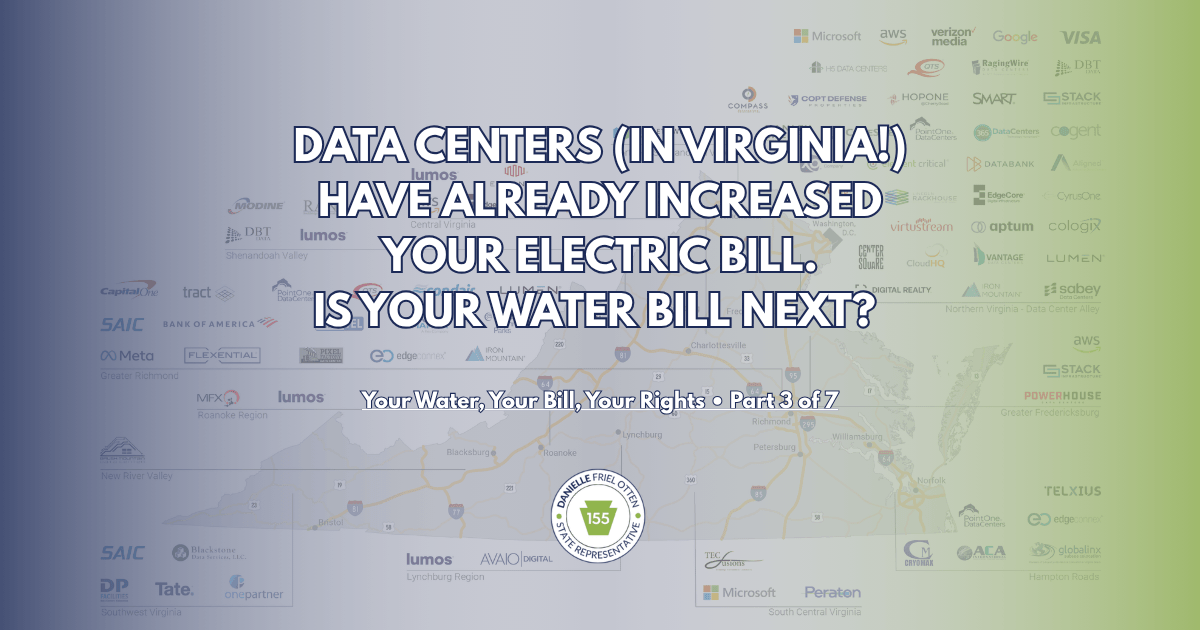
Part 3: Data Centers (in Virginia!) have already increased your electric bill. Is your water bill next?
Electric bills across Pennsylvania have risen sharply in recent years, and one of the biggest drivers is data center development—not here at home, but in the massive concentration of data centers in northern Virginia. Because Pennsylvania is part of the 13‑state PJM grid, the enormous electricity demand created by Virginia’s data center market pushes up capacity prices for every state in the region. That means higher electric bills for Pennsylvania families, even though the data centers causing the demand spike are located hundreds of miles away.
In Part 3 of my seven‑part series on water rights in Pennsylvania, I look at how this same pattern could affect our water bills. Data centers require massive amounts of water for cooling, and Pennsylvania currently has no limits, no efficiency standards, and no disclosure requirements for large‑scale industrial water use. With more than 20 hyperscale data centers proposed in our region, and with a major water utility merger under review, the decisions we make now will determine whether our water supply is protected, and whether residential customers end up paying for increased industrial demand.
Read my full post on Substack to learn how shared grid rules in the PJM region drive up costs, how water utilities operate differently from electric utilities, and what steps Pennsylvania can take to protect both our water resources and our water customers. |
|
|
Weigh in on the AQUA and American Water Merger
The proposed merger between Essential Utilities (the parent company of Aqua America and Peoples Natural Gas) and American Water Works Company (better known as American Water) is subject to approval by the Pennsylvania Public Utility Commission.
The PUC has the ability and authority to approve or reject the merger and to impose conditions including rate protections, affordability commitments, and infrastructure investment guarantees. The upcoming hearings give the public an opportunity to be heard.
How To Participate:
As your state representative, I will be urging the PUC to either reject this merger or impose strict, enforceable requirements including rate protections, transparency requirements, and service quality guarantees as a nonnegotiable condition of approval. Chester County residents and all water utility customers deserve safe, reliable water at an affordable rate.
For more information, see the PUC hearing announcement.
Requiring Consideration of the Public Interest in PUC Proceedings
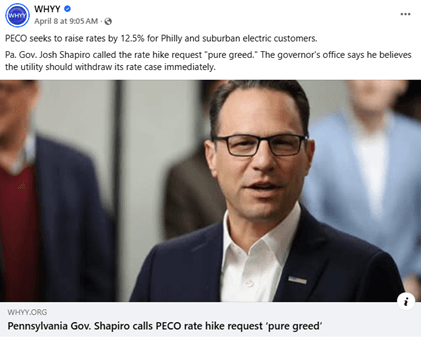
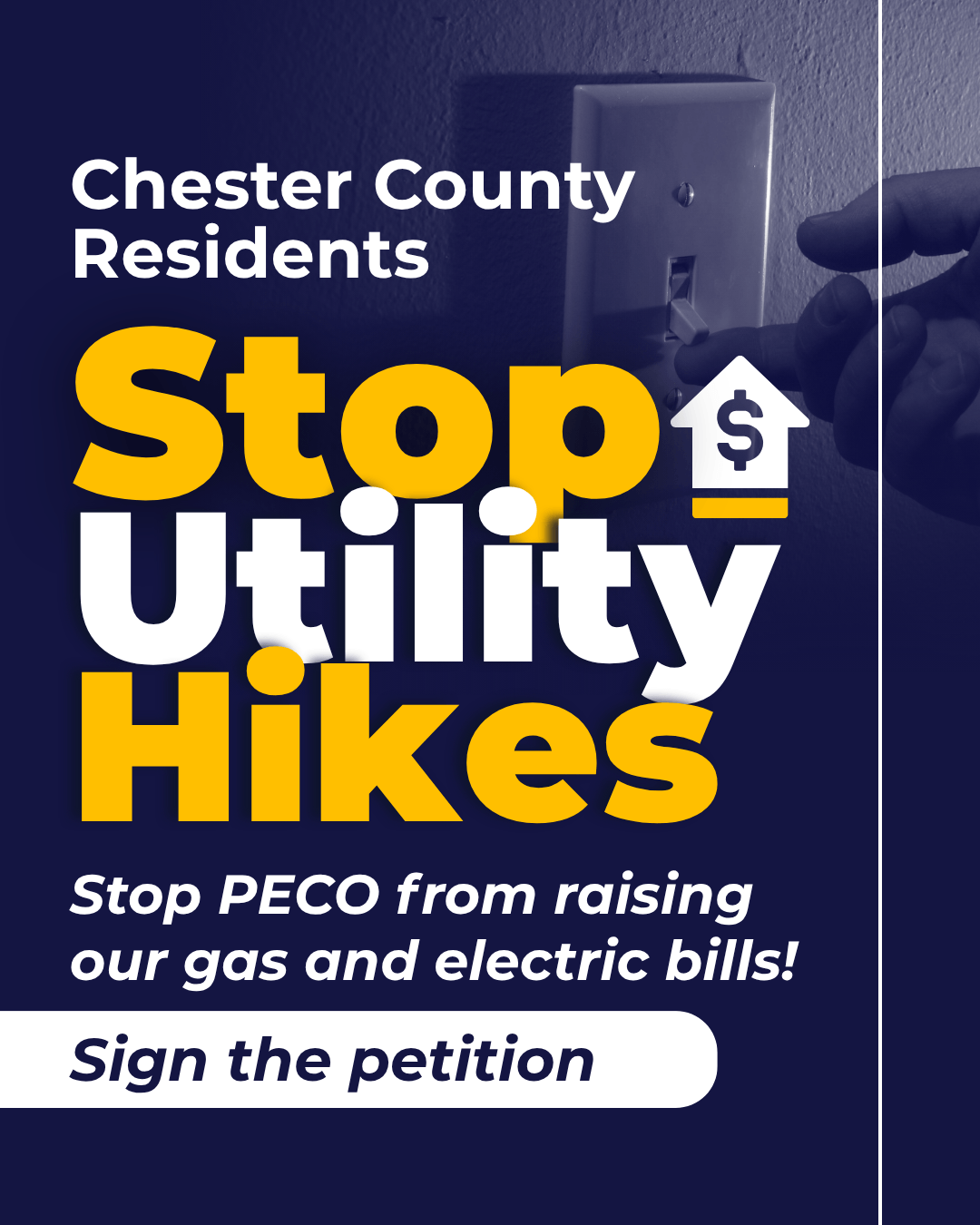
After raking in record profits in 2025, PECO is once again seeking approval from the state’s Public Utility Commission to raise electric rates by 12.5% and gas rates by 11.4%, beginning in 2027. If the PUC approves the request, the average electricity bill would rise by $20.08 a month and the average gas bill by $14.52 a month, according to PECO’s own filing.
Last year, PECO raised gas and electric prices on Pennsylvanians and made $814 million in profit. At the same time, one in five Pennsylvania households reported problems paying their bills, and more than 300,000 households statewide experienced a gas or electric shutoff. When a corporation that operates as a public utility is earning historic returns and still asking struggling families to pay more, it raises serious questions about whose interests our regulatory system is protecting. |
|
|
Under current Pennsylvania law, utility rates must be “just and reasonable,” and the PUC is required to balance the needs of consumers and utilities. But the law does not define “just and reasonable” or address the fact that a utility’s consumers increasingly include large-load customers like data centers, which are driving up everyone’s costs.
In February, I introduced legislation to address this gap in state law by requiring the PUC to explicitly consider the public interest in every proceeding, deliberation, and decision. My bill would specifically require the PUC to consider the affordability of utility rates for current and future residential customers and would require utilities to demonstrate that before seeking a rate increase, they have taken steps to reduce costs through improved energy efficiency and grid reliability, as well as steps to protect public health and the environment.
In plain terms, my bill (HB 2184) would require the PUC to deny rate increases when a utility is making record profits on bills that are unaffordable for the average household.
Families across southeastern Pennsylvania are already feeling the strain of rising energy costs. They deserve a system that puts the public interest first.
PA House Democrats SE Delegation urges PUC to reject PECO rate hikes
On Wednesday, I joined my colleagues in the Southeast Delegation in a letter to PUC Chairman Stephen DeFrank opposing PECO’s request for a rate increase. If approved, this would be PECO’s third rate hike since 2022. Residential and small-business ratepayers are already stretched to the limit, while PECO reports record profits and data centers drive demand for electricity through the roof.
Seniors and working families should not be forced to subsidize soaring corporate profits, and no one should have to choose between paying their utility bills and putting food on the table. Please join us in calling on state regulators to reject this rate increase and stand up for Pennsylvania consumers. |
|
|
|
|
If you have questions or would like to share your thoughts on any legislative or state-related issue, please contact my district office at repotten@pahouse.net. |
|
|
|
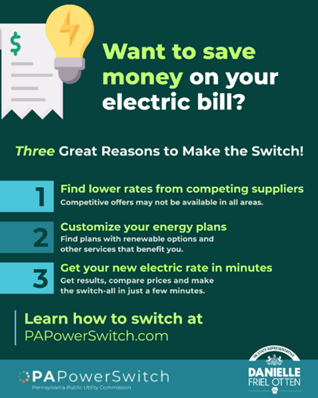
Shop for the best electric rate with PA Power Switch
PA Power Switch makes it easy to compare electricity rates and plans, including plans that save you money while sourcing energy from 100% renewable suppliers. PA Power Switch is Pennsylvania’s official electricity shopping website managed by the Public Utility Commission, so you can be assured that offers are verified and legitimate, and the website makes it easy to review and understand the terms and duration of each offer.
In addition to unbiased comparison shopping, the site provides information about your rights as a utility consumer, plus a helpful explainer about understanding your electric utility bill so you can better see which costs are within your control. (PECO will still be your electric utility; PA Power Switch just allows you to choose the company that supplies your electricity.)
Electricity prices fluctuate, so be sure to check back periodically to make sure you are signed up for the program and rate that best suits your household’s needs and budget. Consider selecting a plan with a fixed, non-introductory rate, or setting a reminder on your calendar or phone to reevaluate plans in a few months, especially if the initial program you select has an introductory period.
Taking a few minutes a few times a year to review your options can save money and ensure your energy plan fits both your values and your budget. |
|
|
|
|
Property Tax/Rent Rebate Application Period Open
The 2026 Property Tax/Rent Rebate Application Period is open and accepting applications for rebates on property taxes or rent paid in 2025. The Property Tax/Rent Rebate Program benefits eligible Pennsylvanians ages 65 and older, widows and widowers ages 50 and older, and people with disabilities age 18 and older.
This program has made it easier for seniors in Chester County to stay in their homes and afford groceries, medicine, and so much more. Please call or stop by my office to find out if you’re eligible and get assistance applying for your rebate. We’d be glad to answer any questions and set up an appointment to help you complete your application online! For those who prefer to file by mail, paper applications are available in my office. |
|

|
|
|
Free Tax Filing Assistance Available in Chester County
Need help filing your taxes? The Volunteer Income Tax Assistance program is here to help.
The Volunteer Income Tax Assistance program is once again offering free, IRS certified tax preparation to eligible residents. By helping individuals keep more of their earnings and access essential tax credits, VITA provides a critical boost for families working to build long term financial stability.
For many households, maximizing this year’s refund is crucial. VITA supports working individuals who do not receive high wages by offering:
VITA sites across Chester County are now open for the season, with locations in Coatesville, Downingtown, Exton, Kennett Square, Phoenixville, Pottstown, Royersford, and West Chester.
To learn more about site locations, hours, and what to bring, click here. |
|

|
|
|
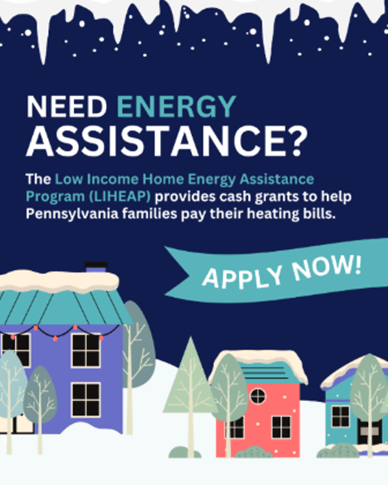
LIHEAP Application Window Open through May 8
The 2025–26 LIHEAP (Low‑Income Home Energy Assistance Program) season will remain open through May 8, 2026. LIHEAP is a federally funded DHS program that helps eligible households pay their heating bills by sending payments directly to their utility company or fuel provider. Grants of up to $1,000 are available to income‑qualified households.
Eligible families are encouraged to apply early. Assistance is available while funds last and is distributed on a first‑come, first‑served basis. LIHEAP also provides support in crisis situations and weatherization services, ensuring no one has to choose between staying warm and meeting other essential needs. |
|
|
|
|
SEPTA Senior Key Cards and Card Renewals
If you have a SEPTA Senior Key Card that has expired or will expire within the next month, we can renew it in our district office. To renew your card before it expires, please stop by my district office, or call us to make an appointment.
My office can also process applications and take photos for new SEPTA Senior Key ID Cards, which allow seniors 65 and older to travel for free on all SEPTA Regional Rail and transit routes within Pennsylvania. Just stop by my district office and bring a form of ID with your date of birth on it, such as a PA driver’s license or non-driver ID, U.S. passport, or birth certificate. We’ll enter your information into SEPTA’s online system, take a quick photo, and then SEPTA will mail your new card to you directly. |
|

|
|
|
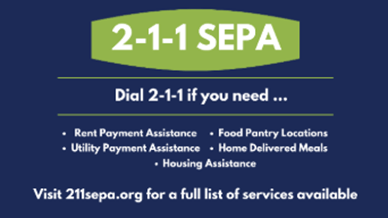
2-1-1 Southeastern Pennsylvania: Health and Human Services
211 SEPA is part of the national 211 Call Centers initiative that seeks to provide health and human services for everyday needs and those in crisis situations.
2-1-1 works with county governments and provider agencies to ensure important local program information is easily accessible.
Visit 211sepa.org for more information. |
|
|
|
|
Mental Health Resources: Call 9-8-8
Chester County residents experiencing mental-health-related crisis or distress can dial 9-8-8 to reach the Suicide and Crisis Lifeline. This system is designed to be a memorable and quick number that connects people in crisis to a trained mental health professional.
Chester County offers additional resources for those in crisis, including Chester County’s warm line, 1-866-846-2722, operated by Certified Peer Specialists, who are individuals in recovery with a lived experience of mental health challenges.
Chester County’s Teen Talk Line ensures seamless referral to Mobile Crisis for youth in need of immediate or higher-level support. The call line is 855-852-TEEN (8336), and the text line is 484-362-9515.
Visit the Department of Human Services website for more information about the 988 system and other state and local mental health resources.
If you or someone you love is in crisis, please don’t give up hope, and please know that you do not need to walk this path alone. We are here and we will do whatever we can to help. |
|

|
|
|
My staff and I are here to help make state government work better for you! For assistance with the above programs or any other state-related services, please email repotten@pahouse.net, call 484-200-8259, contact us through my website, or visit my district office in Exton and let us know how we can help! |
|
|
|
District Office 631 North Pottstown Pike |
|
Pennsylvania State Capitol 34 East Wing PO Box 202155 (717) 783-5009 |
|


|