|
|
Dear Neighbor,
As we move further into October, one issue continues to rise to the top of conversations taking place in Harrisburg and in states across the PJM energy grid region: affordability. Families, small businesses, school districts, and local governments are all feeling the impact of rising electricity costs, yet none of these stakeholders have a real voice in the decisions that shape those costs.
That's why I've spent the past year working with legislators, regulators, consumer advocates, and state leaders from across the PJM region to push for greater transparency, accountability, and public representation in the decisions that affect our electric grid and, ultimately, our monthly utility bills. While these issues can be complex, the underlying question is simple: Are the institutions making decisions about our energy future acting in the public interest?
In this week’s newsletter and on Substack, I'm taking a closer look at that question and at the concerns about PJM's governance structure being raised by federal regulators, governors, consumer advocates, and other stakeholders.
While these voices come from different states, political perspectives, and areas of expertise, they are increasingly flagging the same concerns about transparency, accountability, and how the decisions affecting our electricity prices and grid reliability are made. At a time when affordability remains a top concern for so many Pennsylvanians, I believe those warnings deserve our attention.
What are regulators and stakeholders saying about PJM, and why does it matter?
Every month, families, businesses, schools, municipalities, and nonprofits across Pennsylvania pay electric bills that are directly affected by decisions made by PJM Interconnection, the organization responsible for managing the electric grid serving 67 million people across 13 states and the District of Columbia. As large-load customers, particularly data centers, continue to drive increased energy demand, these regular consumers are becoming a smaller portion of a utility’s total electricity demand, even as they carry a larger share of the financial burden for capacity prices and grid infrastructure.
When electricity prices rise, when reliability becomes a concern, or when major infrastructure investments are proposed, those decisions don't happen in a vacuum. They happen within a governance system that determines who has a voice, whose interests are prioritized, and ultimately who pays the bill.
For the past year, I have worked with legislators from across the PJM region through the bipartisan PJM Legislators' Collaborative to advocate for greater transparency, accountability, and public representation within PJM's governance structure.
Our goal has been straightforward: the people paying the bills deserve a meaningful voice in the decisions that affect them.
That should not be a controversial position. Yet for years, lawmakers, consumer advocates, and state officials have raised concerns that PJM's governance structure gives disproportionate influence to industry stakeholders while limiting the ability of states and everyday consumers to shape decisions that have enormous consequences for affordability and reliability.
Those concerns came to a head earlier this year, when Federal Energy Regulatory Commission (FERC) Chair Laura Swett called for governance reform at PJM that would increase PJM’s independence from big-industry stakeholders and provide states with a more meaningful role in the governance process.
But rather than embracing meaningful reform, the PJM Members Committee ultimately advanced a proposal that moves in the opposite direction, increasing industry influence and further limiting the role of states and smaller consumers.
When the Chair of FERC calls PJM a "mess," when state governors accuse PJM members of writing and approving their own reforms, when state officials say they have been offered "a highchair in the corner" instead of a real seat at the table, and when the U.S. Department of Energy is warning that existing ratepayers deserve stronger protections, these concerns can no longer be brushed aside as isolated complaints.
Visit my Substack for a sampling of comments from federal regulators, governors, senior officials, legislators, and other stakeholders who have sounded the alarm in recent weeks.
The challenges we face will not be solved overnight, but that does not mean we can afford to accept the status quo.
I will continue working with my colleagues in the bipartisan, multistate PJM Legislators’ Collaborative to ensure that the people paying the bills have a meaningful voice in the decisions that affect their monthly electricity costs. We will continue to push for stronger consumer protections, fair cost allocation, and reforms that prevent the costs of new infrastructure and large energy users from being unfairly shifted onto existing ratepayers.
Most importantly, I will continue pushing for a system that puts people before profits.
PJM was created to serve the public interest. If it is going to maintain the trust of the people who depend on it, then it must be willing to listen to the growing chorus of voices calling for reform.
At the end of the day, this is not about excluding industry stakeholders from the conversation. The question is whether the residential consumers, communities, schools, businesses, and local governments that ultimately bear the costs of these decisions will finally have a seat at the table alongside them.
|
|
|
Voting is underway in Chester County!
Election Day is still a few weeks away, but voting is already underway in Chester County. Pennsylvanians have more options than ever when it comes to casting their ballot, whether that means returning your mail-in ballot to a USPS mailbox or secure mail-in ballot drop box, taking advantage of on-demand mail ballot voting, or voting in person on Election Day on November 3.
No matter how you choose to participate, now is the time to make a voting plan and familiarize yourself with important deadlines and available resources.
Any qualified voter may apply for a mail ballot and vote from the comfort of home. Once the ballot is requested, voters can track the status of their ballot through the time the completed ballot is received and their vote is recorded.
For voters who prefer to complete the process in a single visit, Chester County will begin offering on-demand mail ballot voting on October 12, the same day that mail-in ballot drop boxes open across Chester County. On-demand voting allows eligible voters to apply for a mail ballot, receive it, complete it, and return it during the same trip to a designated election office. Additional information about the process is available through the Pennsylvania Department of State's On-Demand Mail Ballot Voting Guide and Chester County Voter Services.
Once you have completed your mail-in ballot, you may return it by mail or by using one of Chester County's secure drop-off locations. Voters should remember that Pennsylvania law only permits voters to return their own ballot, unless a voter qualifies for and completes the state's designated agent process.
For a list of Chester County ballot drop-off locations and hours of operation, visit the Chester County Voter Services website.
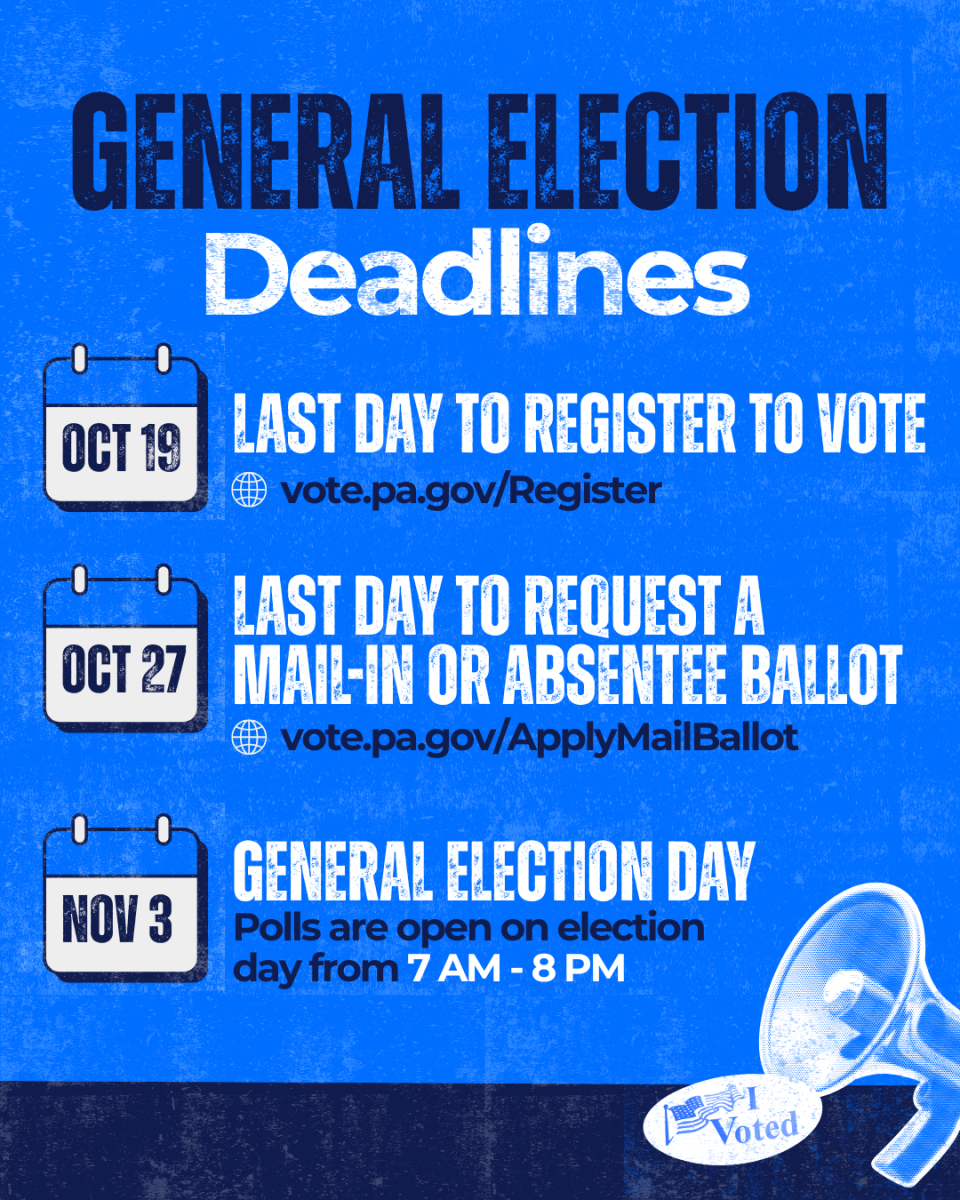
Important Election Dates and Deadlines
November 3 is Election Day. Here are the dates and deadlines you need to ensure that you are prepared to vote.
|
|
|
Election Resources
For accurate and up-to-date information, rely on your county election office or vote.pa.gov, the official website of the Pennsylvania Department of State. |
|
|
|
Please contact my district office at repotten@pahouse.net if you have questions or would like to share your thoughts on any legislative or state-related issue. |
|
|
|
Upcoming Events
FREE Paper-Only Shred Event
Join Team Otten for a FREE Paper-Only Shred Event!
Bring your confidential documents to be destroyed! Each car will be limited to 4 file-size boxes. Small paper clips and staples are OK, but please no binder clips, binders, or cardboard (plan to take your boxes home with you).
The shredding event will take place in the parking lot of the North Brandywine Middle School, 256 Reeceville Rd, Coatesville, PA.
This event is first-come, first-served. When the truck is full, the event will end. All shredded paper will be recycled!
If you have any questions, please contact Rep. Otten’s district office at 484-200-8259 or email repotten@pahouse.net . |
|

|
|
|
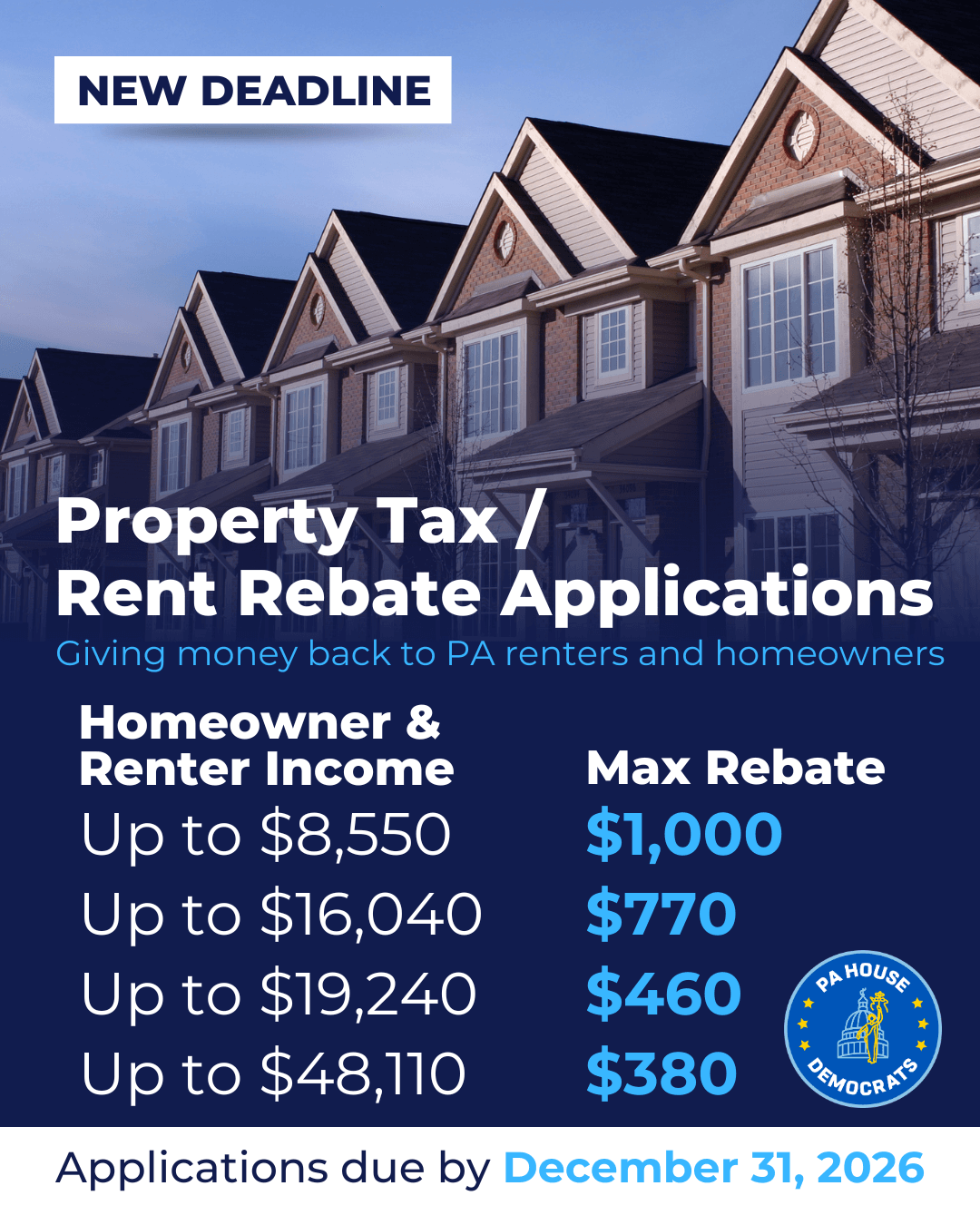
Property Tax/Rent Rebate Application Period Extended
The 2026 Property Tax/Rent Rebate Application Period has been extended through December 31, 2026. The Department of Revenue began sending rebates on July 1, so submit your application now to get your rebate as soon as possible!
The Property Tax/Rent Rebate Program benefits eligible Pennsylvanians ages 65 and older, widows and widowers ages 50 and older, and people with disabilities age 18 and older.
Please call or stop by my office to find out if you’re eligible and get assistance applying for your rebate. We’d be glad to answer any questions and set up an appointment to help you complete your application online!
For those who prefer to file by mail, paper applications are available in my office. |
|
|
|
|
SEPTA Senior Key Cards and Card Renewals
If you have a SEPTA Senior Key Card that has expired or will expire within the next month, we can renew it in our district office. To renew your card before it expires, please stop by my district office, or call us to make an appointment.
My office can also process applications and take photos for new SEPTA Senior Key ID Cards, which allow seniors 65 and older to travel for free on all SEPTA Regional Rail and transit routes within Pennsylvania. Just stop by my district office and bring a form of ID with your date of birth on it, such as a PA driver’s license or non-driver ID, U.S. passport, or birth certificate. We’ll enter your information into SEPTA’s online system, take a quick photo, and then SEPTA will mail your new card to you directly. |
|

|
|
|
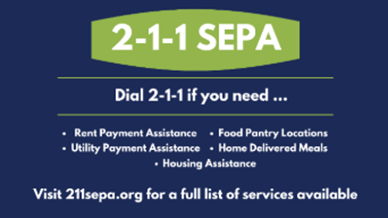
2-1-1 Southeastern Pennsylvania: Health and Human Services
211 SEPA is part of the national 211 Call Centers initiative that seeks to provide health and human services for everyday needs and those in crisis situations.
2-1-1 works with county governments and provider agencies to ensure important local program information is easily accessible.
Visit 211sepa.org for more information. |
|
|
|
|
Mental Health Resources: Call 9-8-8
Chester County residents experiencing mental-health-related crisis or distress can dial 9-8-8 to reach the Suicide and Crisis Lifeline. This system is designed to be a memorable and quick number that connects people in crisis to a trained mental health professional.
Chester County offers additional resources for those in crisis, including Chester County’s warm line, 1-866-846-2722, operated by Certified Peer Specialists, who are individuals in recovery with a lived experience of mental health challenges.
Chester County’s Teen Talk Line ensures seamless referral to Mobile Crisis for youth in need of immediate or higher-level support. The call line is 855-852-TEEN (8336), and the text line is 484-362-9515.
Visit the Department of Human Services website for more information about the 988 system and other state and local mental health resources.
If you or someone you love is in crisis, please don’t give up hope, and please know that you do not need to walk this path alone. We are here and we will do whatever we can to help. |
|

|
|
|
My staff and I are here to help make state government work better for you!
For assistance with the above programs or any other state-related services, please email repotten@pahouse.net, call 484-200-8259, contact us through my website, or visit my district office in Exton and let us know how we can help.
|
|
|
|
District Office 631 North Pottstown Pike |
|
Pennsylvania State Capitol 34 East Wing PO Box 202155 (717) 783-5009 |
|


|