Week 5 of the legislative session was another busy one on Capitol Hill. We’ve been hard at work strengthening Utah’s water future, supporting families, and enhancing public safety in communities across our state.
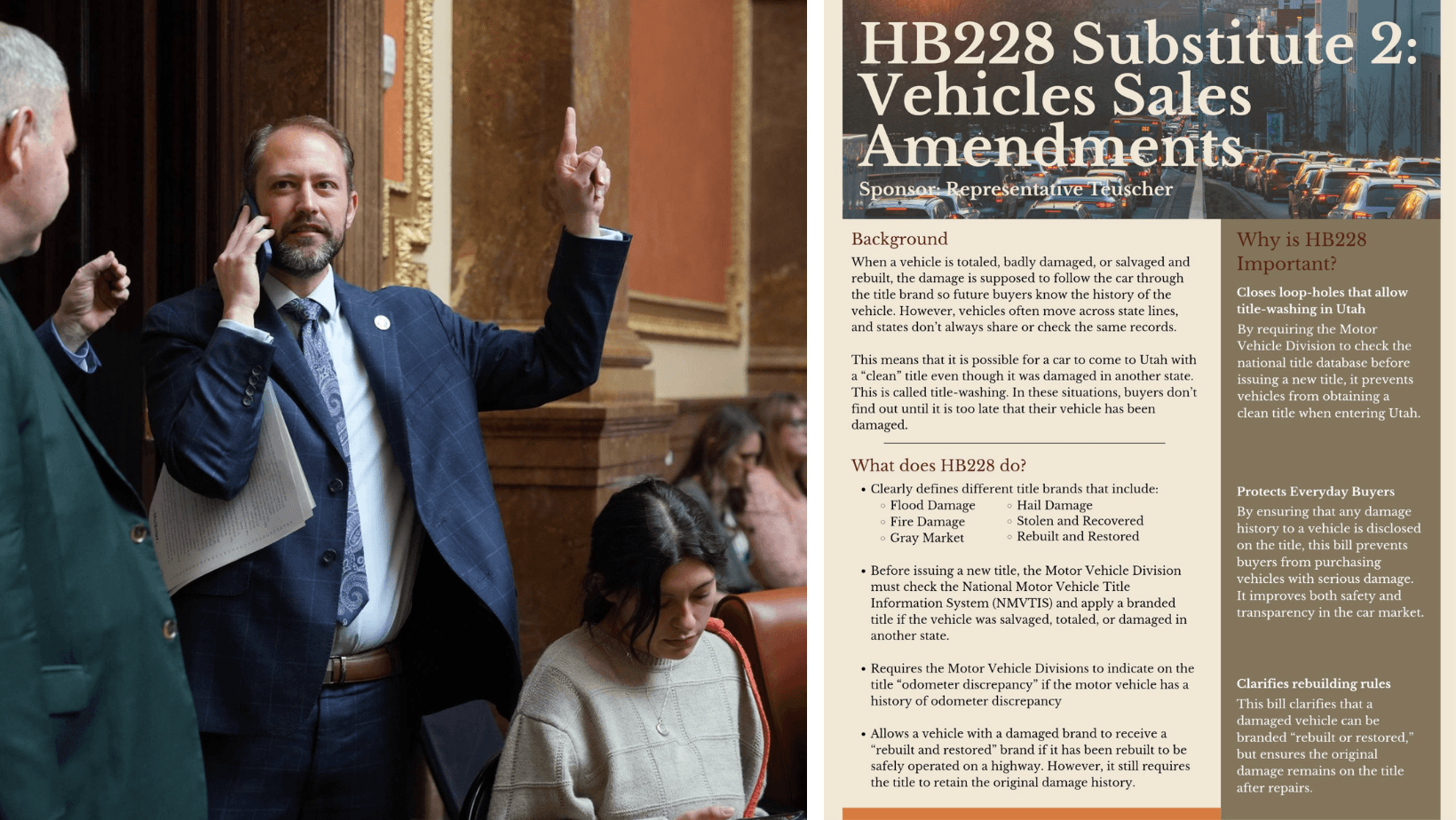
Most of the bills I run start with a conversation from a constituent who ran into a real problem. I genuinely love being able to help when someone calls or emails and says, “This happened to me, and it shouldn’t.” That is exactly where HB228: Vehicle Sales Amendments began.
A constituent purchased a used vehicle for their 16 year old. Not long after, they discovered the car had undergone extensive repairs from severe hail damage. It had actually been totaled in another state, but because Utah does not currently use a hail damage title brand, it was issued a clean Utah title. The buyer had no idea.
That is called title washing, and it should not happen.
HB228 closes that loophole. It creates clear title brands for specific types of damage, including hail damage, and requires the Motor Vehicle Division to check the national title database before issuing a new Utah title. If a vehicle was salvaged or damaged in another state, that history must follow the car.
The bill also requires odometer discrepancy disclosure and clarifies how rebuilt vehicles are labeled, so buyers get full transparency while still allowing properly repaired vehicles to be safely operated and sold.
This is a practical consumer protection bill. It improves transparency in the marketplace, protects families buying vehicles for their kids, and makes sure damage history does not disappear when a car crosses state lines. This bill passed the House unanimously, and I'm thankful to the people who brought this issue to my attention.
Your voice matters in the process. You can follow daily schedules, watch full committee and floor recordings, read bills and livestream proceedings anytime at le.utah.gov.
|
|
Simplifying the Judicial Process
|
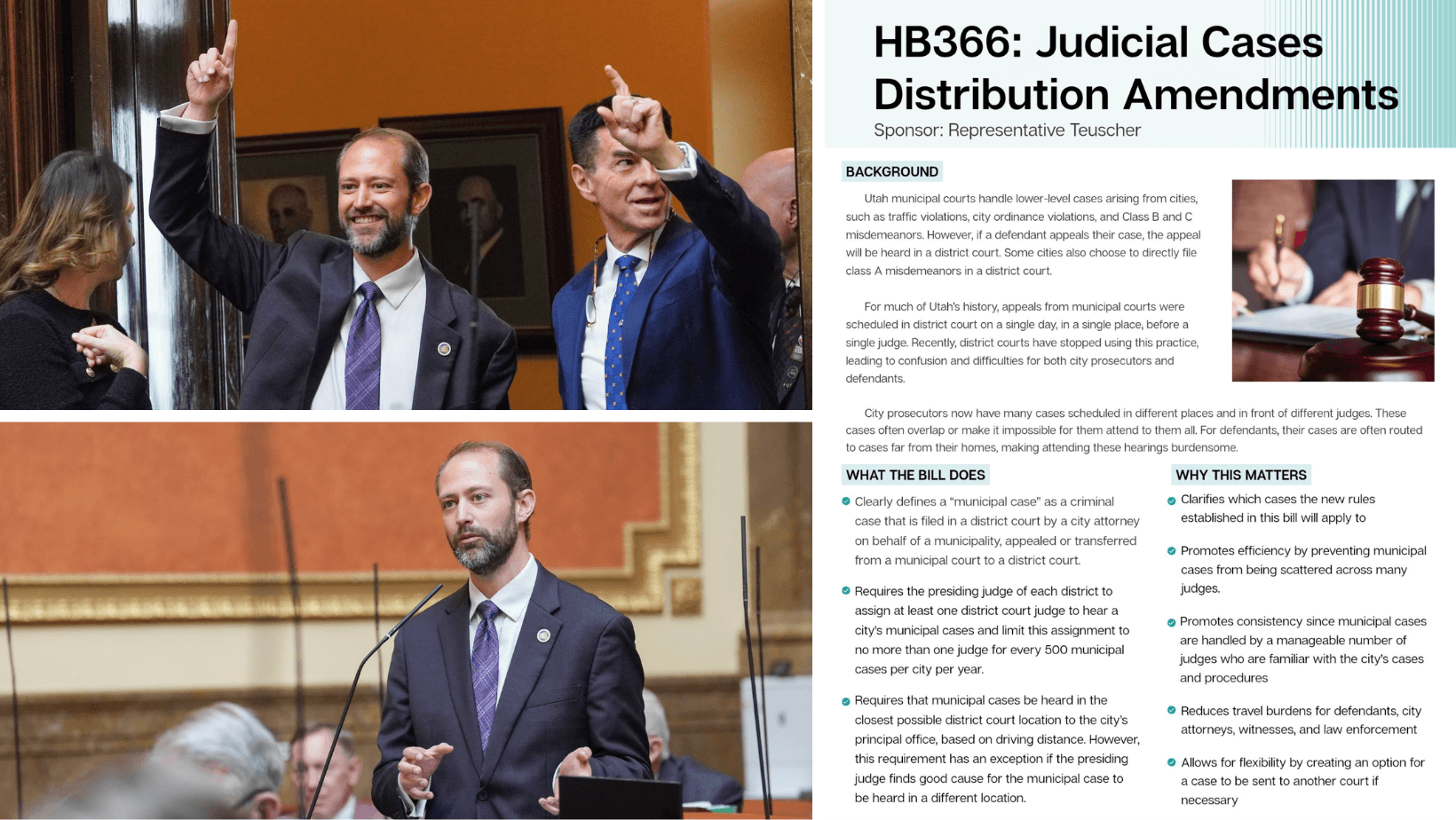
This week, HB366, Judicial Cases Distribution Amendments, passed the House and is now headed to the Senate.
This bill addresses a practical but important issue in our court system. When municipal cases are appealed or filed in district court, they are often scattered across different courthouses and assigned to multiple judges. That creates scheduling conflicts for city prosecutors, confusion for defendants, and unnecessary travel for victims and witnesses, in addition to city attorneys and law enforcement.
HB366 was brought to me by cities throughout the state, including South Jordan, who have experienced these inefficiencies firsthand. The bill brings structure back to the process. It requires district courts to assign a manageable number of judges to handle a city’s municipal cases and directs that those cases be heard in the closest appropriate district court location, based on driving distance.
The goal is straightforward: improve efficiency, increase consistency, and reduce travel burdens for defendants, victims, attorneys, witnesses, and law enforcement. This is not a major policy shift, but it is a meaningful systems fix that helps the courts function more predictably and effectively.
|
|
Meeting with Future Leaders
|
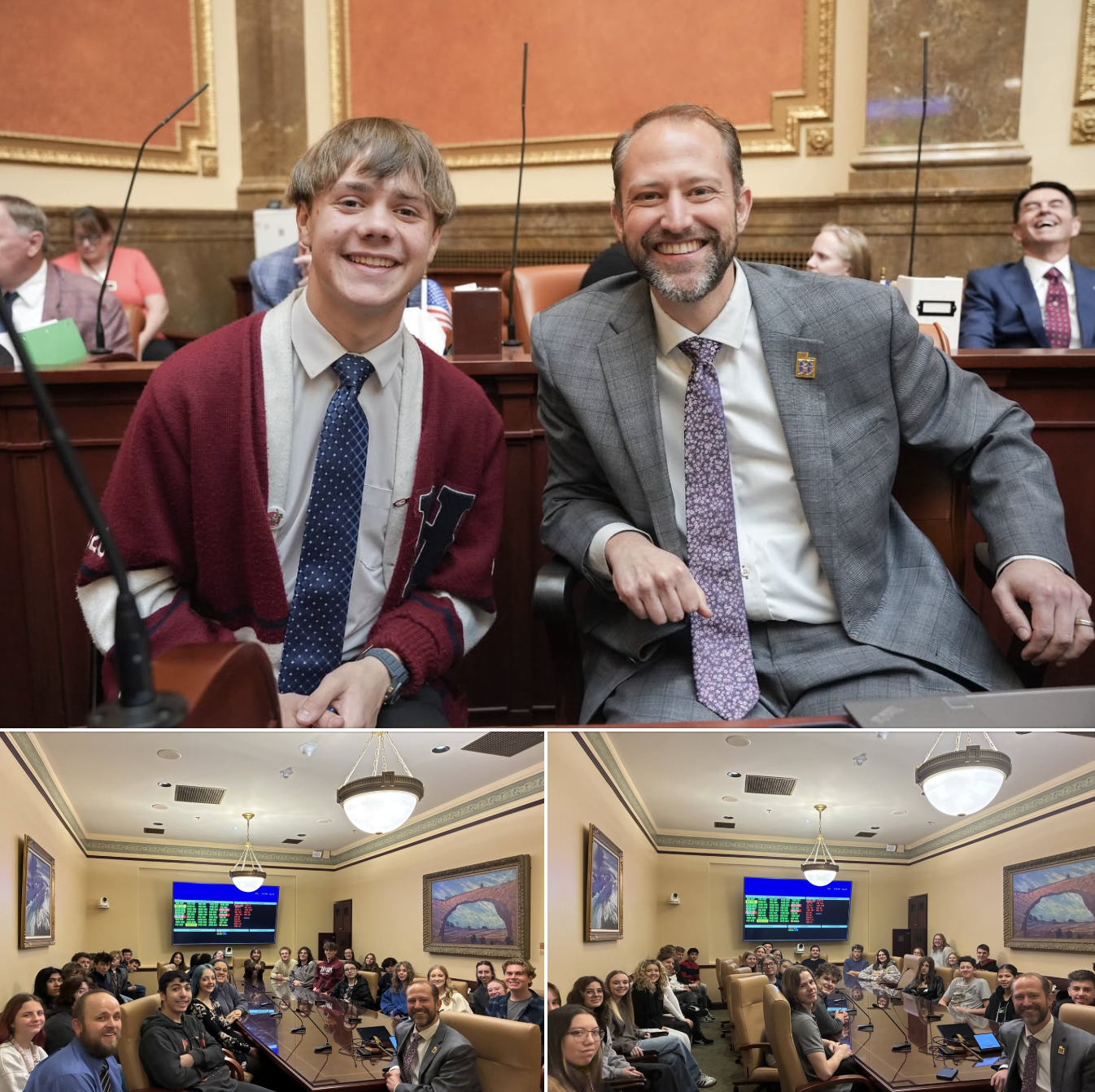
One of the best parts of serving in the Legislature is getting to meet the next generation of leaders.
I had the chance to welcome several impressive students onto the House floor this week, including the student body president from Herriman High School and two AP Government students from Providence Hall High School. They were sharp, engaged, and genuinely curious about how policy gets made.
I also met with students from Herriman High School’s AP Political Science and government classes. We walked through how the legislative process actually works, what happens behind the scenes at the Capitol, and I had the chance to answer some thoughtful questions about the issues facing Utah.
Seeing students take civic engagement seriously, and step up to learn how government works, gives me a lot of hope for the future.
|
|
Protecting Utah’s Water for Generations to Come
|
|
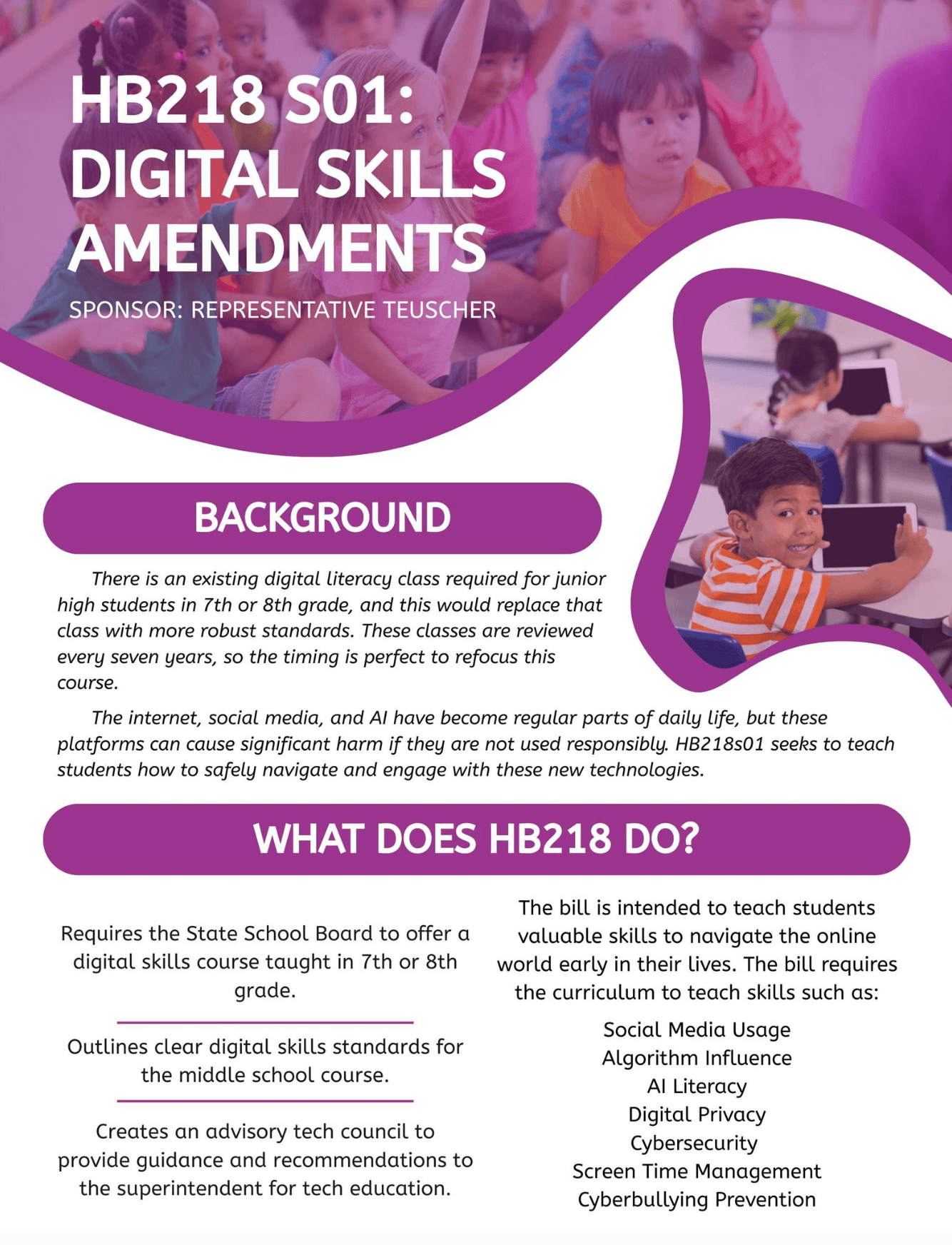
Student Literacy in the Digital Age
|
This bill strengthens Utah’s required digital literacy course for 7th and 8th graders and updates the standards to reflect the world our kids are actually growing up in, including social media, online privacy, cybersecurity, screen time, algorithm influence, and AI literacy.
This is an area I care deeply about. I’ve been fortunate to help lead the charge in the Legislature to protect kids from the harmful impacts of social media, especially the addictive algorithms that are designed to keep them scrolling.
Technology is a powerful tool, but it can also cause real harm if students are not prepared to navigate it safely and responsibly. HB218 is about giving Utah students practical skills to succeed in the digital world, while also helping protect them from its risks.
|
Supporting families isn’t just good policy — it’s essential to Utah’s future. This session, we’re working to provide meaningful relief to parents by expanding the child tax credit, allowing more working families to qualify and keep more of what they earn. We’re also strengthening paid leave policies through extending postpartum recovery leave, adoption leave, and foster leave. We’re also encouraging employers — especially small businesses — to expand child care options by increasing incentives for both on-site and off-site child care support. Together, these efforts help ease financial pressure, expand access to care, and give working parents the stability they need to raise strong families here in Utah.
|
|
Smart Technology, Stronger Classrooms
|
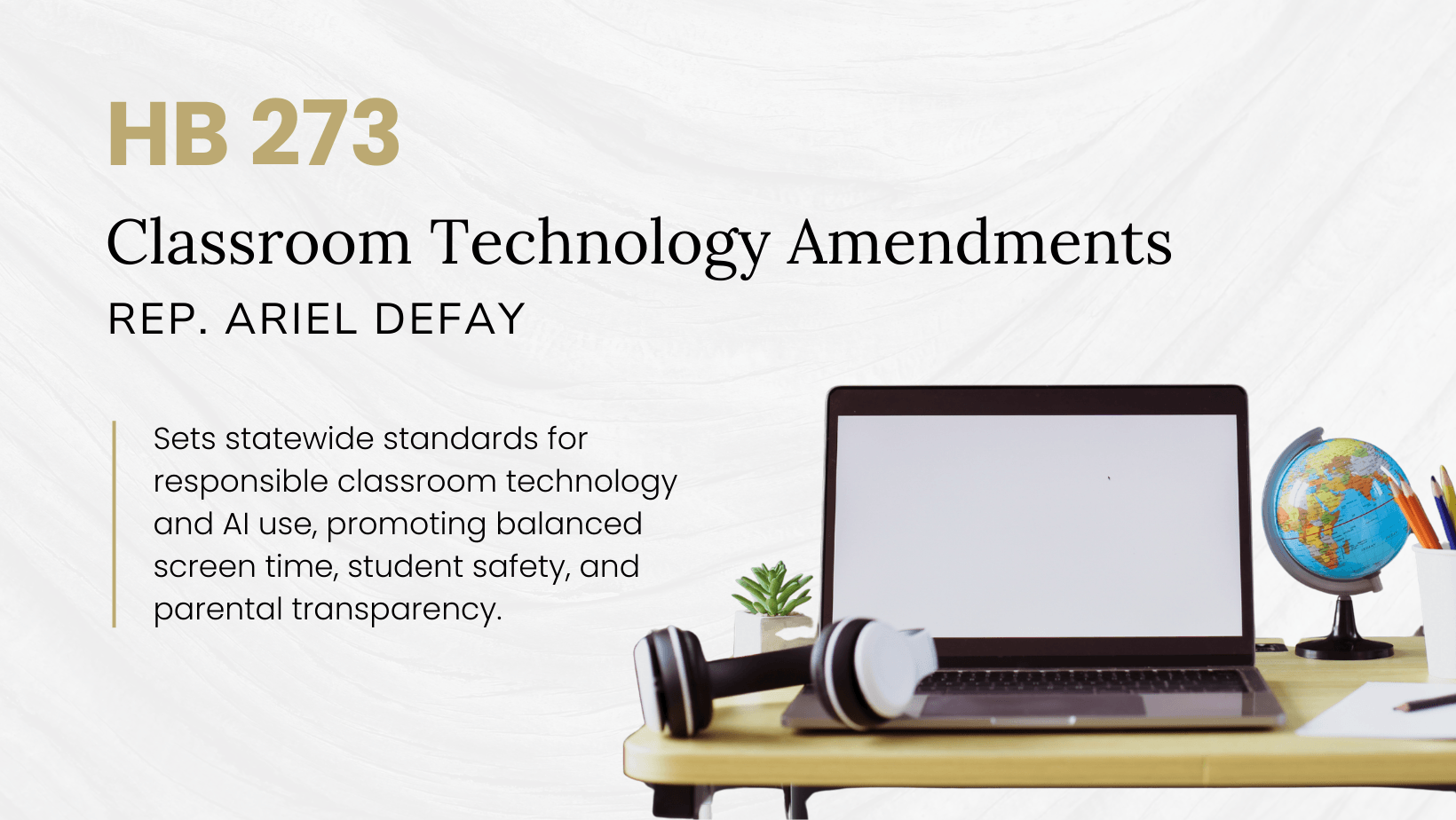
As technology continues to shape our classrooms, we have a responsibility to use it wisely. H.B. 273 Classroom Technology Amendments, which passed the House with bipartisan support, sets clear, age-appropriate standards for technology and AI use in schools. This bill reduces unnecessary screen time in early grades, increases transparency for parents, protects student privacy, and ensures AI is used to support, not replace, quality teaching. It also strengthens computer science education and creates safe, supervised opportunities for students to explore emerging technologies. We can embrace innovation while still putting parents, teachers, and student well-being first.
|
|
Supporting Those Who Protect Us
|
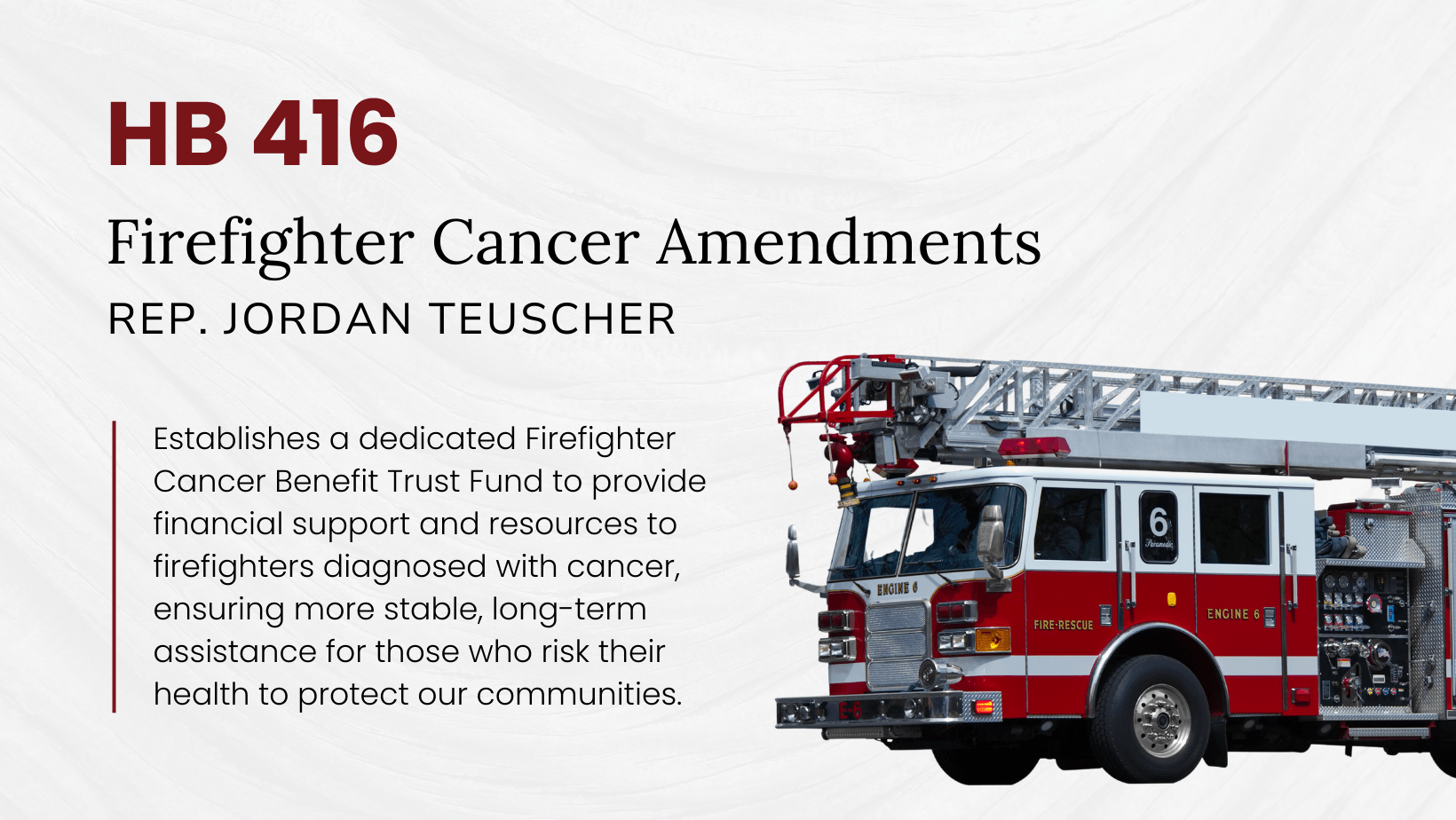
Our firefighters put their lives on the line for us every single day, and they deserve more than just our gratitude — they deserve our support. That’s why I'm sponsoring H.B. 416 Firefighter Cancer Amendments, which builds on groundbreaking cancer screening legislation from last year by creating a dedicated Firefighter Cancer Benefit Trust Fund to provide benefits to firefighters who develop job-related cancers. This legislation leverages existing funding, ensures responsible oversight through a board of trustees, and builds a self-sustaining structure to support those who have sacrificed so much for our communities. I’m deeply grateful for our firefighters and proud to stand by them and their families when they need it most.
|
I would love to hear from you!
|
|