|
|
Dear Friends, At this point in the legislative session, we are in the thick of bill and budget hearings. I serve on the Health and Human Services subcommittee of the Budget and Tax Committee (B&T) and a few times a week, cabinet secretaries from state agencies appear before us to discuss their FY ‘26 budget. The Department of Legislative Services issues a budget analysis, looking over the past year to identify trends, raise issues, and make recommendations that B&T will take into consideration as we work from the Governor’s budget to adopt a balanced FY ’26 budget.
This year, the House considers the budget first – beginning in subcommittees, then in the full Appropriations Committee, before passage by the full House. Once the House passes a budget, it comes to the Senate for consideration and comparison. Differences will be reconciled in a conference committee process.
There are a few important reasons why this year’s budget is so challenging. First, we are beginning with a nearly $3 billion shortfall which I have discussed in prior newsletters and is more fully explained below. Second, the Governor’s budget was introduced with a number of cuts to programs (for example, cuts to the Developmental Disabilities Administration) that the legislature would like to try to make whole. Third, we anticipate that the state will need to compensate victims of child sexual abuse where those occurrences took place in state institutions. While those negotiations are ongoing, Maryland could be liable for billions of dollars. And finally, we are less than a month into the Trump Administration that is taking a wrecking ball to many federal programs, which the state relies on for funding.
At this moment, we have no idea what the full impact will be on the more than 160,000 federal workers who live in Maryland and the essential services they provide to residents and institutions. In just one example, Johns Hopkins University, which receives more federal research funds than any other institution of higher education in the nation, is at risk of losing funding. These funds support scientists’ critical research on disease, clinical trials with sick patients, cancer research, the building and operation of labs, etc. Slashing their federal funding could have devastating consequences for the institution, the surrounding community, and the countless individuals whose careers are dependent on that support for their livelihood.
We are always mindful of how the budget affects your life – because it does every day. It supports our schools, law enforcement, libraries, hospitals and healthcare system, transportation system, roads, courts, and public parks. Our budget is supported by both our federal and state tax dollars and we take the responsibility seriously to put them to good use.
We may take for granted how important our state and federal workers are to a functioning government. I fear that as unelected billionaire Elon Musk wreaks havoc to our federal workforce and agencies, obliterates systems that are meant to serve as a check and balance to abuse (i.e., the Office of Government Ethics, 11 Inspectors General, etc.), it is just a matter of time before we will face even more difficult decisions in-state.
These are some of the issues that make this year particularly challenging. Rest assured that we are facing these daunting times with a seriousness of purpose and with great consideration.
Take care & stay involved,
|
|
|
Shelly L. Hettleman |
|
|
|

|
|
|
|
|

|
|
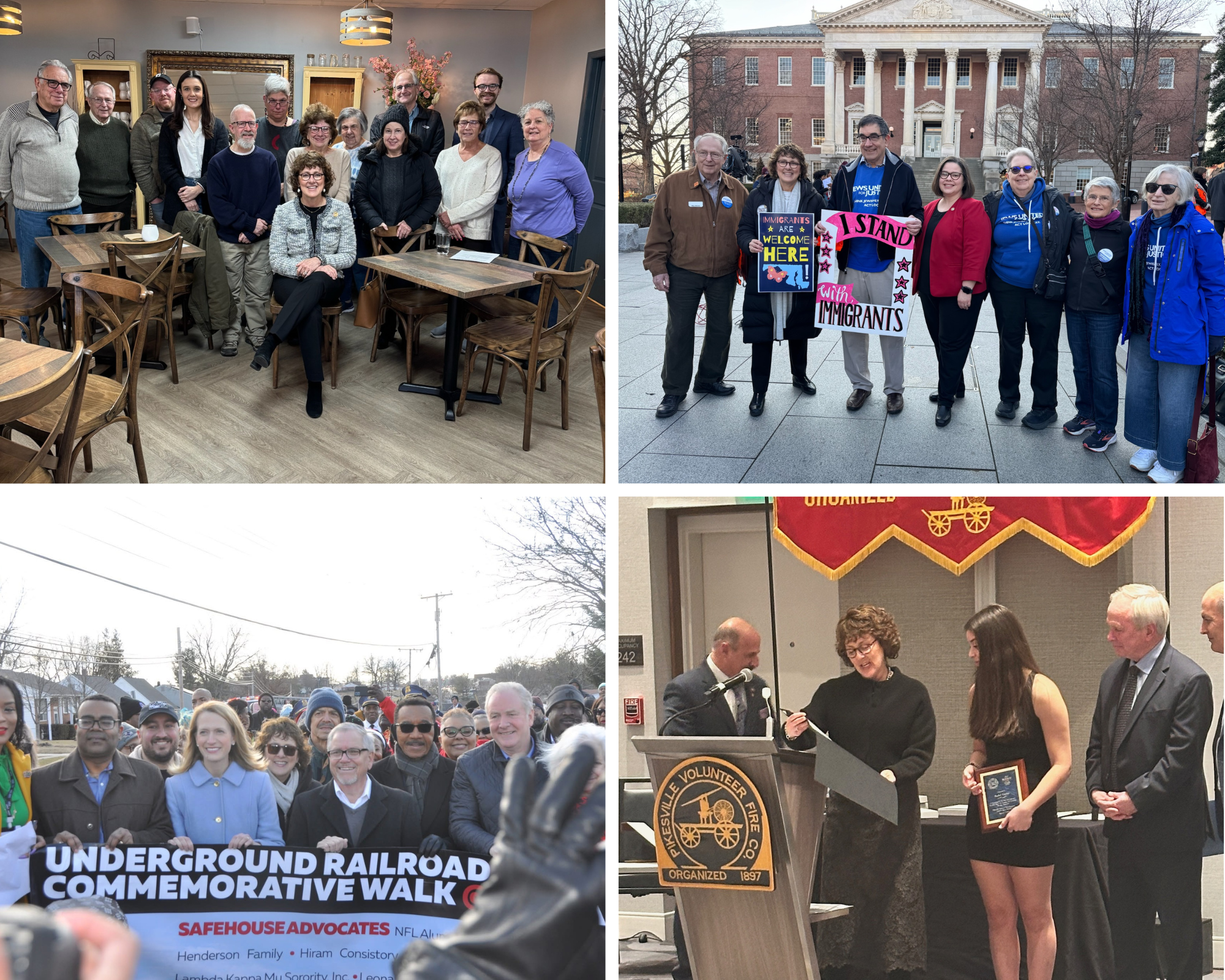
Top left: Many thanks to all those who joined me for our first Shelly@thedeli at Gourmet Girls! We had a good discussion about what's happening in session, including the state budget and energy prices, as well as what's happening locally.
Top right: I saw a number of constituents at last week's rally on immigration, where folks were advocating for increased protections for this vulnerable community.
Bottom left: I was thrilled to join the community and many colleagues at Emmarts United Methodist Church for a commemorative walk highlighting the importance of the area and the church in the Underground Railroad movement. It was the perfect way to kick off Black History Month!
|
|
|
|

|
People across the region, myself included, are now facing substantially higher utility costs. These increases are due to multiple factors, including:
A leadership package of bills to strengthen the affordability, reliability, and predictability of our energy grid has just been introduced. The legislation will: bring down consumers' bills; ensure the reliability of our energy grid to prevent cascading blackouts; and create predictability in our regulatory environment. Demand for electricity in Maryland and through the nation is raising at an untenable rate at the same time that coal and oil electric generation stations are retiring. This mismatch between supply and demand led to a 2025/2026 capacity auction where energy prices increased by 800% compared to the prior year. As a result, we expect Marylanders' bills to rise even more this summer to account for these rising prices and new transmission. That is why it is so important for the General Assembly to act on this package this session:
1) The Next Generation Energy Act -- enabling more in-state generation (likely natural gas and expanded nuclear) because it is the most affordable, reliable, and the fastest energy source available while reducing reliance on dirtier fossil fuels like coal and oil. We need to be realistic about the development of zero-emission energy technologies and while solar generation and battery storage technology still need time to develop, we need to act now. New nuclear technology is an exciting possibility but will likely take a number of years to develop. Unfortunately, we cannot rely on offshore wind energy in the face of the Trump Administration's expected opposition.
2) Renewable Energy Certainty Act, SB931 - we must remove roadblocks to create regulatory certainty for the siting and permitting of projects and we need to explore the possibility of generation and utility companies partnering to construct new generation, spreading risk among multiple entities.
3) Resource Adequacy and Planning Act, SB909 - we need to increase our technical expertise and create an independent office within the Maryland Public Service Commission to engage in long-term modeling and forecasting so we can decrease our reliance on PJM, our regional transmission operator.
4) The Ratepayer Protection Act, SB998 will require BGE to prioritize safety and cost-effectiveness in deciding whether to repair or replace, rather than wholesale replacement, of gas infrastructure.
Please check out these BGE resources for assistance. |
|
|
|
|
As you've probably heard, Maryland is currently experiencing a nearly $3 billion budget deficit. As a member of the Budget and Taxation Committee, I've been hard at work to develop a balanced budget that addresses our deficit while continuing to support essential services. |
|
Despite attempts to oversimplify the reasons for Maryland’s $2.8 billion deficit, it is vital that we understand how we got here. There was a confluence of issues: a one-time influx of federal money for COVID-19 aid that was required to be spent quickly; a stagnant economy reeling from sluggish employment and population growth, and unexpected cost increases in programs such as Medicaid, childcare scholarships, and the medical costs of our incarcerated population.
Federal aid Maryland received during COVID was critical in enabling us to provide much-needed support to residents, businesses, local governments, and nonprofits. It was used to boost the economy in a time of acute need by funding one-time capital projects in communities across the State, and to fund parks and recreational areas, school construction, homeownership programs, and environmental protection initiatives. These were welcomed resources, but they were not a reliable indicator of the health of the State’s budget, which is why the MGA prudently socked away a significant portion of surplus funds as a hedge against future financial challenges.
First, the General Assembly and Governor used pandemic relief funds to significantly increase the State’s Rainy-Day Fund by well over $1.2 billion. Second, significant deposits were also made into the Dedicated Purpose Account, a fund created to fund very specific projects. Finally, the State invested in K-12 education by diverting over $1.7 billion in surpluses to the Blueprint for Maryland’s Future Fund to ensure the State has the resources needed to meet our education policy reform commitments.
We will continue to invest in core programs that support our most vulnerable residents and focus on putting our economy back on the track of sustainable growth. We have daunting challenges ahead of us. And, this is even before we fully understand the effects of Elon Musk's DOGE efforts that are already having an impact on federal funds our state agencies are able to access. There is significant work ahead of us and it is important to understand some of the context in which we will be making decisions. |
|
|
|

|
SB327/HB390 Affordable Housing Payment In Lieu of Taxes (PILOT) Expansion Act Allows all Maryland counties to offer a local property tax break to existing housing that commits to keeping it affordable for at least 15 years. It will encourage the development of new housing options that are within reach for low- and moderate-income families, while making sure that existing units remain available and accessible.
Requires the Maryland Department of Transportation (MDOT) to study the environmental impacts of the state’s highway expansion projects and fund activities that offset the projects’ greenhouse gas emissions, leading to more options for eco-friendly transportation.
SB83/HB845 Public Health - Overdose and Infectious Disease Prevention Services Program Allows community-based organizations (for example, hospitals, clinics, and religious congregations) to create overdose prevention programs in Maryland to provide safe, supervised locations for people to consume pre-obtained drugs. The programs would also offer medical services, make referrals to healthcare and rehabilitative resources, and educate participants on safe drug use and sexual health. Evidence demonstrates that
SB598/HB585 Property Tax – Low–Income Housing Tax Credit – Valuation of Property Alters the process by which the State Department of Assessments and Taxation (SDAT) determines the value of income producing commercial real property developed under specific provisions of federal law related to low-income housing. Ultimately, it is about make a more efficient and effective method of assessing the value of property funded using the federal Low Income Housing Tax Credit program. |
|
|
|

|
Linked below are some recent news articles I was featured in (many of which discuss my legislative initiatives, including my medical and geriatric parole bill, Transportation and Climate Alignment Act, and Anti-SLAPP bill ).
Medical and geriatric parole bill back before Senate panel
Maryland could make it a crime to use AI to create harmful impersonations (need to gift this article) Sierra Club poll finds wide support for more transit, walking and biking investments
Campaign to bolster Maryland’s weak anti-SLAPP law gets a boost from a Baltimore story |
|
|
|

|
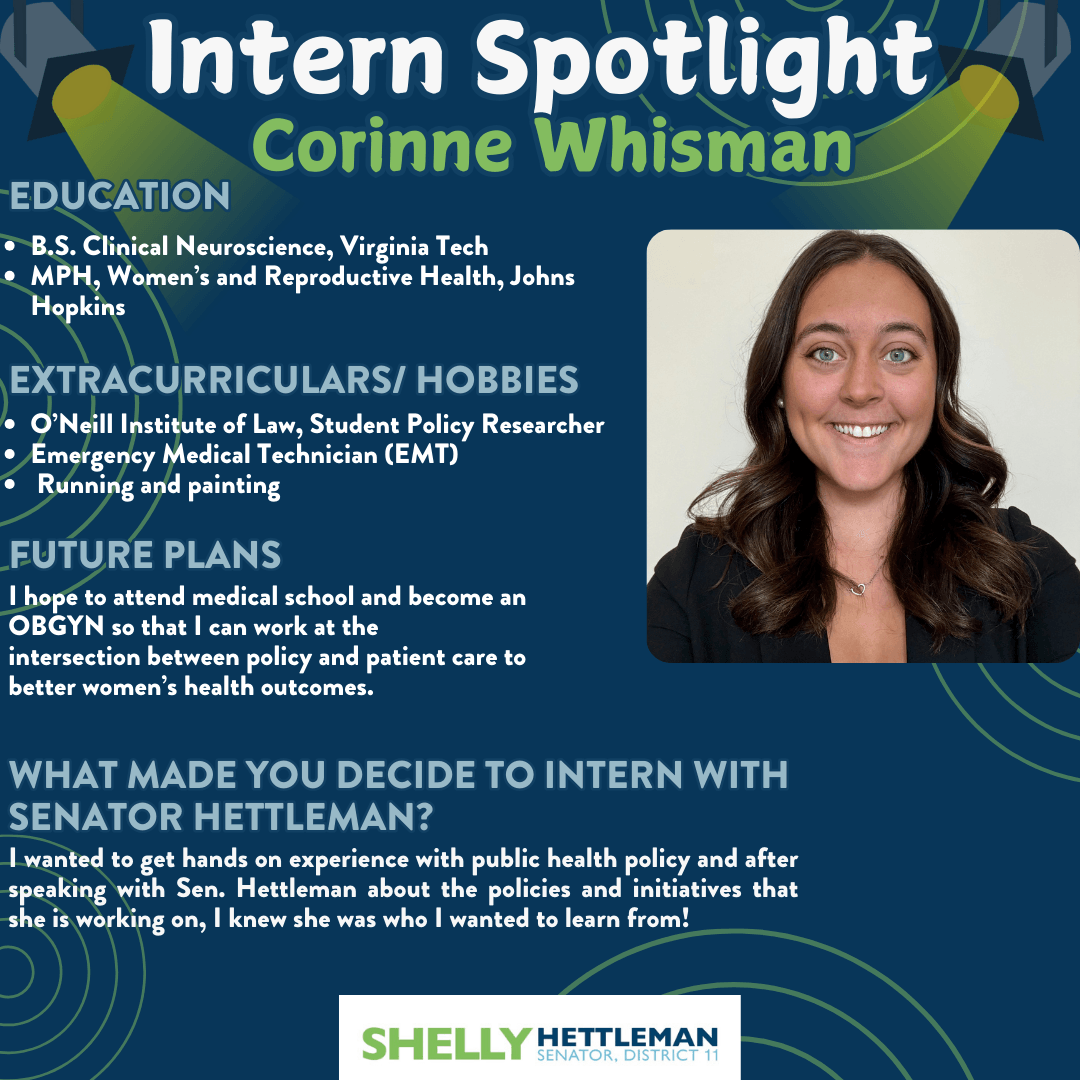
Throughout these next few newsletters, we'll be highlighting one of our office's interns/staff members, whose hard work and support are very much appreciated! |
|
|
|
|
|
As we approach a time of turbulation for the Latino and immigrant populations of our state. The Latino Caucus Remains committed to ensuring that families stay together, and rights are respected.
For this reason, we are sharing the following resources for all offices to use and share amongst their constituents:
CASA Immigration Hotline (1-888-214-6016): This hotline will be providing all assistance possible as it relates to immigration support and immigration questions by constituents. The number will also serve as a tipline where constituents can report sightings and interactions with agencies such as ICE. The hotline is open 24/7 and is available in English, Spanish, and French
Latino Caucus Legal Rights Cards: The Maryland Legislative Latino Caucus will have packets of Know your Rights card pages available for legislators who would like to share them with their constituents. Each MLLC package has 30 pages worth of cards ready to be picked up. Feel free to stop by our office (House of Delegates, Room 200) if you would like a package, or reach out if you would like one delivered.
AMICA Legal Services: AMICA provides free legal representation to undocumented Marylanders in the custody of ICE. For more information, visit Amica's website. |
|
|
|

|
|
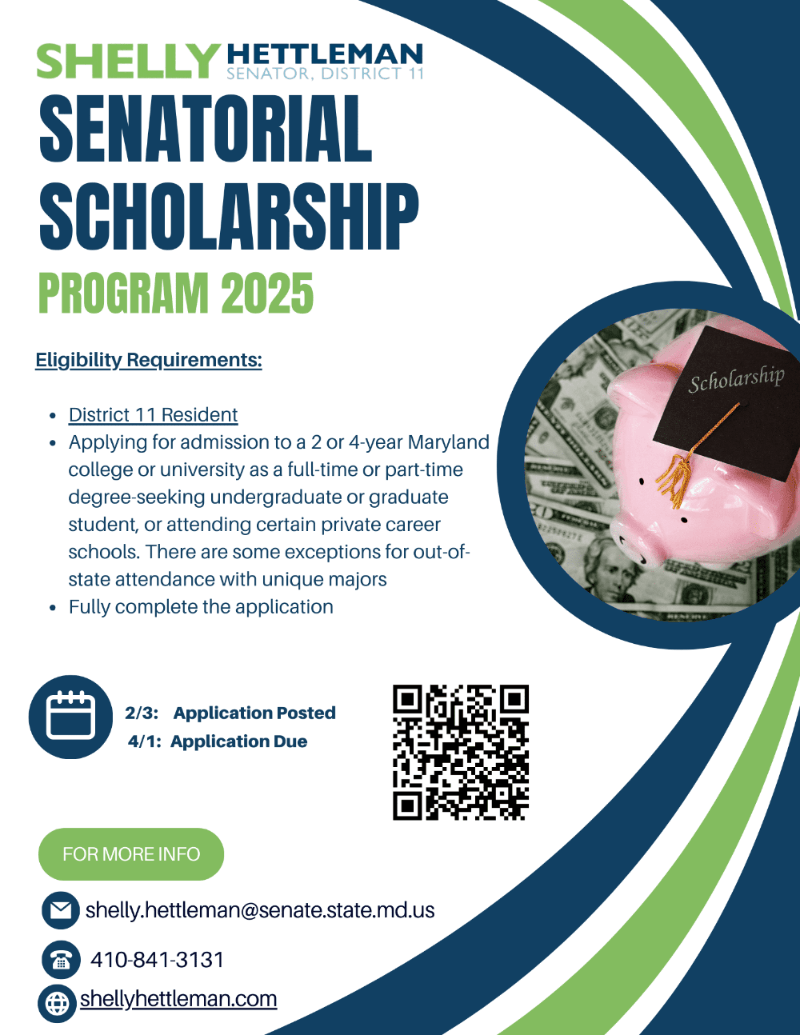
For more information, please visit here. |
|
|
|
|
The application portal is now open for individuals to service in Class 3 of Service Year Option, Members for Class 3, beginning in September 2025!
This is your opportunity to serve, grow, and build your future through a paid, nine-month service experience with wraparound supports to ensure your success. As a Service Year Option Member, you will receive:
Start your journey today! Apply Now at serve.maryland.gov
This is your amazing chance to be part of something bigger—Don’t wait! Apply today and be part of the movement that’s transforming Maryland through service.
If you have any questions, please email applytoserve@maryland.gov. |
|
|
|

|
|
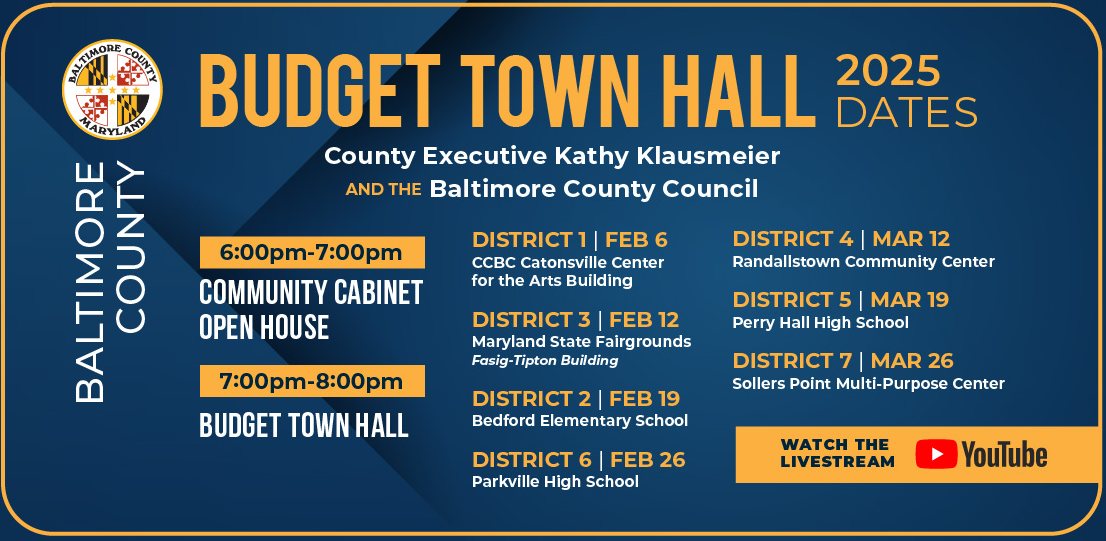
The District 2 Budget Town Hall will be on Wednesday, February 19, 2025 at Bedford Elementary School (7320 Campfield Rd., Pikesville, MD 21208).
For those unable to attend, the Budget Hall meeting will be live-streamed on the Baltimore County Government’s YouTube page. |
|
|
|

2025 REDISTRICTING COMMISSION |
|
On December 16, 2024, the County Council passed Resolution 47-24 to establish the 2025 Redistricting Commission. This followed the approval of the Council expansion (from 7 Council members to 9 Council members) ballot question at the 2024 general election by Baltimore County voters. The Commission’s objective is to make recommendations and submit a final report to the County Council on the configuration of the nine Council districts for the 2026 election.
The 2025 Redistricting Commission has scheduled its first public hearing for Thursday, February 20, 2025 at 6:00 p.m. The public hearing will be held in the Council Chambers.
For more information, please visit https://countycouncil.baltimorecountymd.gov/redistricting/. |
|
|
|
CAREER CENTER LOCATIONS
|
|

|
|
|

|
Four high school students are coordinating an event for BCPS middle school students interested in technology and cybersecurity. The inaugural BCPS Cyber Games will be open to all BCPS middle schoolers, regardless of experience. The games will take place on Saturday, February 22, from 11 a.m. - 3 p.m., at Dumbarton Middle School, 300 Dumbarton Rd., Baltimore 21212.
To register or learn more, please visit the Cyber Games website. |
|
|
|

|
|
|
|
|
|
|

|
For more information and to register, please visit https://www.baltimorecountymd.gov/departments/police/community/citizen-programs. |
|
|
|

|
|
Do you think you may have been cheated on your wages? |
|
The U.S. Department of Labor is urging workers who believe they might be owed unpaid wages to check out the department’s Workers Owed Wages, or WOW, database to see if the agency has money for them.
For more information, please visit https://ow.ly/pJzc50UBmju |
|
|
|
|
|
|
|
Unsubscribe from future updates |