|
|
Dear Friends,
This is an extremely busy time in Annapolis. As I write this, I have an afternoon of 5 bill hearings in 3 different committees. The topics range from teacher vetting, expanding opportunities for STEM teachers, enabling police officers to enforce traffic laws on certain private roads, making our tax system fairer, and making life safer for Jewish students and others who experience hate crimes on our colleges and university campuses.
It is a particularly challenging time for our state budget. We began session with a $3 billion shortfall and we anticipate the Board of Revenue Estimates to announce later this week that the national headwinds are having a negative impact on Maryland revenues. Our state relies heavily on the federal government in innumerable ways: we have over 160,000 direct federal workers whose jobs are at risk; we have thousands of contractors, over 1,200 of whom have already lost their positions; and many of our higher education institutions depend on federal grants to do essential research on a wide variety of issues, including trying to find cures for deadly diseases. They will be forced to make difficult decisions about their employees should those reductions proceed as expected.
The Governor introduced his budget that included cuts of nearly $2 billion and revenue of almost $1 billion. Accompanying the budget is a document called the Budget Reconciliation Financing Act, known as the BRFA, that makes statutory changes to balance the budget. There are many formulas in our law that dictate how certain services are funded, but if we have to alter the funding, we must also change what’s in statute, which happens via the BRFA. This year, the BRFA is particularly large, and was heard late last week with the Governor testifying before the committee on which I serve, the Budget and Taxation Committee. The Department of Legislative Services (DLS) provides an analysis of the BRFA that you can read here. Please note that while DLS makes certain recommendations, the General Assembly is not bound by this advice, and will make its own independent decisions.
Given this year’s unprecedented fiscal challenges, we must consider a variety of revenue options, along with additional cuts to services, to balance our budget. For that reason, I have recently introduced a bill that would tax business to business services. This bill is meant to generate discussion – there will be a hearing on the bill soon – and provides additional options for us to consider as we strive to meet our fiscal challenges. The sales tax has not kept up with how our economy has evolved. When we were manufacturing based, we taxed goods. We are now service-based, so this bill reflects the new realities of how our economy operates, imposing a 2.5% tax on business to business services. I do not do this lightly, but believe all options for revenue need to be considered.
We are attempting to craft a balanced budget in the midst of so many unknowns at the federal level. On March 14th, the federal government is due to run out of funding, so we anxiously await Congress’ actions and are concerned that significant cuts to programs like Medicaid could have an awful effect on our state. However, we must continue moving the budget process forward, given our 90-day time constraints.
While most of my attention this session has focused on the budget, our committee hearing process carries on and I continue to advocate for my bills that you can find here. We highlight a few of them below and will provide an update as (hopefully!) more of my bills move before our March 17th crossover date (the date by which bills must pass one house to be guaranteed a hearing in the other).
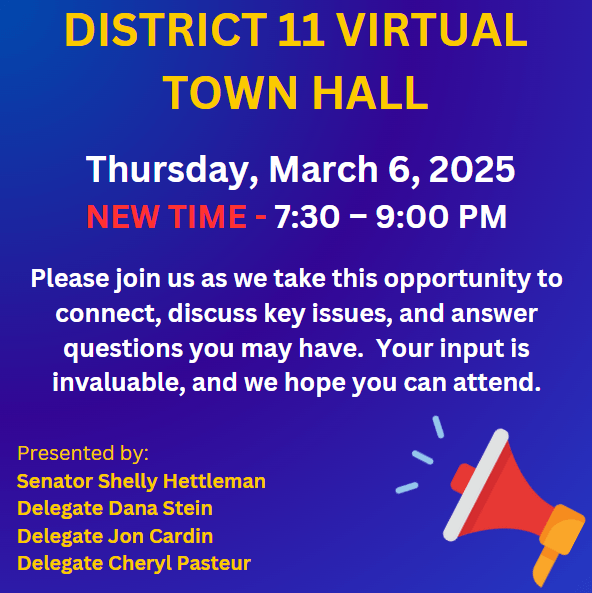
I hope you can join us for our Town Hall – see graphic below. You can submit questions here. My District 11 colleagues and I will look forward to seeing you online.
As always, I don’t take these difficult decisions lightly. We are living in extraordinary times, and I appreciate your consideration as we navigate them. As always, I welcome your feedback.
Sincerely |
|
|
Shelly L. Hettleman |
|
|
NEW TIME: The District 11 Virtual Town Hall will now be taking place on Thursday, March 6th from 7:30-9:00pm.
To register for the event and submit your questions, please fill out this form. |
|
|
|

|
|
|
|
|

|
|
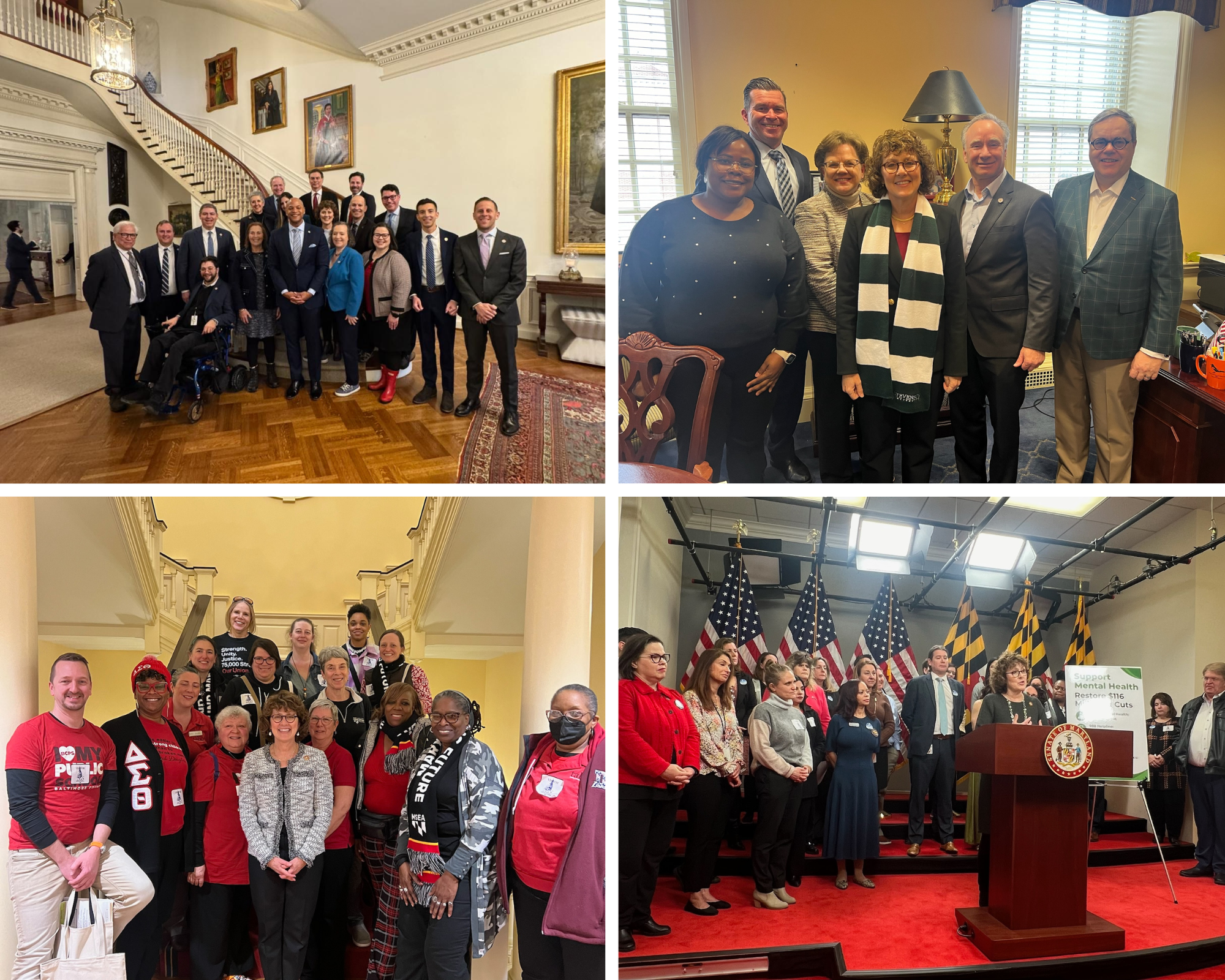
Top left: Thank you to Governor Wes Moore for hosting the annual Legislative Jewish Caucus breakfast- we are so grateful for your support and partnership!
Top right: I had a great time meeting with MD Independent Colleges and Universities Assoc. and Baltimore County Public Library representatives. It’s been wonderful connecting with many of my constituents these past few weeks.
Bottom left: Thank you TABCO (Teachers' Association of Baltimore County) for paying me a visit and sharing their valuable perspectives.
Bottom right: Speaking at a press conference in support of restoring more than $116 million in state mental health services. This session, I’m sponsoring a bill to continue these crisis response behavioral health grants (SB599/HB1049). |
|
|
|
|
My office continues to hear from people across the region facing substantially higher utility costs. These increases are due to multiple factors and there are legislative options that seek to address these concerns which I have included in previous newsletters. If you are struggling to pay your utility bill there is help available. You may consider applying for financial assistance from OHEP. OHEP is a state-run program that helps income-eligible households pay their energy and fuel bills. You do not need a turn-off notice to apply. When you fill out the OHEP application you are applying for four grants and for free weatherization for your home to help lower your monthly costs. For more information on OHEP, click here. Please check out these energy assistance resources from the Office of the People's Counsel. |
|
|
|

|
SB 914: Baltimore County Public Library – Collective Bargaining – Supervisory Employees This legislation would allow supervisors who work at the Baltimore County Public Library to join their own group (called a bargaining unit) to negotiate things like pay, benefits, and working conditions. Under current law, only non-supervisory employees have this option. The new law would create a separate group specifically for supervisors to do the same.
SB 846: Business Regulation - Cellular Phone Carriers - Service Contract Requirement This bill will require cell phone carriers to allow customers on shared plans to designate multiple people that can have permissions to modify, alter, or cancel the account. All authorized users must agree to this arrangement in writing when the contract is created. This ensures that if the “primary user” on the account is unavailable, other designated users can still make changes. |
|
|
|

|
Linked below are some recent news articles I was featured in (many of which discuss my legislative initiatives).
Maryland behavioral health advocates balk at more than $100M in proposed cuts
|
|
|
|

|
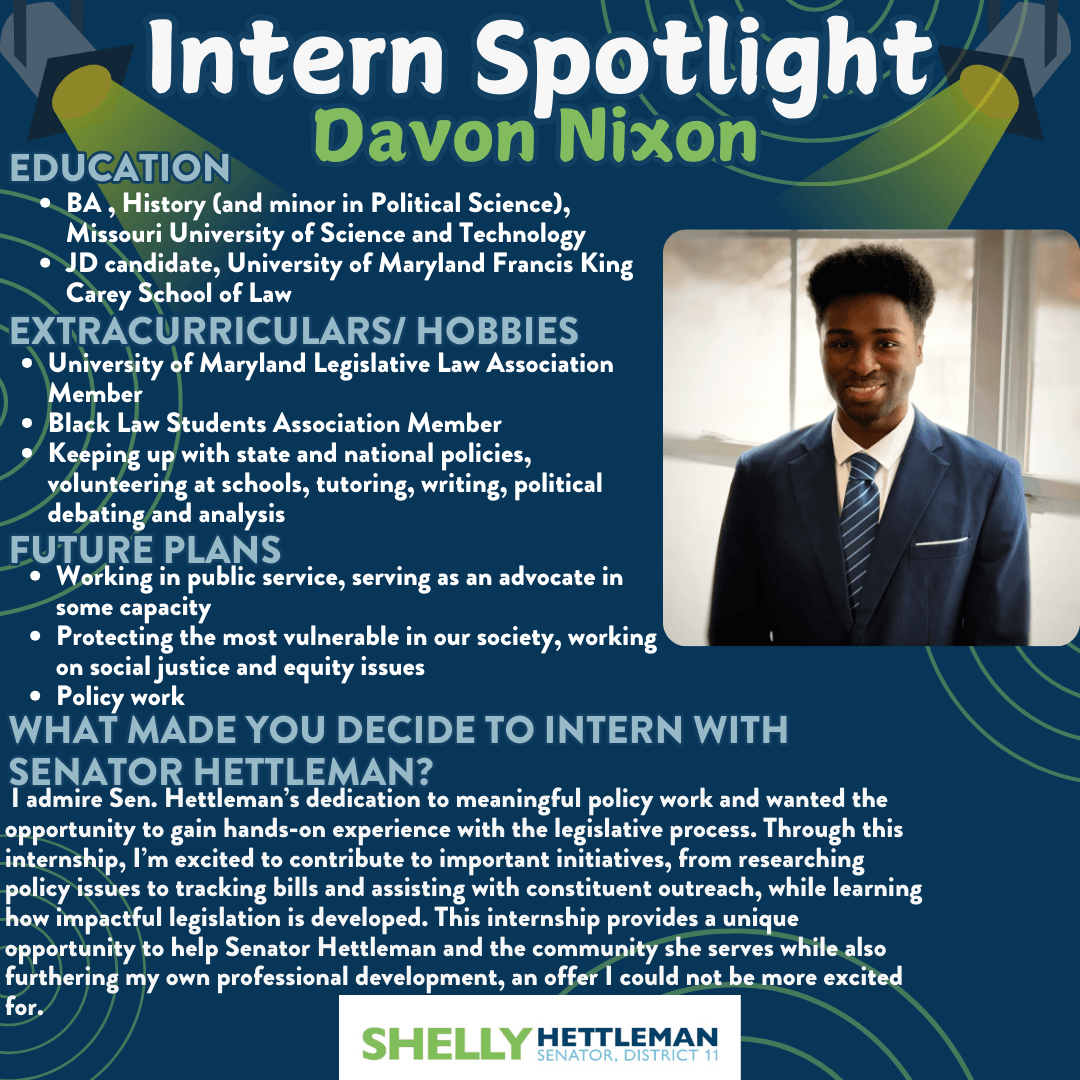
Throughout these next few newsletters, we'll be highlighting one of our office's interns/staff members, whose hard work and support are very much appreciated! |
|
|
|
|

|
|
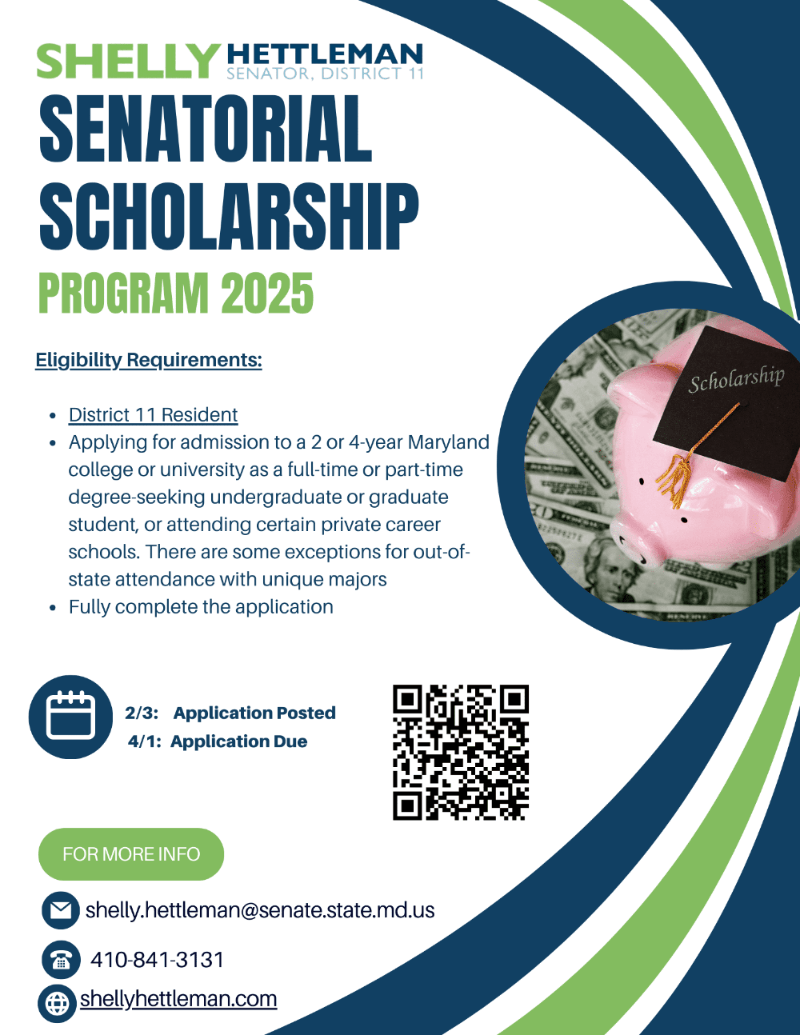
For more information and to apply, please visit here. |
|
|
|

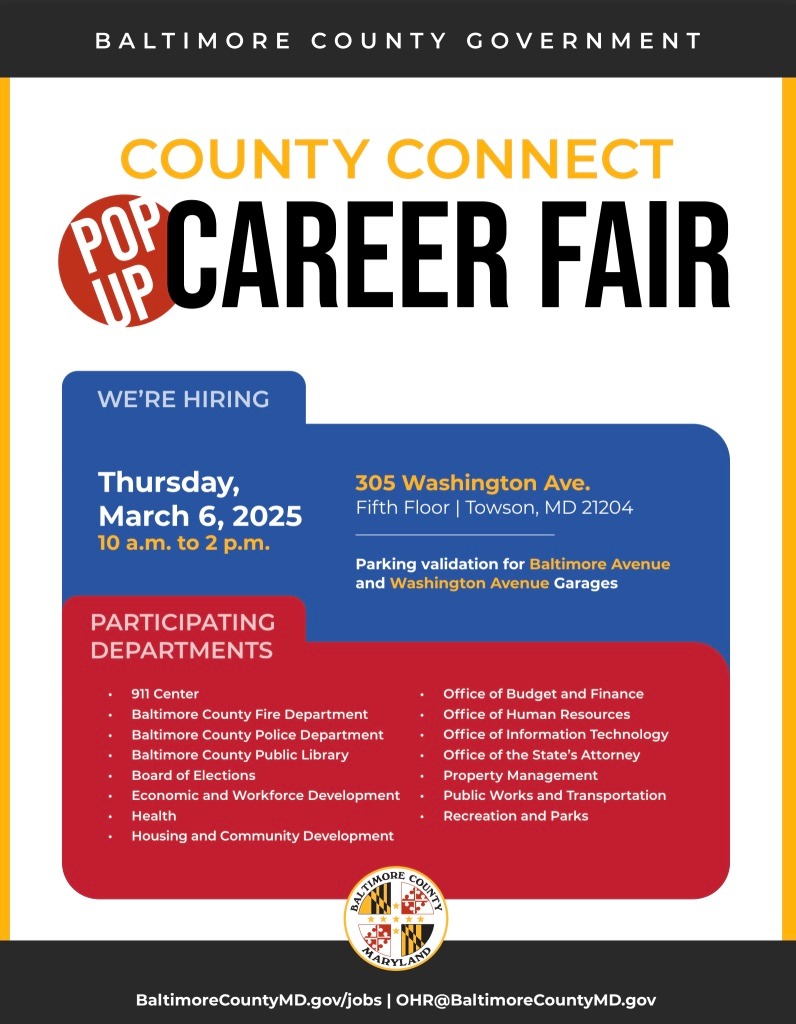
Are you a federal worker or contractor who recently lost your job (or fear you will)? |
|
If yes, please check out these Maryland resources for assistance. |
|
|
|
|
|
|

|
The project aims to make our communities safer for pedestrians, bicyclists and runners. There are proposed changes in our neighborhoods, so please take some time to provide your thoughts. For more information about the project and to leave your feedback, please visit here. |
|
|
|

|
For more information and to register, please visit https://www.baltimorecountymd.gov/departments/police/community/citizen-programs. |
|
|
|
|
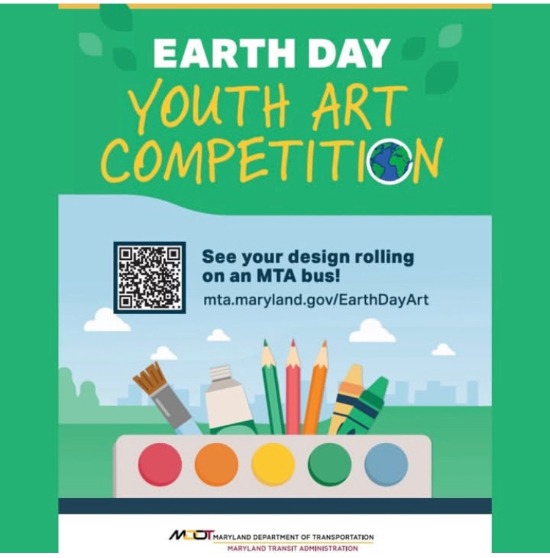
The Maryland Transit Administration is now accepting submissions for its second annual Earth Day Art Competition. Young artists (aged 5-17) from across Maryland are invited to submit their artwork, which should highlight the connection between public transportation and sustainability. The finalists' artwork will be showcased on a specially wrapped bus, transforming it into a mobile celebration of sustainability and artistic expression. The submission deadline for artwork is March 17.
Submit your artwork here. |
|
|
|
|
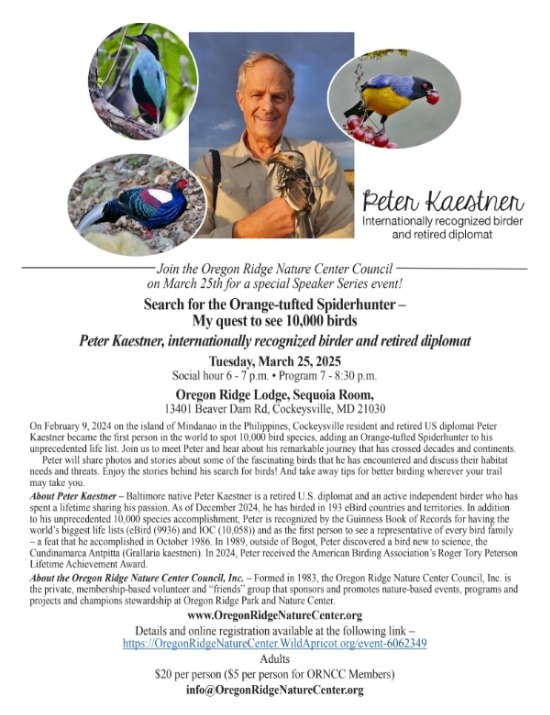
Please register for the event here- https://oregonridgenaturecenter.wildapricot.org/. |
|
|
|
|
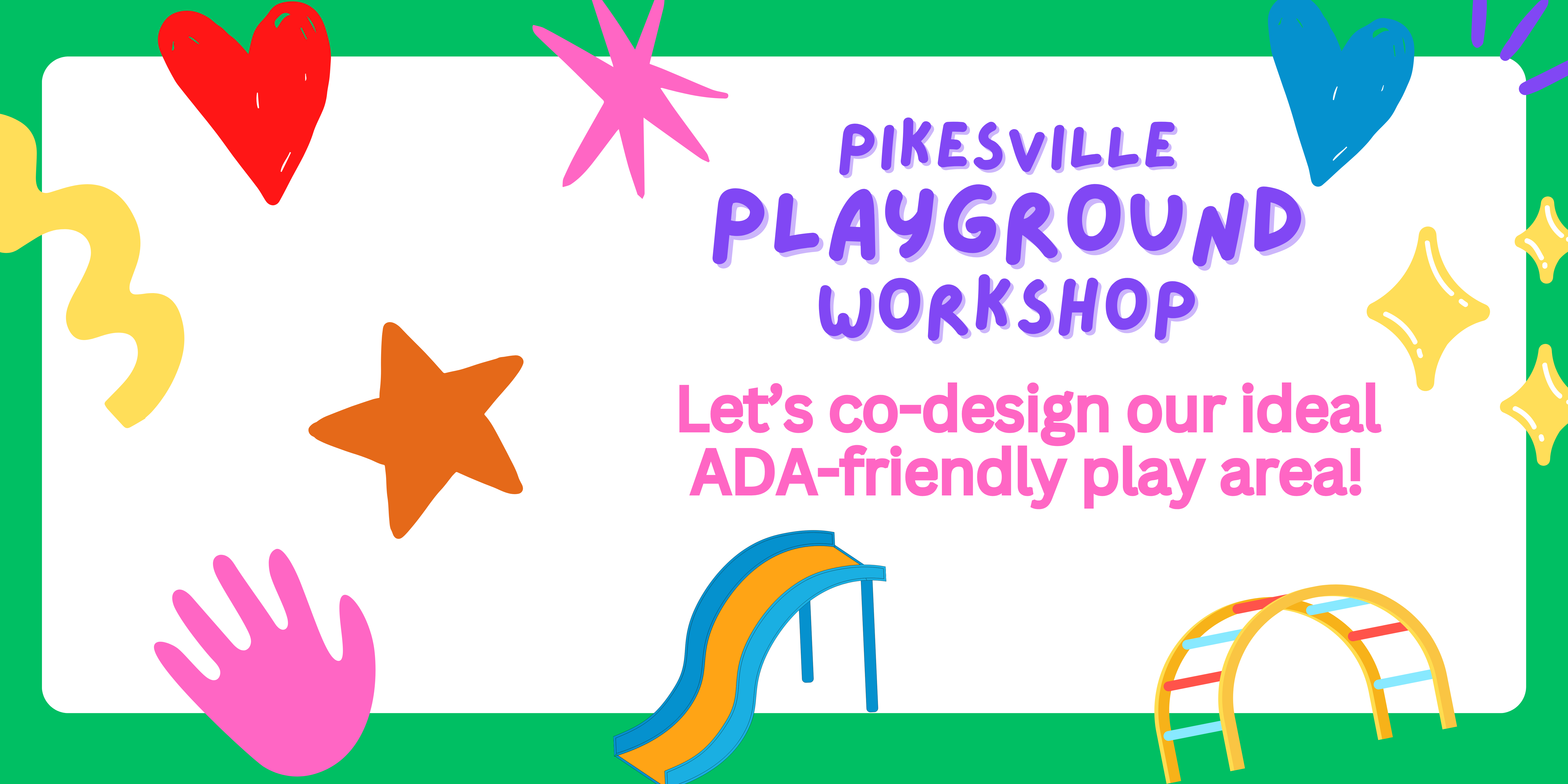
The Pikesville Armory Foundation is partnering with award-winning landscape designers Unknown Studio to host a family-friendly interactive workshop. This is Workshop #2! Come and see some updates and continue to provide suggestions and feedback!
The workshop will take place on Wednesday, March 12 at 5:30pm at the Pikesville Volunteer
Please register for the event here (as space is limited)- https://ow.ly/vNuU50V8ZWq |
|
|
|
|
|
|
|
|
Do you think you may have been cheated on your wages? |
|
The U.S. Department of Labor is urging workers who believe they might be owed unpaid wages to check out the department’s Workers Owed Wages, or WOW, database to see if the agency has money for them.
For more information, please visit https://ow.ly/pJzc50UBmju |
|
|
|
|
|
|
|
Unsubscribe from future updates |