|

|
Hi folks,
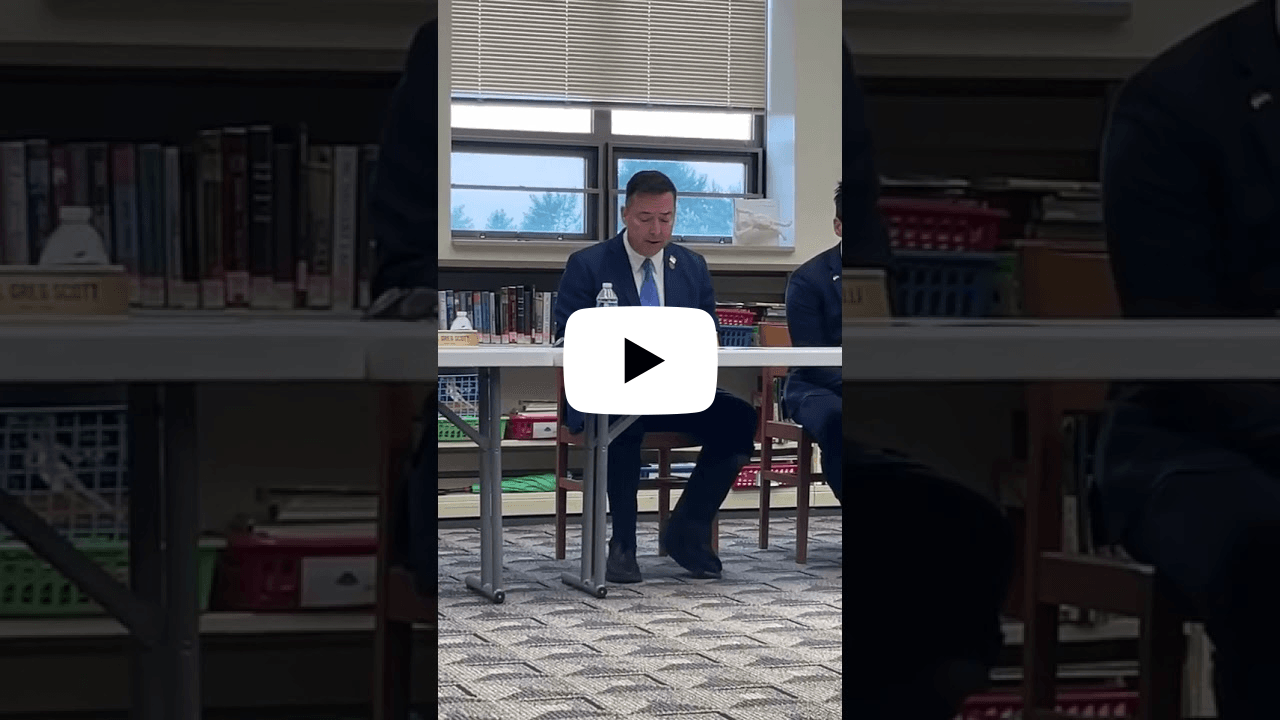
On Wednesday, I led an AI and Child Safety Policy Roundtable, co-hosted by the West Chester Area School District (WCASD). I was joined by six PA House colleagues, WCASD administrators, a West Chester East High School student, youth mental health experts, and our Chester County District Attorney. We discussed the pressing issue of artificial intelligence (AI) use in our schools and in our children’s daily lives. |
|

|
As AI technology rapidly advances without adequate regulation, it’s crucial that we examine its potential negative impact on our children. As many as 6 in 10 teenagers interact with AI companions, also known as AI chatbots, several times a month, with 13 percent using them every day. Several reports have cited instances in which AI companions have simulated romantic relationships and initiated or engaged in sexually explicit conversations with children. Furthermore, AI has negatively affected children struggling with suicidal thoughts by offering to write a child’s suicide note and discouraging children from talking to their families or trusted adults about their mental health struggles.
Some children that use AI companions have described close friendships which led to romantic interactions with their AI companions, describing the experience as feeling like they've fallen in love and engaging in sexually explicit conversations. With the rising use of AI companions for emotional support, these digital companions are feared to be addictive and create unhealthy attachments. |
|

|
I have also co-sponsored related legislation - House Bill 2005 introduced by Rep. Melissa Shusterman - that would require AI companion applications to implement safety features when the user interacts with the application for long periods of time. This legislation would also require the AI application to detect and implement a safety protocol if a user talks about suicidal ideation or self-harm and notify and remind the user that the companion is not human. |
|

|
According to Policy Roundtable panelist Jess Boyle, Senior Director of Digital Care Transformation and Digital Health at Children’s Hospital of Philadelphia: “(AI companionship) is not homework help. Six in 10 teenagers cited friendship and companionship as reasons to engage, because these products are engineered to supply precisely that. These AI companions use engagement-prolonging design to meet a child’s emotional needs while posing an unregulated risk to their well-being. Children are forming attachments to systems built to hold their attention, not to protect their development.”
In addition, Boyle discussed that nearly half of teens reported at least one harmful experience while interacting with an AI companion. An audit of five major AI companion applications involving 250 health-related questions revealed problematic and incorrect answers delivered with complete confidence. A teenager turning to a chatbot for health-related questions could receive a dangerously inaccurate answer that could adversely affect their health. Students are echoing similar concerns. We heard testimony from West Chester East High School senior Hannah Diem. She opened our eyes to what her experience was like growing up with this AI technology. In her education, Hannah says there have been trainings on the ethical use of AI, but they often fall short or are already behind the times. |
|

|
West Chester Area School District Superintendent Dr. David E. Christopher also agreed that, while AI can be an amazing tool for education, there is a need for greater safeguards and regulation. Dr. Christopher identified four key issues regarding students’ use of AI: equitable access; student data privacy; deepfakes and synthetic media; and student well-being and human relationships. The last issue really stood out because of the emotional and mental health concerns it raises.
"Schools play a critical role in helping students build relationships with peers, teachers, counselors, coaches, and other trusted adults," said Dr. Christopher. "We should be cautious about a future in which technology begins to substitute for, rather than supplement, those important human connections. While we should embrace innovation, we should also ensure that AI remains a tool that supports human development rather than replacing it." |
|
|
I once again want to thank everyone who attended and testified at this roundtable. It was certainly an eye-opening experience to hear about the many concerns surrounding AI use from all perspectives. What remains crystal clear is that the time to act is now. Unfortunately, for some of our children, it may already be too little, too late. As we have heard reported in the national news, AI companions have allegedly played a role in tragic, preventable harm, including the deaths of several minors.
Although we have written and passed legislation to address some of these issues, an enormous amount of work remains to be done. My colleagues and I are working together to craft additional legislation so that our students and educators can use artificial intelligence in a safe and responsible manner. In the meantime, I encourage everyone to engage with teachers, legislators, mental health professionals, parents, and, most importantly, our most precious resource—our children—to help address and navigate this brave new world in which we find ourselves.
Interested in learning more? You can read the release from the event here. If you're interested in reading the full testimony from our guest speakers, you can read that here. |
|
|
|

|
Chris Pielli |
|
|
|
Pennsylvania State Capitol 115-B East Wing |
|
District Office 121 West Miner St., Suite 1E |
|


|
Unsubscribe from future updates |