|
|
Dear Neighbor,
This week was significant for energy policy in Pennsylvania and the PJM region, with two major developments that hold promise for ratepayers struggling to keep up with rising electricity bills.
We have a ton of information to share in this week’s newsletter, so if you’d prefer the short version, here are the main things you need to know:
Read on for more details about this week’s important PJM and PUC developments, as well as Primary Election reminders, an extended Property Tax / Rent Rebate deadline, and more!
Inside the PJM Annual Meeting: Steps toward real reform
Tuesday marked a pivotal moment at the PJM Annual Meeting, as the Federal Energy Regulatory Commission announced its intent to address flaws in PJM’s governance and stakeholder process, with a focus on identifying actionable reforms to ensure that our regional power grid does its job efficiently and in the public’s interest.
PJM is the company that makes sure the lights stay on for about 67 million people across 13 states by managing the flow of electricity through a giant shared power grid. Since 2019, I have worked with colleagues from our neighboring PJM states to learn this complex system, advocate on behalf of ratepayers, and figure out what can be done on the states’ side to address how cost allocation and interconnection are managed.
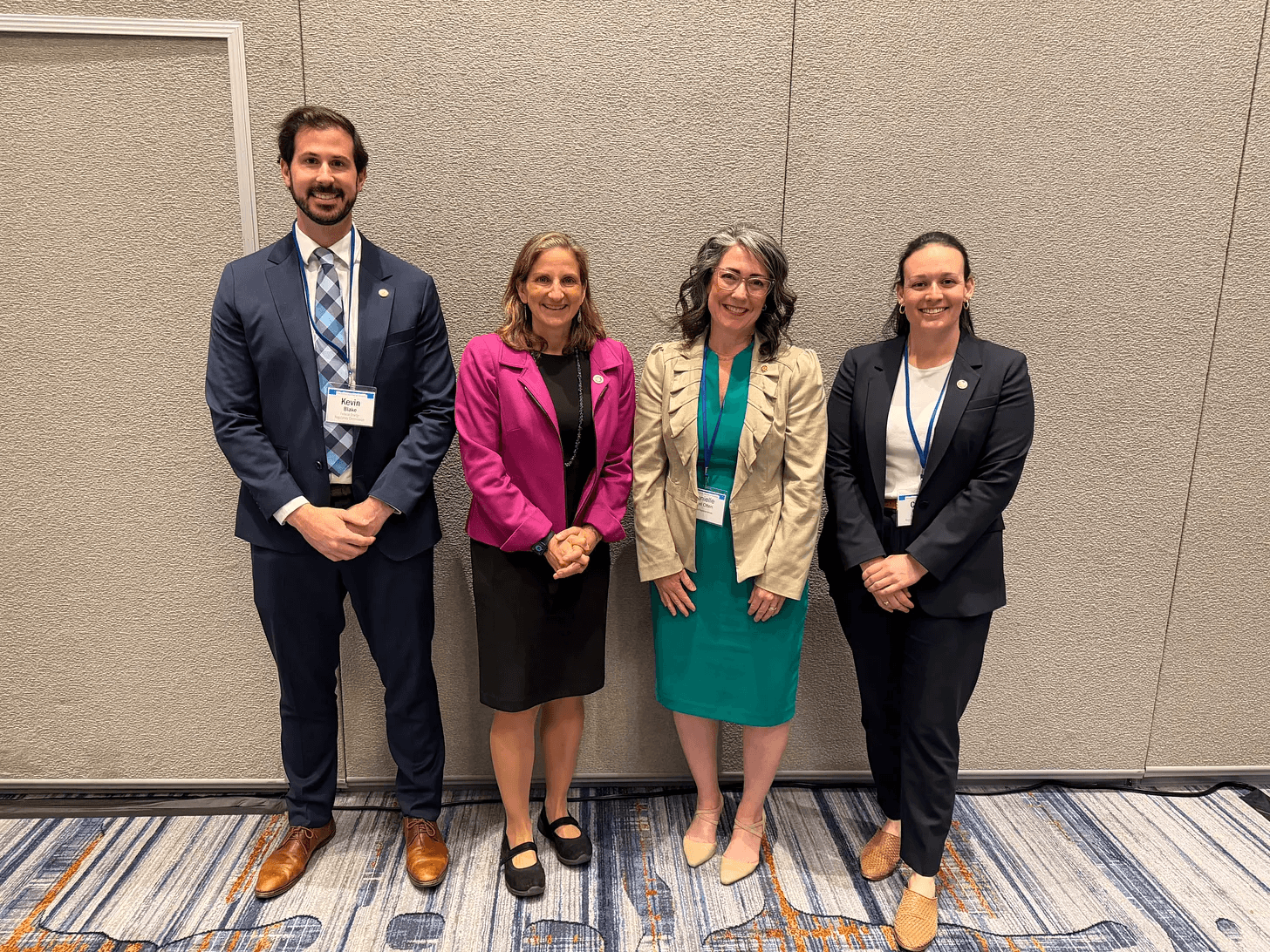
I currently serve as the state lead for Pennsylvania on the PJM Legislators Collaborative steering committee, and this week I joined our Chair, Senator Katie Fry Hester (MD), and our colleague and PJM expert, Delegate Lorig Charkoudian (MD) at the PJM Annual Meeting in Baltimore, for conversations with FERC and PJM staff and with PJM board members.
Data center development has been the leading driver of the cost increases we are all seeing in our electricity bills. Power-hungry data centers coming online and phantom load from speculative data center exploration have sent the capacity markets soaring, forcing the governors of the PJM states, led by Governor Shapiro, to step in and negotiate a price cap for the last two capacity auctions to prevent rates from surging even higher. But while a price cap buys us time to figure this out, a price cap alone does not solve the problem.
“Phantom load” refers to the massive energy demand requests of proposed AI data center projects that are not yet built and may never actually be built. Developers often submit duplicate requests across multiple markets, making it difficult for grid operators like PJM to forecast true power needs. To solve this problem, we must find a way to identify and remove duplicative phantom load from our forecast, and we must assign data center load to its own capacity market, separate from regular ratepayers. Without these corrections, the problem persists. Artificially inflated market pressures continue to build, the correct market signals do not get sent, and everyone pays. But energy generators and suppliers, the voting stakeholders in PJM, benefit from inflated capacity rates for energy they will never have to deliver, so there is no incentive for them to fix it.
Solving this problem is exactly what we worked on this week at the PJM Annual Meeting. I was truly grateful for the time the PJM Board gave to me and fellow members of the PJM Legislators Collaborative, led by Senator Katie Fry Hester from Maryland. We sat down in person with PJM staff and members of the PJM Board to build a better understanding of the gaps and what action states need from PJM in order to protect residential and other general ratepayers from data center cost shifting.
We also had the opportunity to sit down with staff from the Federal Energy Regulatory Commission, who gave us helpful technical advice on how to leverage the Federal Power Act and have our concerns and demands heard and addressed through the FERC process. We walked away from our conversations with clear action items and a sense that we were heard.
And while data centers’ impact on the capacity markets is the most immediate and painful problem, the need to reform PJM Governance has never been more apparent. This soon to be 100-year-old giant, which controls the power for 20% of the United States population and economy and the central grid for much of our national defense and security infrastructure, has a governance structure that incentivizes gridlock and greed. The members who vote on decisions about PJM are the very entities that profit from the status quo, inflated demand forecasts, and an uneven playing field.
The reality is that PJM is too slow and the current stakeholder process too broken to meet this critical moment, and the consequences have the potential to be catastrophic. This is a theme we heard echoed throughout the week, as I joined the PJM Legislators Collaborative in calling for PJM governance reform.
On Monday, Democratic Governor Wes Moore of Maryland addressed the room with a firm and pointed call for accountability and reform. And on Tuesday, Republican FERC Chair Laura Swett delivered a powerful and fiery rebuke of the current stakeholder process, suggesting it fails to meet the goals set in PJM Manual 34, being too slow, opaque, and vulnerable to obstruction. This inefficiency threatens reliability, affordability, and public confidence. Chair Swett expressed confidence that PJM and its stakeholders can rise to the challenge for the sake of the 67 million Americans who depend on it, and for the sake of the nation’s global energy leadership.
Chair Swett followed her remarks with the announcement of an official order of action by FERC to convene a technical conference on July 23 in Washington, D.C., to identify flaws and, more importantly, actionable solutions for PJM’s stakeholder process and governance.
After years of advocacy and deep frustration with a system that is so clearly broken, yesterday’s action by FERC gives me hope that we are getting a once-in-a-generation opportunity to meet the moment, recenter priorities, give states a voice in these decisions, and give ratepayers relief from a system that has outgrown its existing structure and has too often prioritized corporate profits over public interest. We are at a critical juncture, and we have a real chance at implementing meaningful reform at a moment when it is most desperately needed. |
|
|
What this week’s PUC Order means for Pennsylvania ratepayers
On April 30, Pennsylvania’s Public Utility Commission voted 5-0 to adopt a new framework for managing “large load” electricity users, primarily data centers. This week, they released their final order establishing that framework, and it’s important to understand what we won, what it means for your electric bill, and what work still remains.
First, the good news: Cost protections, financial guarantees, queue transparency, and more
We’ve talked a great deal about the fact that energy-intensive data centers want to connect to our grid, where they consume enormous amounts of electricity. When that happens, utilities must build new infrastructure to handle the load. Until now, there were no statewide rules about who pays for that, and the costs have been spread across all ratepayers.
The PUC’s large load model tariff framework finally puts some rules in place to ensure that the corporations creating the need for new infrastructure pay the costs. The PUC order adopts what is called a “but-for” standard, meaning if an infrastructure upgrade would not have been built “but for” the needs of a new data center, the data center must pay the full cost, even if other customers happen to benefit down the road.
That cost-causation ruling is a win for regular ratepayers, and it’s the standard I argued for in my official comments to the PUC when the large load model tariff was released for public comment several months ago.
The PUC’s order also requires data centers to put up financial guarantees before construction begins so that ratepayers are not left holding the bag if a project collapses. It creates a public interconnection queue at every utility so you can see who is applying to connect and how much power they are asking for. And for the first time, it requires data centers to contribute to utility programs that help low-income customers afford their electric bills, with the largest facilities contributing up to $1 million a year.
Now, the work that remains:
The PUC regulates your local utility, but it does not control what happens at the regional grid level, which is managed by our regional grid operator, PJM. We still have significant problems there, with some recent hope for reform.
One of the issues that affects us at the regional grid level is “phantom load.” A planned data center project reserves 200 megawatts of power. It ends up using 80. But Pennsylvania ratepayers still pay capacity charges based on that full 200, because higher demand drives higher prices at the PJM capacity auction, which drive higher rates on your utility bill.
The PUC cannot fix this issue alone. In this order, they are going as far as they believe their statutory authority allows. For the PUC to go farther would require an act of the General Assembly, and to fully solve the problem will require collaboration between the PUC, PJM, the other states in the PJM region, and electric distribution companies.
The House took the first step this session by passing HB 1834, which has yet to be taken up in the Senate.
There are other gaps in regulation that the PUC order does not touch:
What does this mean for Pennsylvania ratepayers?
First and foremost, the PUC’s order means the next data center that connects to the grid in Pennsylvania cannot make you pay for the wires and infrastructure they need. That is a big win for Pennsylvania ratepayers, but the work is far from being done. Your capacity charges, the cost of your monthly bill, and the long-term stability and predictability of your electricity rates will depend on what happens next in Harrisburg and at PJM.
The PUC has built a floor; now the legislature needs to build the rest of the house. HB 1834 addresses some of the remaining concerns, and I am close to introducing legislation addressing water usage. The five-year minimum contract remains a point of disagreement.
I am committed to advocating for policies and legislation that protect ratepayers and the public interest, and I will continue to share updates as we work through these complex issues. |
|
|
|
Please contact my district office at repotten@pahouse.net if you have questions or would like to share your thoughts on any legislative or state-related issue. |
|
|
|
Important Primary Election Reminders
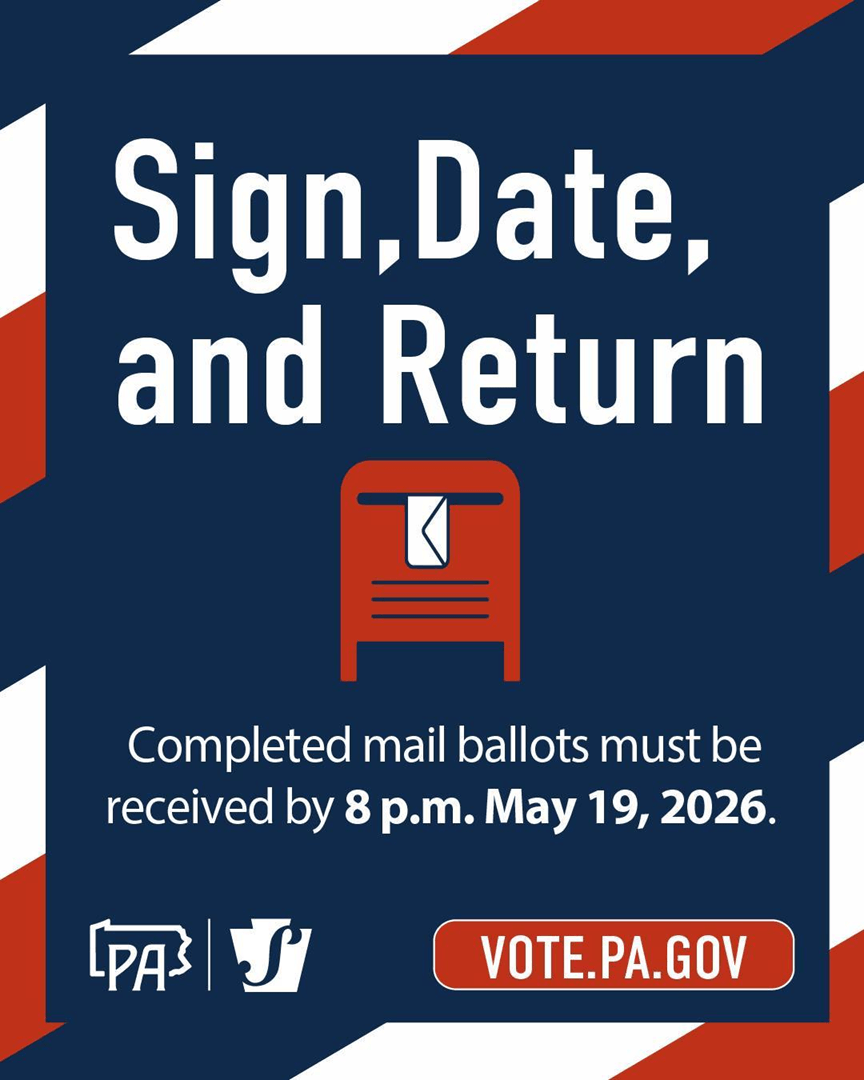
Pennsylvania's Primary Election is this coming Tuesday, May 19. Polls will be open from 7:00 AM until 8:00 PM on Election Day. If you are voting by mail, your mail-in ballot must be received by Voter Services (not just postmarked!) by 8 PM on Election Day.
Please contact Chester County Voter Services for any other election-related questions. |
|
|
|
|
Property Tax/Rent Rebate Application Period Extended
The 2026 Property Tax/Rent Rebate Application Period has been extended through December 31, 2026. Rebates on property taxes or rent paid in 2025 will be distributed beginning July 1, so submit your application now to get your rebate as soon as possible!
The Property Tax/Rent Rebate Program benefits eligible Pennsylvanians ages 65 and older, widows and widowers ages 50 and older, and people with disabilities age 18 and older.
Please call or stop by my office to find out if you’re eligible and get assistance applying for your rebate. We’d be glad to answer any questions and set up an appointment to help you complete your application online!
For those who prefer to file by mail, paper applications are available in my office. |
|

|
|
|
SEPTA Senior Key Cards and Card Renewals
If you have a SEPTA Senior Key Card that has expired or will expire within the next month, we can renew it in our district office. To renew your card before it expires, please stop by my district office, or call us to make an appointment.
My office can also process applications and take photos for new SEPTA Senior Key ID Cards, which allow seniors 65 and older to travel for free on all SEPTA Regional Rail and transit routes within Pennsylvania. Just stop by my district office and bring a form of ID with your date of birth on it, such as a PA driver’s license or non-driver ID, U.S. passport, or birth certificate. We’ll enter your information into SEPTA’s online system, take a quick photo, and then SEPTA will mail your new card to you directly. |
|

|
|
|
2-1-1 Southeastern Pennsylvania: Health and Human Services
211 SEPA is part of the national 211 Call Centers initiative that seeks to provide health and human services for everyday needs and those in crisis situations.
2-1-1 works with county governments and provider agencies to ensure important local program information is easily accessible.
Visit 211sepa.org for more information. |
|

|
|
|
Mental Health Resources: Call 9-8-8
Chester County residents experiencing mental-health-related crisis or distress can dial 9-8-8 to reach the Suicide and Crisis Lifeline. This system is designed to be a memorable and quick number that connects people in crisis to a trained mental health professional.
Chester County offers additional resources for those in crisis, including Chester County’s warm line, 1-866-846-2722, operated by Certified Peer Specialists, who are individuals in recovery with a lived experience of mental health challenges.
Chester County’s Teen Talk Line ensures seamless referral to Mobile Crisis for youth in need of immediate or higher-level support. The call line is 855-852-TEEN (8336), and the text line is 484-362-9515.
Visit the Department of Human Services website for more information about the 988 system and other state and local mental health resources.
If you or someone you love is in crisis, please don’t give up hope, and please know that you do not need to walk this path alone. We are here and we will do whatever we can to help. |
|

|
|
|
My district office will be closed on Tuesday, May 19, for the Primary Election. We will reopen on Wednesday, May 20, at 9:00 AM.
My staff and I are here to help make state government work better for you! For assistance with the above programs or any other state-related services, please email repotten@pahouse.net, call 484-200-8259, contact us through my website, or visit my district office in Exton and let us know how we can help! |
|
|
|
District Office 631 North Pottstown Pike |
|
Pennsylvania State Capitol 34 East Wing PO Box 202155 (717) 783-5009 |
|


|