|
|
2026 LEGISLATIVE SESSION REPORT: WEEK 2 |
|
A Beehive of Activity |
|
Hello friends,
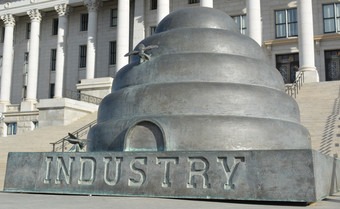
If you take a visit to our beautiful Capitol, you may notice the various beehive decorations placed throughout the building. Our early pioneers adopted this symbol, and it continues to be just as applicable today. Bees symbolize a community that works for the good of the whole group, with each bee doing its part. For us Utahns, the beehive symbolizes the Utah community as individual citizens working together to support and help one another, creating a thriving state.
The symbolism of the beehive translates perfectly to the work you and I are doing in this year’s Legislative Session. Everyone can bring their experiences, perspectives, and knowledge as policies are proposed, discussed, and voted on. It’s the coming together and working together that I love about Utah. Thank you for your critical involvement and for the opportunity I have to serve you as we work together to benefit Utahns for generations to come. Our communities and the Legislature exemplify Utah as the Beehive state. |
|
|
Exclusive Invitation Just For You: Family Night At the Capitol |
|
I would like to personally invite each of you to the Capitol for a special event I’m hosting just for our House District 63. Here are all the details. RSVP quickly as space is limited.
|
|

|
Locals On the Hill |
|
House District 63 was well represented again this week at the Capitol. Neighbors, friends, students, teachers, parents, and businesses participated in committee meetings, and advocating for our communities. I’m grateful for your involvement and assistance.
Everyone in our communities is invited to come to the Hill during the Legislative Session. Please let me know when you are at the Capitol and I’d love to see, visit, and help you. |
|

|
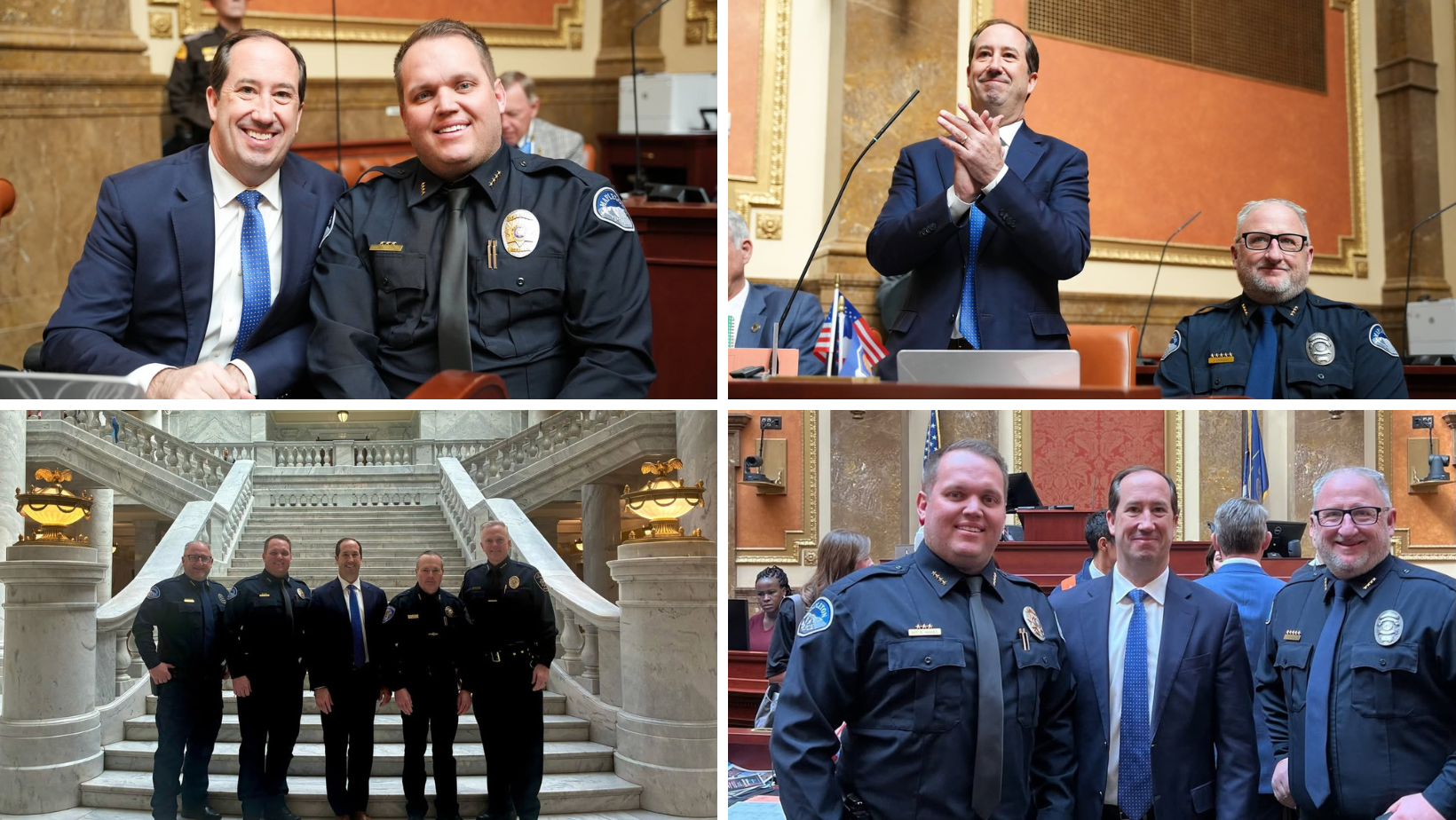
I was extremely honored to have Mapleton Police Chief John Jackson on the House Floor where we recognized him for his 30 years of service and work within law enforcement. Congratulations on his retirement this week. Words cannot adequately express our appreciation to him and his amazing family. I also had the privilege of having Mapleton’s new Police Chief Clay Hooley on the House Floor. We are in great hands moving forward and he has our full support. Having the Police Chiefs of Springville, Spanish Fork and Mapleton at the Capitol was wonderful and I appreciated their input on proposed laws. |
|
|
Balanced budget: Leading the Nation in Fiscal Responsibility |
|
Balancing the state budget is one of the most important constitutional responsibilities given to the Legislature. It’s wonderful that each year Utah has a balanced budget because of the foresight of our state’s founders requiring this through our state constitution. Additionally, Utah is actually the ONLY state in the nation that allows all lawmakers to be part of the budgeting process. To accomplish this, all 104 lawmakers sit on an appropriation subcommittee. I serve as the Chair of the Public Education Appropriations Committee that works directly with the $8.8 billion education budget that provides most of the operating funding for our public schools.
This week, the House and Senate passed the annual 29.4 billion base budget, which will help fund key areas in our state. My colleagues and I will continue to make adjustments to the state budget over the next several weeks. To see the total state budget, as well as all the individual budgets and expenditures for every dollar the state collects in taxes, visit: https://budget.utah.gov. |
|

|
Strengthening Election Security |
|
I am committed to ensuring Utah’s elections are secure, transparent, and trusted by all voters. This session, we’re advancing H.B. 209 Voting Amendments, which adds meaningful election integrity measures while maintaining easy participation for voters. The bill provides a clear process for election officials to verify citizenship and ensure ineligible individuals—including non-citizens—are not on our voter rolls, building on the safeguards already in place. Most Utahns won’t notice any change in how they vote, but these steps strengthen public confidence in our elections and protect the foundational principle that only eligible citizens participate in state and local elections. |
|
|
Utah School Land Trust Program: Helping Our Local Students and Teachers |
|
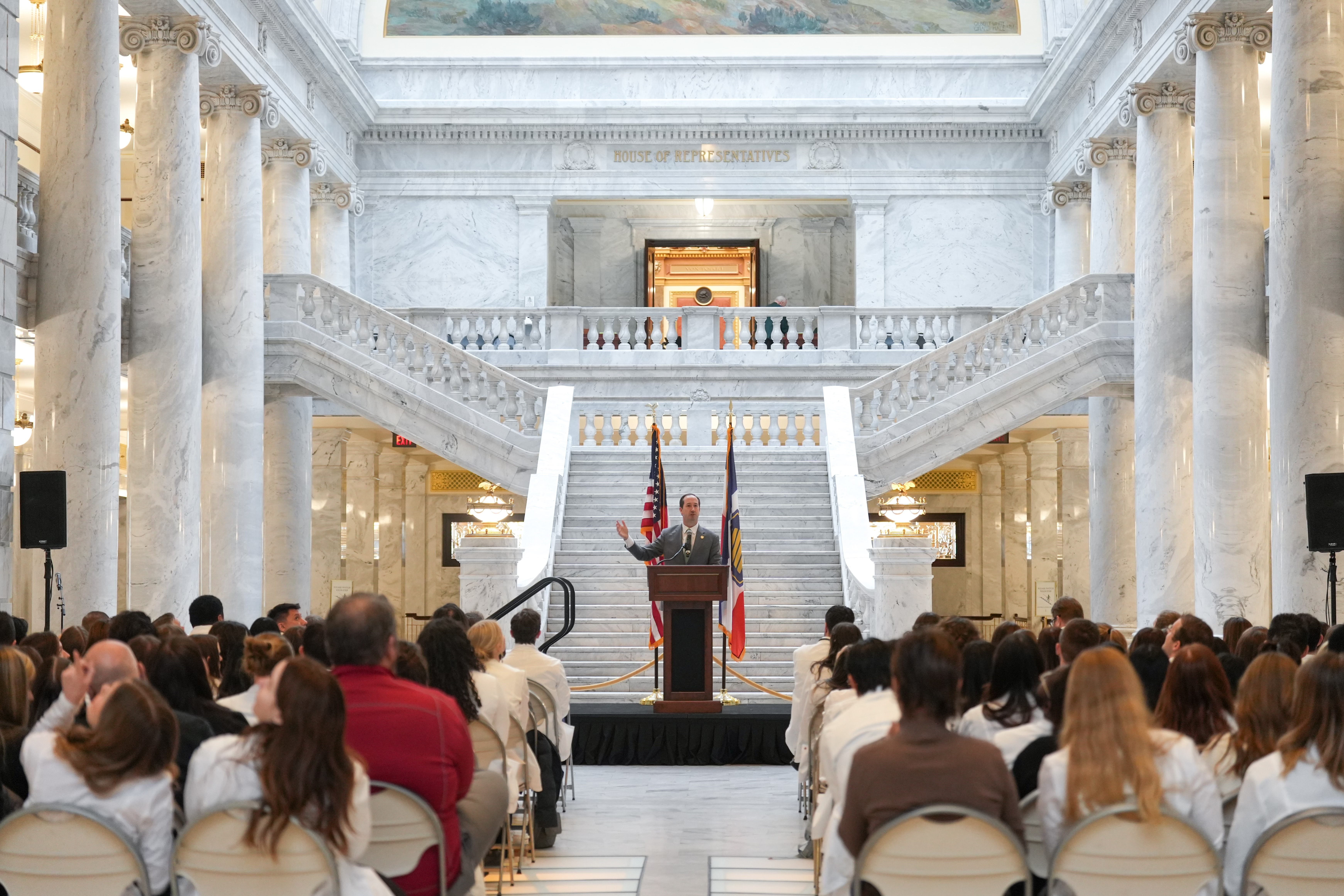
The Trust Lands Administration manages the trust lands that were granted at statehood. The trust lands generate revenue through energy and mineral leases, real estate development, and surface resource use. Utah’s unique School Land Trust Program leverages community input by directing funds through local School Community Councils comprised of the local principal, teachers and parents.
I received the following report this week that shows how much our local schools, within our House District 63, received this past year. If you have questions about how these funds are being used to benefit our local schools, please visit with the school’s principal. |
|

|
Bill Highlights and Voting Record |
|
HOUSE FLOOR VOTES:
HCR 1 Yes HCR 4 Yes HJR 1 Yes HJR 2 Yes HR 1 Yes HR 2 Yes HB 1 Yes HB 5 Yes HB 6 Yes HB 7 Yes HB 40 Yes HB 65 Yes HB 75 Yes HB 76 Yes HB 77 Yes HB 78 Yes HB 98 No HB 143 Yes HB 182 Yes HB 199 Yes HB 209 Yes HB 211 Yes SB 1 Yes SB 4 Yes SB 5 Yes SB 6 Yes SB 7 Yes SB 13 Yes SB 18 Yes SB 134 Yes COMMITTEE VOTES:
HB 86 Yes HB 58 Yes HB 90 Absent for education leadership meeting HB 172 Yes HB 202 Absent for education leadership meeting HB 230 Absent for education leadership meeting HB 392 Yes SB 13 Absent for education leadership meeting SB 18 Absent for education leadership meeting SB 33 Yes SB 134 Yes |
|
My Voting Rationale: SB 134 Court Amendments |
|
Recently I had the opportunity to meet with many judges from across the Wasatch Front. I was very impressed with the work that they are doing, their commitment to serve and help our state, and dedication to administer justice fairly. Their united ask was to increase the number of judges and support staff, particularly in the district and appeals courts due to their ever-increasing workload. Since this meeting, I’ve further dug into these issues, talked with legal experts, and received input from many people within our House District 63, which I have greatly appreciated. Below are my findings, details about the proposed bill, and my voting rationale.
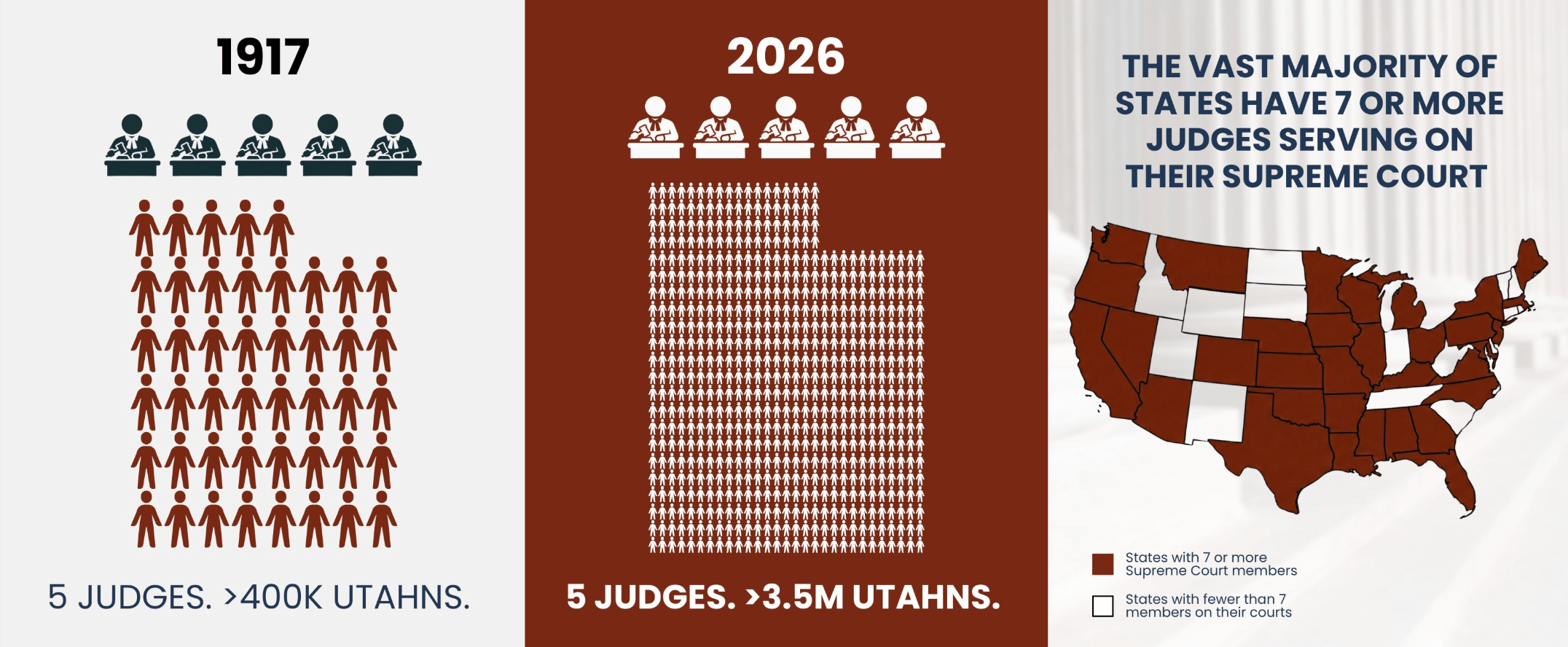
Increasing demand and complexity: Utah is one of the fastest-growing states in the nation. While we still value our reputation as a nimble, efficient state, the reality is that our population growth has brought increased demand and greater complexity to nearly every part of government, including the court system.
In the Utah Judiciary 2026 Annual Report to the Chief Justice, Governor, and Legislature, the Utah Judiciary wrote: “The Appellate Courts experienced record-setting caseload growth in FY2025. FY2024 and FY2025 were two of the three highest filing years in the past decade, and FY2025 recorded the highest number of appellate filings in the history of both the Supreme Court and the Court of Appeals. This sustained increase in filings reflects growing demand for appellate review and increasing pressure on existing judicial resources.”
Sizes of courts:
|
|
|
Supreme Court:
The Court of Appeals:
Determining the number of Supreme Court Justices: The Utah Constitution gives the Legislature authority to establish the number of Supreme Court justices by statute (Article 8, Section 2).
Selecting judges: The Legislature does not appoint judges or justices. Any new proposed judge would continue to go through the independent nominating commission process and be appointed by the Governor, just as they are today. In the State of the Judiciary address to the Utah Legislature, Chief Justice Matthew B. Durrant on January 20, 2026, said, “You saw the success of the Utah merit-based model firsthand with your recent confirmation of Justice John Nielsen, and throughout the year when you confirmed many outstanding trial judges. Thank you for your role in adopting and implementing a selecting process that has built an honorable and conscientious judiciary in which citizens can have confidence.”
What this bill would do:
Questions that have been asked: Is this a power grab / retaliation by the Legislature?
The Supreme Court believes this will slow down rather than speed up its operations. Why will this be helpful?
Is it concerning that the Judiciary opposes parts of the bill?
Why is this being rushed through instead of taking more time to study the issue?
Voting rationale: Based upon the information shared above and the overwhelming majority of people in our House District 63 supporting the bill, I voted in support of SB134 as it will help the Courts keep pace with Utah’s growth, improve efficiency where possible, and ensure our court system remains strong, fair, and capable of handling increasingly complex cases. |
|
|
I would love to hear from you! |
|
District 63 Representative Stephen L. Whyte swhyte@le.utah.gov 385-271-8435
|
|
|


|
Unsubscribe from future updates |