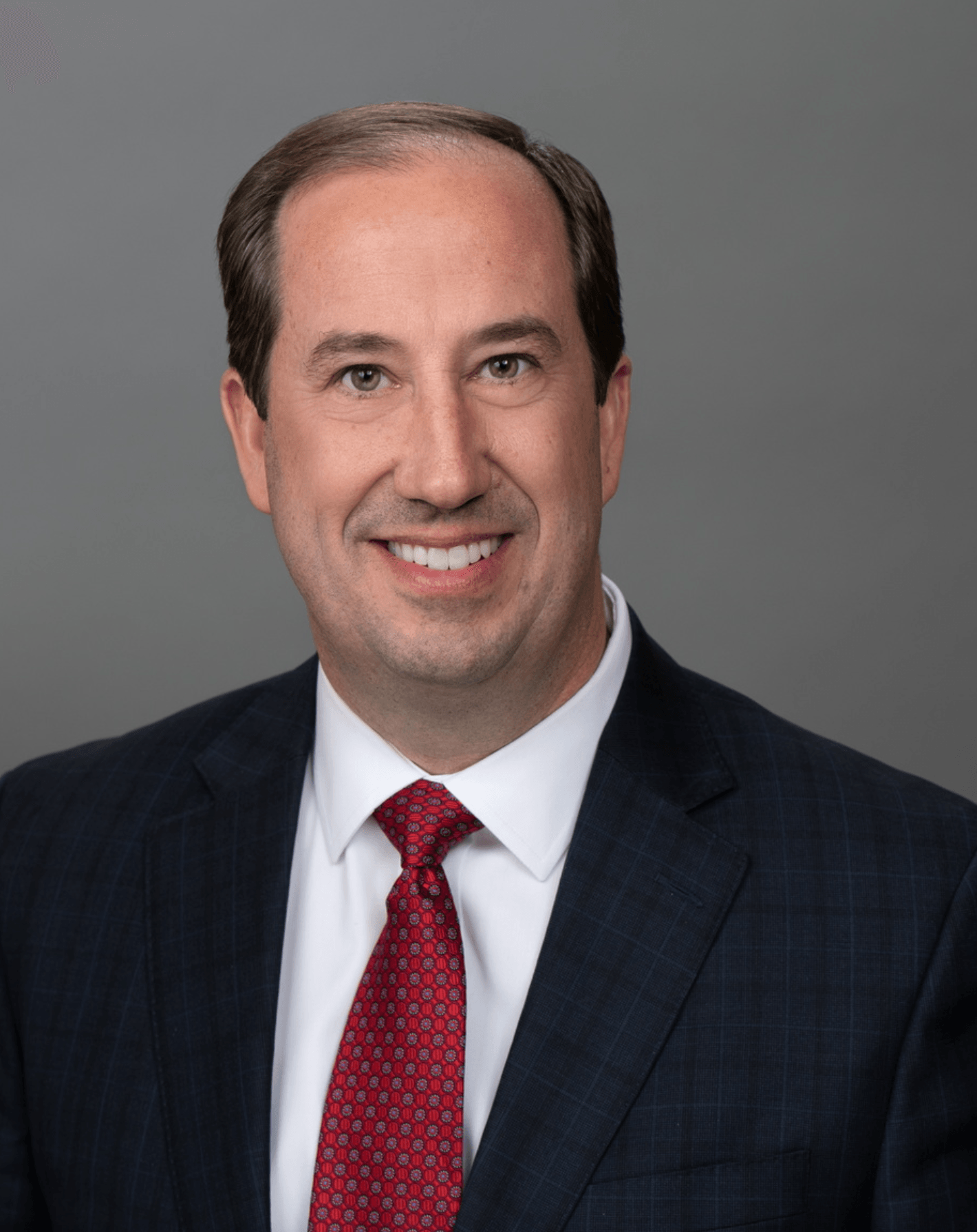
August 2024 Legislative Newsletter
|
The month of August has been filled with many wonderful and significant activities, initiatives, and events within our House District 63. From the Utah County Fair hosted in Spanish Fork (with an exciting demolition derby finish), to the Springville Mapleton Chamber of Commerce annual member and family BBQ, and all the schools and children getting ready for a new school year, I’m grateful for everyone who volunteers to make our communities a great place to raise families, do business, recreate with neighbors and help those in need.
Many significant things are also taking place on Capitol Hill. This newsletter provides some important updates and resources to help you be informed, involved, and to also help me know how you want me to represent you. Thank you for the privilege of allowing me to represent you and our great communities in the Legislature.
|
You’re Invited: Family Night At the Capitol
|
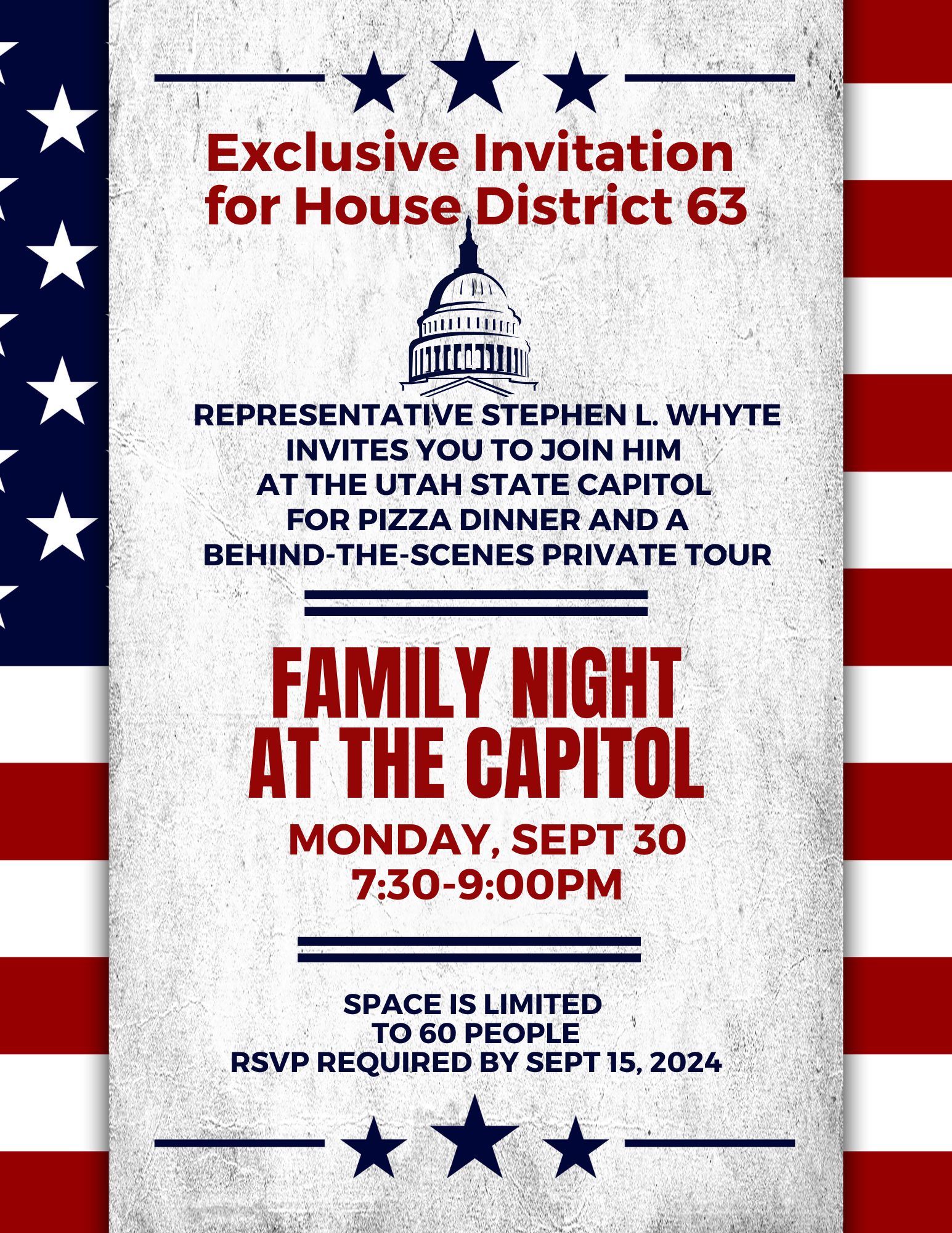
Back by popular demand and in follow up to the Family Night at the Capitol I hosted earlier this year, you are invited to attend a fall Family Night at the Capitol on September 30, 2024, for a pizza dinner and a behind-the-scenes private tour.
This is an exclusive invitation for people who live in our House District 63.
Space is limited to 60 people, so an RSVP is required by September 15, 2024. If you and your family are interested, please reserve your tickets quickly before space is filled. I’m excited to be with you.
RSVP HERE
|
Upcoming Events and Important Dates
|
August Interim Legislative Updates
|
I enjoyed meeting with legislators from throughout the state during this month’s interim meetings at the Capitol. These meetings are an opportunity for us to hear presentations from experts and stakeholders, as well as the public, all of which helps us prepare for the upcoming legislative session. Topics discussed and learned about include: housing, energy, water, sales and income tax, travel and tourism, cosmetology, election integrity, K-12 and higher education, crime, sex offense registry, refugees, juvenile court procedures, and many, many more topics.
The next interim meetings will be held on September 18 at the Capitol. You can participate in person or online at le.utah.gov.
A summary of all the August interim committee meetings can be found here.
Here are just a couple of things of particular note that impact Mapleton, Springville and Spanish Fork:
Education:
- Classroom size reduction: Earlier this year in the 2024 Legislative Session, the Legislature allocated $190 million to help reduce classroom sizes. In follow up to this, we received a presentation from committee staff, Nebo School District, Cache County School District, and Jordan School District about the class size reduction appropriation and districts’ class size reduction efforts. As a result of this discussion, a committee bill has been opened to address class size reduction. To help understand what Nebo School District is doing, view Superintendent Rick Nielsen’s presentation here.
- School Safety and Security Updates: Earlier this year in the 2024 Legislative Session, the Legislature passed HB84 School Safety Amendments. In the interim committee, we received a presentation from the Department of Public Safety’s Division of State Security on the implementation of this bill to help keep our children and schools safe.
Housing Obtainability:
- I serve as the Co-Chair of the state’s Commission on Housing Affordability. Since May, we’ve been meeting at least monthly, usually weekly, to identify problems and solutions to help make homeownership a possibility for our children and grandchildren. I presented to the Political Subdivisions Committee regarding the work underway to address housing issues and policy suggestions as we’ve opened a couple of bill files for the 2025 legislative session.
Traffic Safety:
- We received a presentation from committee staff and a joint presentation from UDOT and the Department of Public Safety on traffic safety topics, including aggressive driving, wrong way driving, and street racing.
Wildfires:
- Fires this year: We received a presentation from the Division of Forestry, Fire and State Lands regarding wildfires in the state this year and the possibility of Utah entering an interstate wildfire compact. So far this year, Utah has had 961 fires, 50,170 acres have been burned, 544 of those fires were human caused. This has cost the state an estimated $28.4 million dollars just this year.
|
American Founders and Constitution Month
|
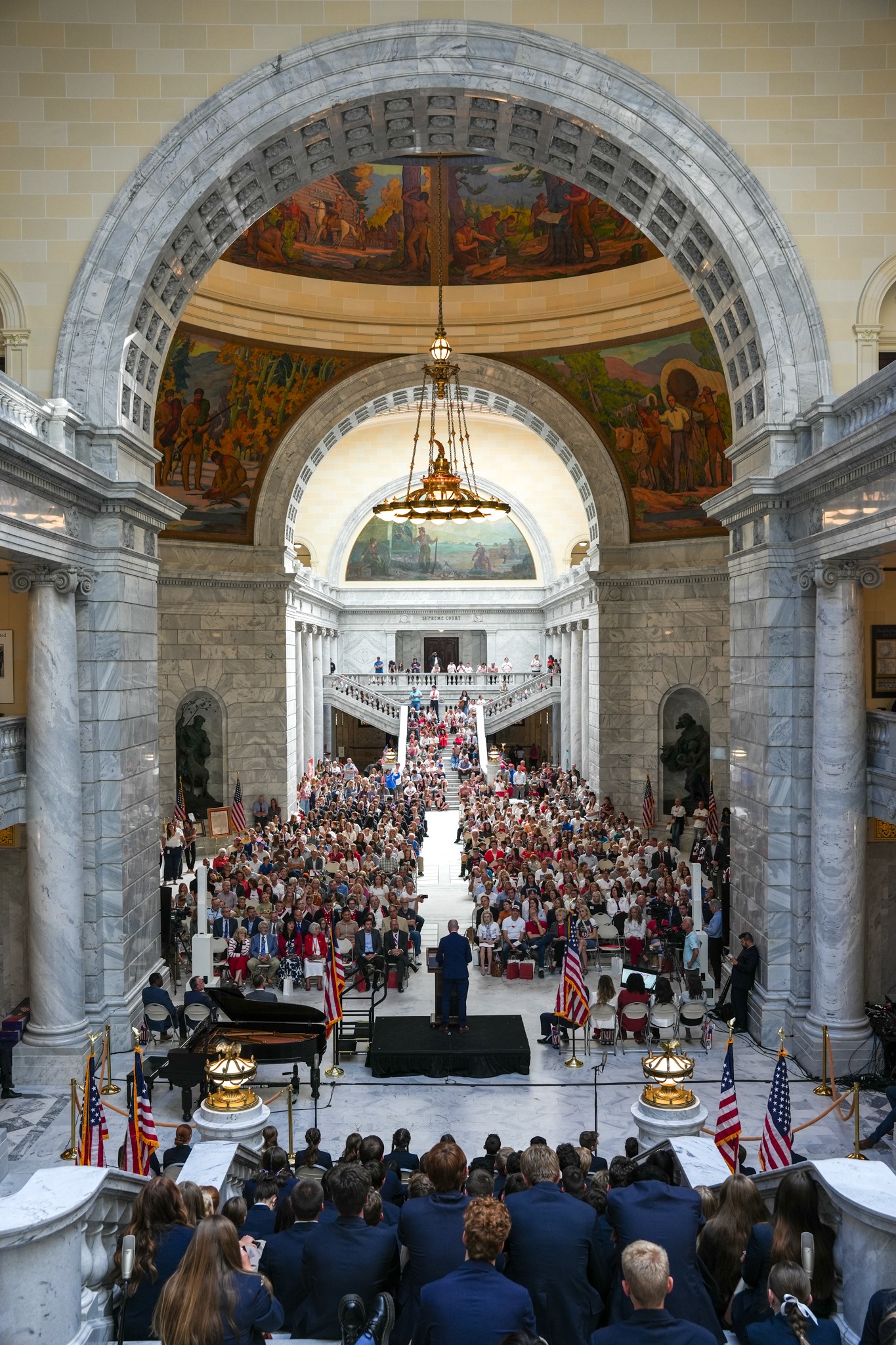
The Legislature has designated September as American Founders and Constitution Month, giving us the chance to honor the many freedoms we enjoy because of those who came before us. I am deeply grateful for our country’s great constitution and the many freedoms we enjoy because of it. I hope you will join me over the next month in reflecting on the wisdom of our Founding Fathers and the values that have shaped our nation.
|
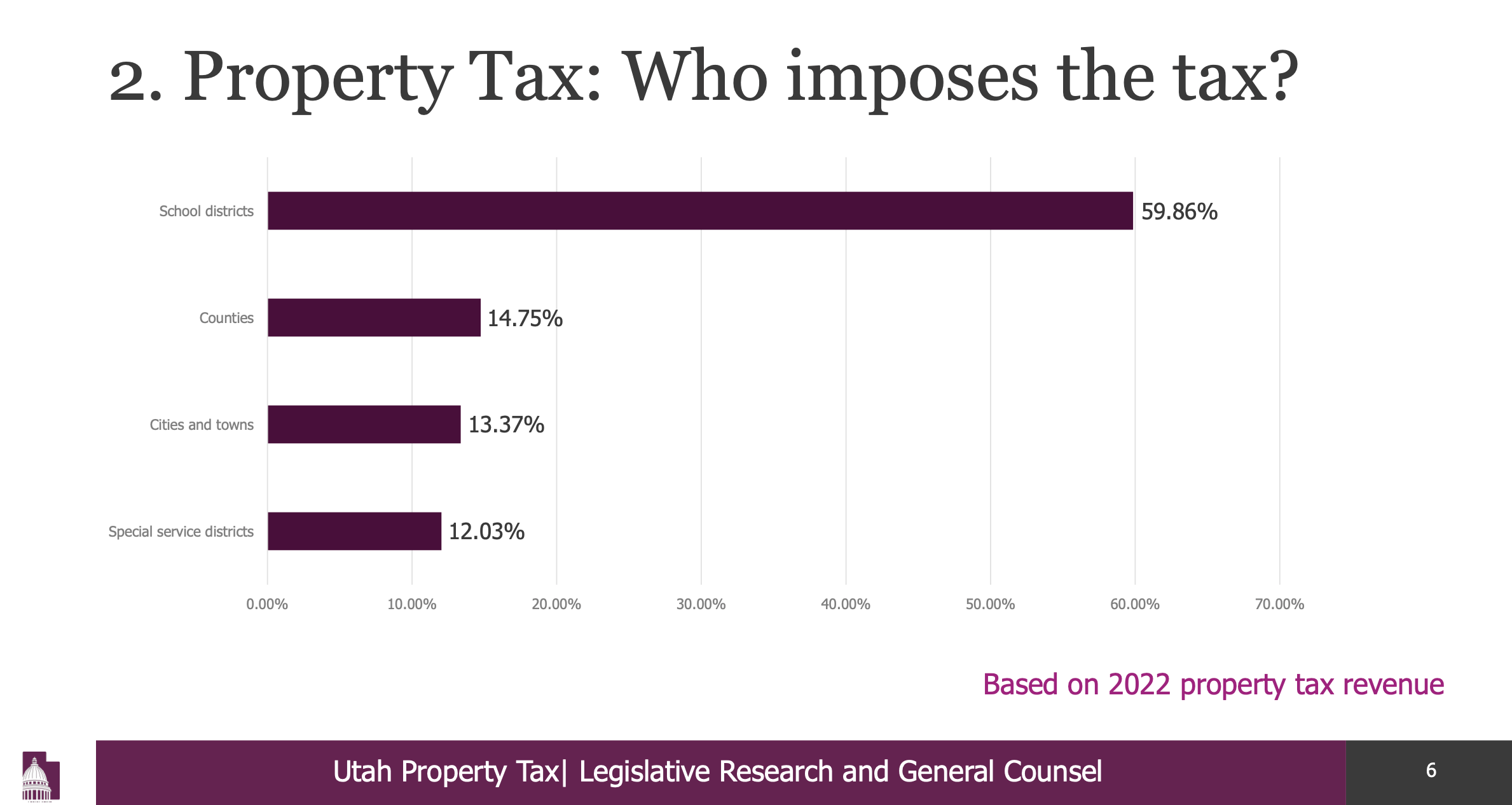
I’ve been asked many questions about property taxes including, “Who determines our property taxes?”, and, “Where do the property taxes go?”.
A simple and helpful presentation about property taxes was given in the Revenue and Taxation Legislative Committee. Check it out here.
A screenshot from this presentation shows which organizations determine our property taxes. Before property taxes are set, it is required that a “Truth in Taxation” hearing be held so we can all share our ideas, concerns, and recommendations. It is our opportunity and responsibility to be involved in these important decisions. Many of these meetings were held in August and have been covered by the press. It is also never too late to share your recommendations with members of our City Councils, Mayors, Nebo School District Board Members, and County Commissioners.
|
Protecting Our Public Land Rights
|
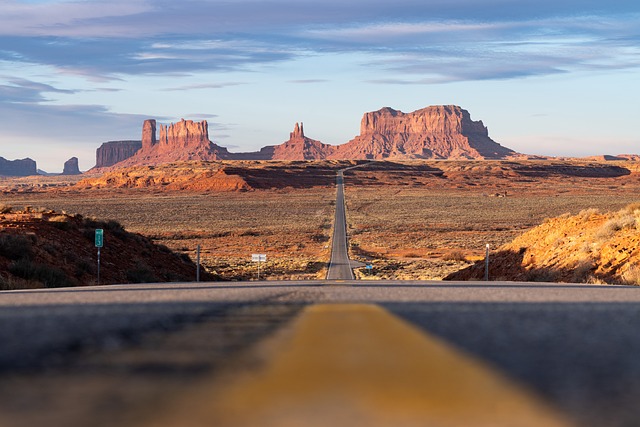
The federal government controls nearly 70% of the land in Utah. 34% of this land is “unappropriated” land, meaning the United States simply holds the land without any designated purpose. In comparison, the federal government controls less than 1% of the land in Connecticut, New York, and Rhode Island, and less than 3% of the land in Delaware, Maine, Massachusetts, Ohio, and Pennsylvania.
Utah has filed a landmark public lands lawsuit asking the U.S. Supreme Court to address whether the federal government can simply hold unappropriated lands within a state indefinitely. The “unappropriated” land in question is approximately 18.5 million acres controlled by the Bureau of Land Management (BLM) under the Federal Land Policy Management Act (FLPMA). This lawsuit WILL NOT impact the millions of “appropriated” acres already designated as national parks, national monuments, wilderness areas, national forests, Tribal lands, or military properties.
Based upon the input you have shared with me and what the Legislature has heard throughout the state, Utah’s preference is that public land remain public and remain open for responsible and sustainable use and recreation, including hunting, fishing, camping, biking, off-highway vehicle travel, and rock climbing. We are committed to ensuring that the lands and resources are used sustainably to benefit both current and future generations of Utahns and visitors. The State of Utah has proven itself as a good steward of our public lands. The intention of this lawsuit is to keep public lands public and actively managed.
To help create understanding and also to dispel misinformation about what this lawsuit is about and not about, below are questions and answers that I hope you will find helpful.
|
FREQUENTLY ASKED QUESTIONS:
|
- What is the purpose of the lawsuit?
- Why did the state file a public lands lawsuit against the federal government over Bureau of Land Management (BLM) controlled land? What is the process?
- Is this lawsuit going to impact our national parks?
- If the state is simply asking a question of the Supreme Court, why is this considered a lawsuit?
- Why a lawsuit?
- How did the federal government end up controlling so much land in the West and very little in the East?
- Why now? What led the state to take action at this time?
- What would the state do with the lands if we controlled them? What’s the process?
- Could Utah afford to manage the land? How much money would come back to the state if the state owned the majority of its land to cover those costs?
- How is the state better equipped to manage public lands / Does the state have programs in place that could handle such large scale land management?
- Has any state ever attempted legal action like this in the past?
- Why doesn’t the state work more collaboratively with the BLM on these issues instead of suing for control?
- Will the land be sold to the highest bidder if the federal government disposes them?
|
1. What is the purpose of the lawsuit?
- The sole purpose of the lawsuit is to answer the constitutional question of whether or not the federal government can retain unappropriated lands in a state indefinitely, over the state's objection.
- The state wants to see public lands remain in public hands and available to all Utahns and visitors of all ages and abilities to be managed for multiple uses for current and future generations.
- The state encourages Utahns and visitors to support public lands being managed locally by the state of Utah.
2. Why did the state file a public lands lawsuit against the federal government over Bureau of Land Management (BLM) controlled land? What is the process?
- A key challenge Utah currently faces is that the federal government continues to restrict public use of BLM lands. In many instances, these restrictions do not provide Utahns with the most efficient and effective land management, economic stability, and recreational opportunities.
- After decades of legal analysis, the state of Utah has filed a landmark public lands lawsuit asking the U.S. Supreme Court to address whether the federal government can simply hold unappropriated lands within a state indefinitely. Unappropriated lands are those that the federal government simply holds without a congressionally defined purpose.
- This lawsuit aims to definitively determine the constitutionality of BLM's extensive land ownership in Utah under Article I or the Property Clause of the U.S. Constitution.
- In Utah, nearly 70% of the land is controlled by the federal government, only in Nevada does the BLM control a larger percentage of a state’s land. In comparison, the federal government controls less than 1% of the land in Connecticut, New York, and Rhode Island. The BLM controls nearly 22.8 million acres in Utah, almost 42% of Utah. Large-scale BLM land control is an anomaly in the United states, with almost all BLM land concentrated in Utah and ten other western states.
- Of those 22.8 million BLM acres in Utah, the majority (approximately 18.5 million acres) are “unappropriated” BLM lands held by the federal government without any clear Congressional designation. These 18.5 million acres are the lands in question in the lawsuit.
3. Is this lawsuit going to impact our national parks?
- No, this lawsuit WILL NOT impact the millions of “appropriated” acres already designated as national parks, national monuments, wilderness areas, national forests, national conservation areas, Tribal lands, or military properties.
- The lawsuit is asking the U.S. Supreme Court to address whether the federal government can simply hold “unappropriated” lands within a state indefinitely.
4. If the state is simply asking a question of the Supreme Court, why is this
considered a lawsuit?
- Any filing in any court is considered a lawsuit, regardless of topic.
5. Why a lawsuit?
- From a legal standpoint, nothing in the text of the Constitution authorizes the U.S. government to simply retain huge swathes of unappropriated land within a state forever. To the contrary, the Framers of the Constitution carefully limited federal government power to hold land within the states.
- The lawsuit is asking the U.S. Supreme Court to address whether the federal government can simply hold unappropriated lands within a state indefinitely. The Constitution never intended a federal agency to hold onto so much land in any state. The state of Utah is asking the U.S. Supreme Court to weigh in on this critical constitutional question we, and many western states, have had for decades.
- The federal government’s expansive landholdings deprive Utah of a significant amount of sovereignty compared to other states, where Utah is unable to actively manage more than two-thirds of the land within its borders. Federal overreach prevents Utah from actively managing public lands, impacting recreation, local economies, and resource development.
- The state’s preference is that public land remain in public hands and locally managed.
6. How did the federal government end up controlling so much land in the West and very little in the East?
- The federal government stopped disposing of public lands as per their constitutional mandate with the passage of the Federal Land Policy Management Act (FLPMA) in 1976.
- See timeline found in the fact sheet.
7. Why now? What led the state to take action at this time?
- While this question of federal authority to retain public lands has been widely discussed and argued for decades, the federal government’s ongoing and proposed actions have created an immediate need for an answer from the Supreme Court. Under the control of the federal government, Utah public lands have become less and less public with each and every federal lands action coming out of Washington D.C.
- The Bureau of Land Management (BLM) Public Lands Rule, signed as an executive rule this year, redefines conservation to adopt a restrictive, museum-type management approach to conservation, limiting public access and use, impacting recreation and local economies, and allowing the issuance of Restoration and Mitigation Leases that close leased lands to other uses. This is contrary to the BLM's legal obligation to promote multiple-use and sustained yield under the Federal Lands Policy and Management Act (FLPMA).
- The BLM recently closed over 317 miles of popular roads and trails in Grand County against Utah’s wishes. This action has significantly limited public access to these areas, impacting recreational activities and local businesses that rely on tourism. The BLM is proposing closures on thousands of additional miles of roads on federal land in Utah, which could further restrict public access and use.
- The new management plans for the Bears Ears and Grand Staircase-Escalante National Monuments will impose severe restrictions on access, recreation, and the ability to build the infrastructure needed to accommodate increased visitation and use.
- Recent decisions by the federal government impose heavy restrictions on developing our energy portfolio and necessary infrastructure.
8. What would the state do with the land if we controlled them? What’s the process?
- If the lawsuit is successful, Utah intends to take steps to acquire these BLM lands and actively manage them for public use. Should Utah acquire these lands, the state will manage them for multiple uses: to balance recreation, wildlife habitat, and conservation with other responsible uses such as energy production, livestock grazing, and sustainable resource development.
- The Utah legislature created the Utah Department of Land Management in 2017 (Utah state Code 63L-9-102), which would come into existence if Utah were to acquire 250,000 or more acres of federal lands. The Utah Department of Land Management would manage these newly acquired lands under the Utah Public Lands Management Act (Utah state Code, Title 62L, Chapter 8), which outlines management processes and includes a prohibition against the privatization of these public lands, except in rare situations (Utah state Code 63L-8-104).
- Utah would recognize valid existing rights on public lands such as outdoor recreation, dispersed camping, rock climbing, livestock grazing, mining, energy development, and energy transmission.
9. Could Utah afford to manage the land? How much money would come back to the state if the state owned the majority of its land to cover those costs?
- The state of Utah sends roughly $225 million in royalty payments on BLM controlled land to the federal government every year. These royalty payments could instead be used to actively manage the lands under Utah’s stewardship.
- Should Utah prevail in the lawsuit, a more detailed economic analysis would be completed to assess the fiscal impact of managing the lands in the lawsuit in greater detail prior to potential acquisition.
10.How is the state better equipped to manage public lands / Does the state
have programs in place that could handle such large scale land management?
- Utah has a long history of working in partnership with local and federal agencies to improve and provide stewardship for Utah's public lands. Recent actions by the BLM undercut these efforts, making collaborative restoration projects increasingly difficult to implement. Under state management of unappropriated BLM land, Utah would expand these successful restoration and management efforts.
- Utah’s Grazing Improvement Program (GIP) is dedicated to improving the health and sustainability of Utah’s rangeland. It provides grants and funding resources for ranchers, directs rangeland improvement programs and projects, and supports grazing management plan development. This program helps prevent the decline of public lands by using sustainable management practices. Utah has invested over $35 million in GIP projects, benefiting over 12 million acres statewide by working cooperatively with private landowners, local and federal agencies, and local partners to promote multiple-use management of public lands.
- Utah’s state parks are well-visited and well-managed and play a vital role in sustaining the state’s tourism economy. In 2023, Utah’s 46 state-owned parks provided over 600 jobs and 6 million visitors with recreation opportunities throughout the state.
- Every year, hundreds of wildfires burn on private, state and federal land in Utah. Wildfires that occur on state and unincorporated private lands are managed by the state. The state works with federal agencies and local fire departments to coordinate the suppression effort. The majority of all wildfires in Utah are extinguished before they exceed 10 acres. The state also has several programs that are focused around prevention, preparedness, mitigation and post-fire rehabilitation. These programs are in coordination with federal and local agencies to achieve the greatest amount of success on the landscape.
- For over 100 years, Utah has used wildlife/waterfowl management areas (WMAs) to provide winter ranges with feed and shelter to help deer and other big game animals survive the snowy winter months. Utah and its partners manage these lands and implement habitat projects to help provide food and water to maintain healthy wildlife populations. These properties are owned and managed by the Utah Division of Wildlife Resources for conserving critical wildlife habitats, helping minimize and mitigate wildlife depredation on private property providing places where Utahns can go to hunt and fish. Currently, there are 194 WMAs throughout Utah, totaling over 500,000 acres or 780 square miles. Each WMA ranges from a couple of dozen to over 50,000 acres.
- The state has approximately 150 DNR law enforcement officers (LEO) statewide, more than double the law enforcement presence of all the federal land management agencies combined. Our Utah Department of Natural Resources (DNR) LEOs have excellent working relationships with local law enforcement agencies across the state and are more dispersed so there are LEOs in nearly every corner of the state closer to the resources and recreation areas.
11. Has any state ever attempted legal action like this in the past?
- No, but the question has been one the state, and other states, have discussed and analyzed for decades.
- Several years ago, Utah investigated the feasibility of transferring all public ands to Utah; we are not aware of any other states pursuing similar action currently. This only applies to unappropriated BLM lands.
12.Why doesn’t the state work more collaboratively with the BLM on these issues instead of suing for control?
- Utah has a long history of working in partnership with local and federal agencies to improve and provide stewardship for Utah's public lands. Recent actions by the BLM undercut these efforts, making collaborative restoration projects increasingly difficult to implement. Under state management of unappropriated BLM land, Utah would expand these successful restoration and management efforts.
- Utah’s Grazing Improvement Program (GIP) is dedicated to improving the health and sustainability of Utah’s rangeland. It provides grants and funding resources for ranchers, directs rangeland improvement programs and projects, and supports grazing management plan development. This program helps prevent the decline of public lands by using sustainable management practices. Utah has invested over $35 million in GIP projects, benefiting over 12 million acres statewide by working cooperatively with private landowners, local and federal agencies, and local partners to promote multiple-use management of public lands.
- Utah’s state parks are well-visited and well-managed and play a vital role in sustaining the state’s tourism economy. In 2023, Utah’s 46 state-owned parks provided over 600 jobs and 6 million visitors with recreation opportunities throughout the state.
- For over 100 years, Utah has used wildlife/waterfowl management areas (WMAs) to provide winter ranges with feed and shelter to help deer and other big game animals survive the snowy winter months. Utah and its partners manage these lands and implement habitat projects to help provide food and water to maintain healthy wildlife populations. These properties are owned and managed by the Utah Division of Wildlife Resources for conserving critical wildlife habitats, helping minimize and mitigate wildlife depredation on private property providing places where Utahns can go to hunt and fish. Currently, there are 194 WMAs throughout Utah, totaling over 500,000 acres or 780 square miles. Each WMA ranges from a couple of dozen to over 50,000 acres.
- The state has approximately 150 DNR law enforcement officers (LEO) statewide, more than double the law enforcement presence of all the federal land management agencies combined. Our Utah Department of Natural Resources (DNR) LEOs have excellent working relationships with local law enforcement agencies across the state and are more dispersed so there are LEOs in nearly every corner of the state closer to the resources and recreation areas.
13.Will the land be sold to the highest bidder if the federal government disposes them?
- The state is committed to keeping public lands in public hands and available to all Utahns and visitors of all ages and abilities to be managed for multiple uses for current and future generations.
- The state statute prohibits the privatization of public lands except in rare circumstances. (Utah state Code, Title 62L, Chapter 8)
- The state encourages Utahns and visitors to support public lands being managed locally by the state of Utah.
|
I would love to hear from you!
|
|