|
Merry Christmas and Happy New Year
|
Dear Friends,
Although we don’t have snow for Christmas this year, my family and I send you a “Whyte Christmas” wish, hoping your days will be merry and bright as we celebrate the birth of Jesus Christ, who is the bright and shining star, the true light of the world. Thank you Mapleton, Spanish Fork, and Springville cities for the annual Christmas traditions that bring our neighborhoods together in celebration and promote goodwill towards men.
As we celebrate this Christmas season, I want to share my heartfelt gratitude with each of you. Serving our community is one of the greatest honors of my life, and I’m truly thankful for your trust, your involvement, and your commitment to making our district such a wonderful place to call home. This time of year reminds us of the things that matter most—family, faith, generosity, and the simple joy of gathering with the people we love. I hope your holidays are filled with peace, warmth, and meaningful moments, and that the new year brings health, happiness, and renewed hope to every household. Merry Christmas and happy holidays from my family to yours!
|
|
You’re Invited: Pre-Legislative Session Community Info Meetings
|
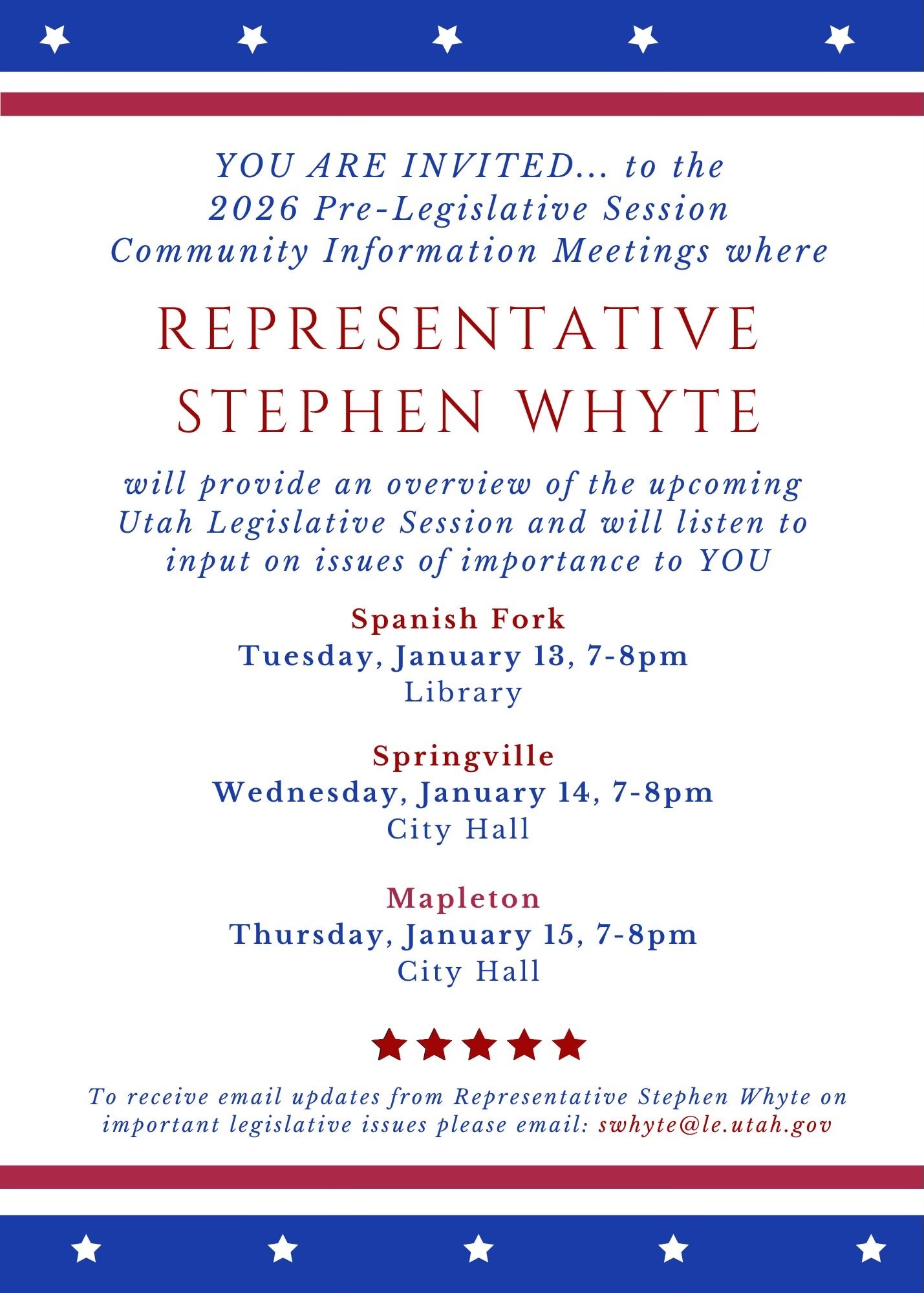
Residents of House District 63 in Mapleton, Springville and Spanish Fork are invited to my 2026 Pre-Legislative Session Community Information Meetings. I will provide an overview of the upcoming Utah Legislative Session and will listen to your input on issues of importance to YOU!
[
Here are the details for each of the meetings. Please come to the one that is most convenient for you.
|
|
Wrapping Up the Legislative Interim Meeting Process
|
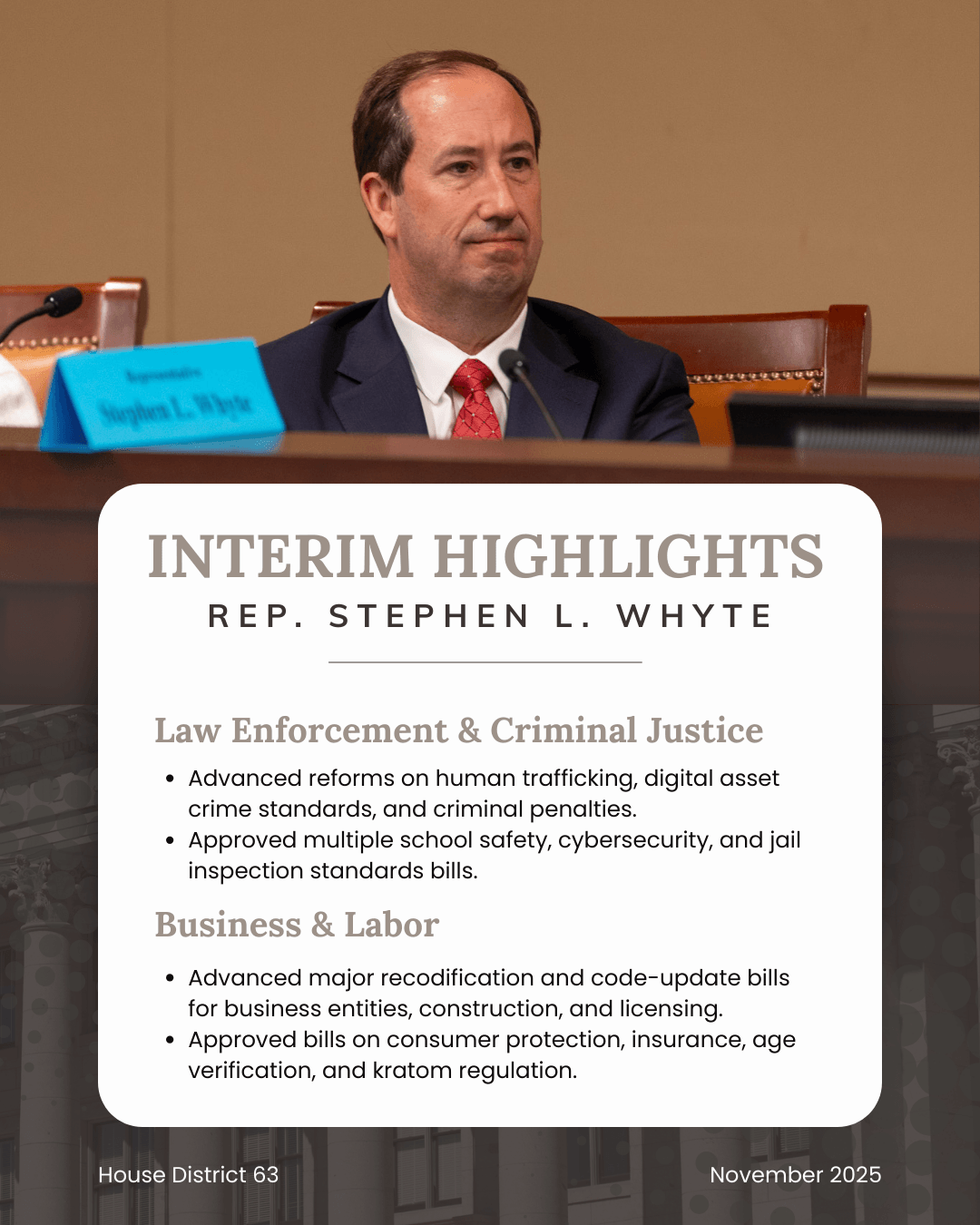
With our final interim meetings now behind us, I’m proud of the steady, detailed work we’ve done throughout the year to prepare for the upcoming 2026 General Session. Interim is where much of the real governing happens—months of studying issues, reviewing data, meeting with stakeholders, and refining ideas long before any bill reaches the House floor. Throughout the year, our committees dug deep into topics ranging from education and water policy to tax reform, transportation, public safety, and family well-being.
Thanks to this year-long effort, we’re entering the 2026 Legislative General Session on January 20, 2026 ready to move meaningful, well-informed legislation that strengthens our communities and supports Utahns across the state. I’m excited for what’s ahead—and grateful for everyone who engaged in the process along the way. As always, I encourage you to stay engaged—whether by attending in person or tuning in at le.utah.gov—and I hope to see you at the Capitol next year.
|
|
December 9 Special Legislative Session – My Voting Record & Rationale
|
On December 9, 2025, the Legislature was called into a Special Session by Governor Cox “to address certain matters that have arisen since the adjournment of the 2025 General Session.” The following items were presented, discussed, and voted upon:
- SB2001 Election Amendments: For the 2026 election year only, this bill would modify requirements and deadlines for a candidate for the office of the Utah States Representative who is a member of a political party and desires to qualify for placement on a primary ballot. This bill would not change any requirements or deadlines for any other elective office or for unaffiliated and write-in candidates. The intent behind this bill is to give time for a final decision to move through the courts regarding the four Congressional district boundaries. I voted in support of this bill. The bill passed the House with 56 yeas, 13 nays, and 6 absent non votes. The bill also passed the Senate with 22 yeas 7 nays, and 0 absent non votes. It was signed into law by Governor Cox on Dec. 11.
- SB2002 Appellate Court Jurisdiction Amendments: this bill reorganizes and amends Utah’s appellate jurisdiction statutes to establish exclusive and original Supreme Court jurisdiction over elections cases – i.e. cases involving elections, voting contests, or redistricting. As a result, appeals from district court judgements in these matters proceed directly to the Supreme Court, and the Court may not transfer them to the Court of Appeals. The bill also specifies that a final judgment in election cases is appealable even when a motion or claim for attorney fees remains pending in the district court. I voted in support of this bill. The bill passed the House with 57 yeas, 12 nays, and 6 absent non votes. The bill also passed the Senate with 22 yeas 7 nays, and 0 absent non votes. It was signed into law by Governor Cox on Dec. 11.
- S.J.R. 201, Joint Resolution Amending Court Rules of Procedures: This resolution amends certain court rules to create expedited procedures for election cases – i.e., cases involving elections, voting contests, or redistricting – and exempts a government official or entity from posting a bond to appeal a case. Under current rules, certain post-judgement motions—such as requesting a new trial or asking for attorney fees—pause the deadline to file an appeal, meaning parties must wait for those motions to be decided before the appeal clocks starts running. This resolution moves this “pause” for elections cases. Regardless of any post-judgment motions, the appeal period begins on the day the district court enters its judgement. I voted in support of this resolution. The bill passed the House with 58 yeas, 12 nays, and 5 absent non votes. The bill also passed the Senate with 22 yeas 7 nays, and 0 absent non votes. This resolution became effective December 9.
- HB 2001 Public Sector Labor Union Modification: This bill modified provisions governing labor organization activities for public education employees, public safety employees, and public fire employees who are paid by taxpayer dollars. This bill repeals HB267 which was passed into law earlier this year. The intent behind HB2001 is to provide an opportunity to reset the discussion, continue conversations with stakeholders, to find solutions that support public workers while also protecting taxpayer dollars and ensuring that government remains accountable to voters. I voted in support of HB2001. The bill passed the House with 60 yeas, 9 nays, and 6 absent non votes. The bill also passed the Senate with 26 yeas 1 nays, and 2 absent non votes. It was signed into law by Governor Cox on Dec. 11.
- HJR201 Joint Resolution Regarding Constitutional Authority: this resolution does 4 things:
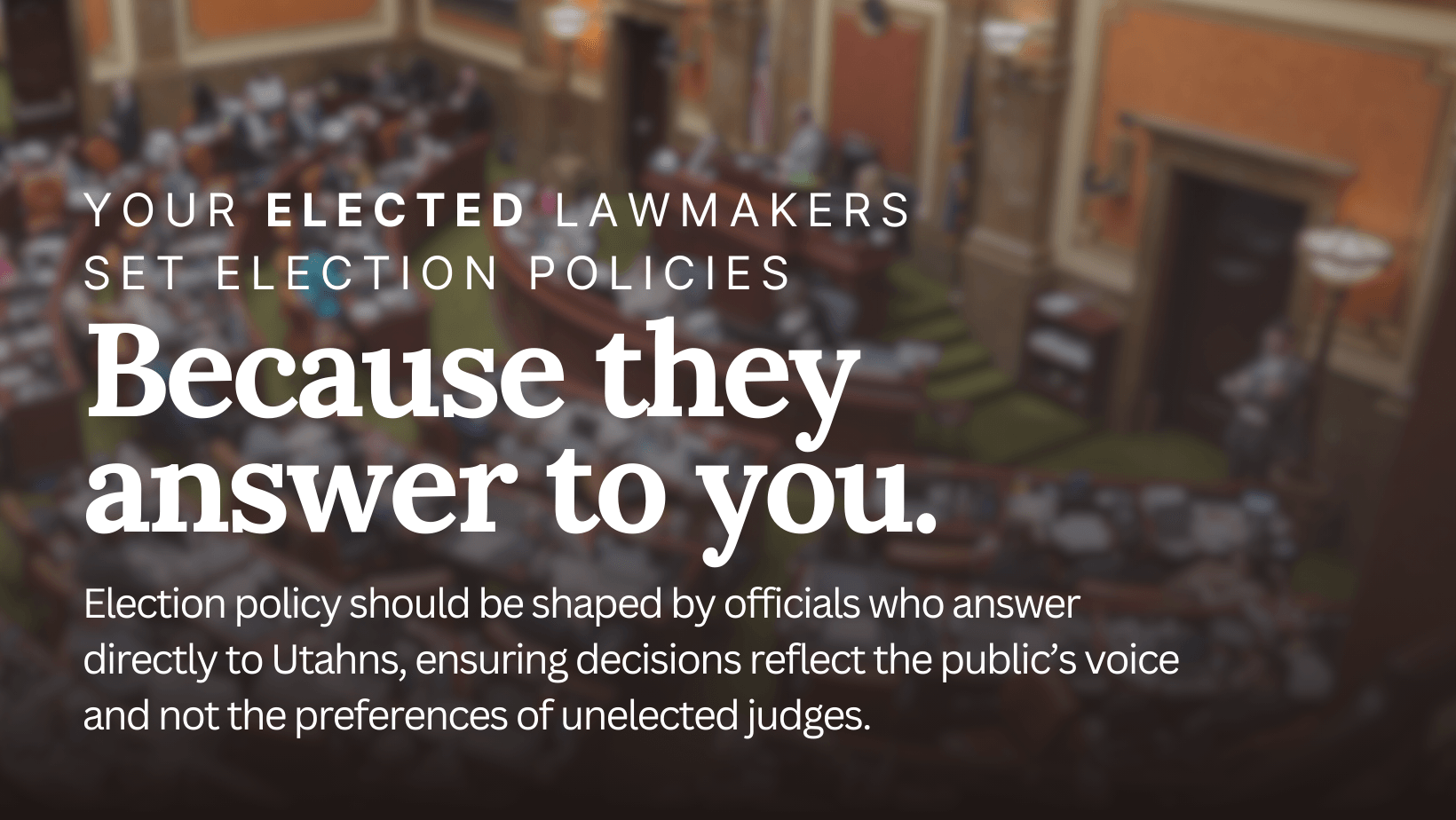
- Reaffirms the constitutional and statutory role of the Legislature in redistricting. Article IX, Section 1 of the Utah Constitution and Article I, Section 4 of the United States Constitution both vest the power of redistricting solely in the Legislature. Proposition 4, approved in 2018, did not strip the Legislature of its constitutional authority to adopt or reject congressional maps.
- Condemns actions that ignore the Utah Constitution and Proposition 4. The Utah Supreme Court contrived a concept of super laws preventing future legislatures from amending those laws unless a judge agrees. The District Court disregarded Proposition 4 requirements that would have allowed for an independent commission and public involvement.
- Rejects the unconstitutional use of the special interest groups’ congressional map. The Court’s late-night decision unconstitutionally ordered the Lieutenant Governor to use a map drawn by private special interest groups, which never underwent the Proposition 4 process.
- Urges the judicial branch to safeguard and follow the text of the Utah Constitution. The Legislature rejects the special interest groups’ map and condemns the implementation of a map that violates the Utah and United States Constitutions.
- I voted in support of this resolution. The bill passed the House with 54 yeas, 16 nays, and 5 absent non votes. The bill also passed the Senate with 19 yeas 7 nays, and 3 absent non votes. This resolution became effective December 9.
|
|
More Access, Less Burden: Higher Education in Utah
|
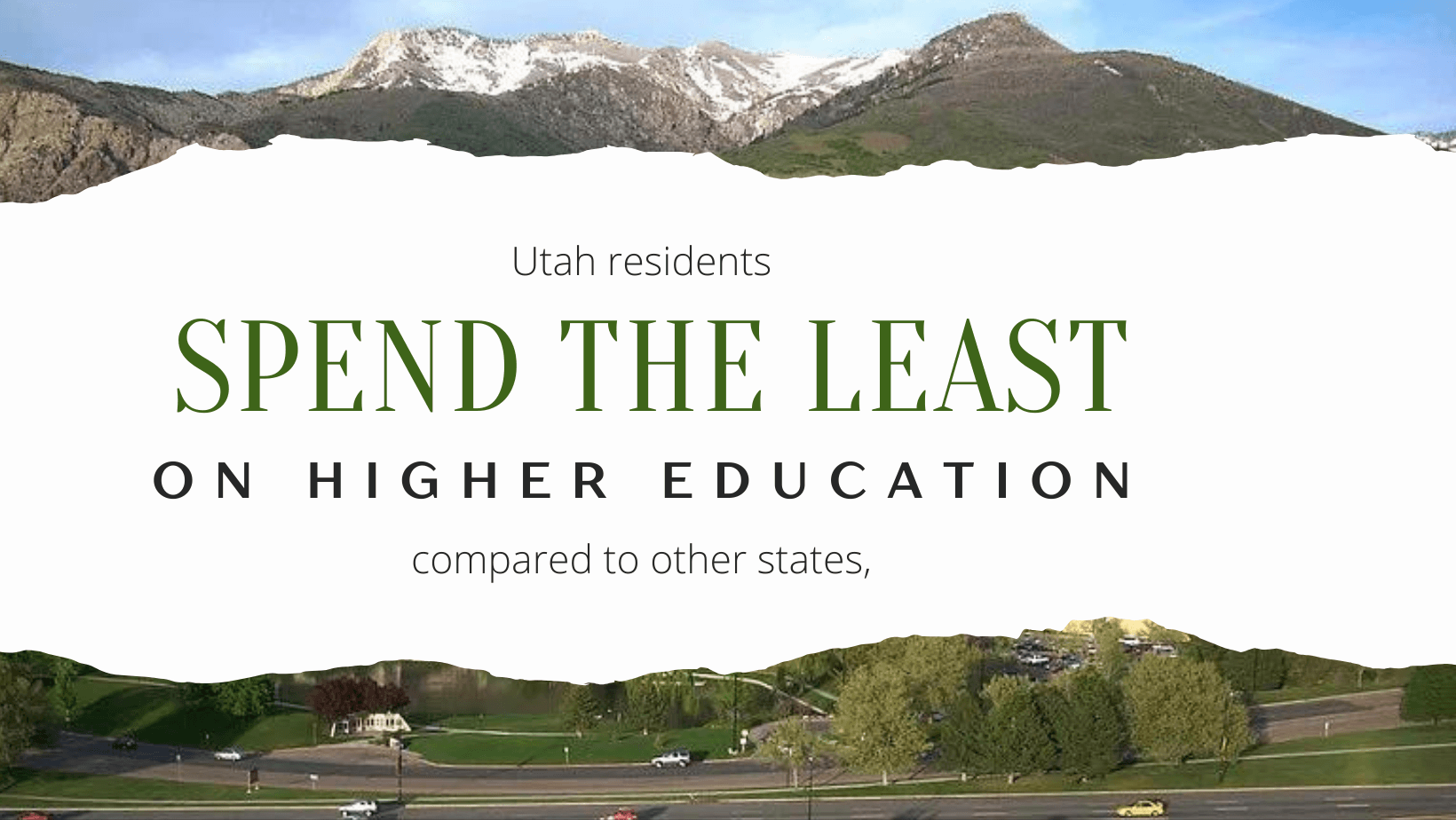
A new report brings great news for Utah families: our state now ranks #1 in the nation for the lowest higher-education cost burden, with college expenses averaging just 27% of median income—far below states like Pennsylvania, where costs exceed 72%. Even better, enrollment in Utah’s public colleges and universities continues to grow, rising 4.2% this year to more than 216,000 students. This is a strong sign that our investments and reforms are working. As your state representative, I’m committed to building on this progress by keeping higher education affordable, accessible, and aligned with the workforce needs that strengthen Utah’s future.
|
|
Investing in Recreation and the Outdoors
|
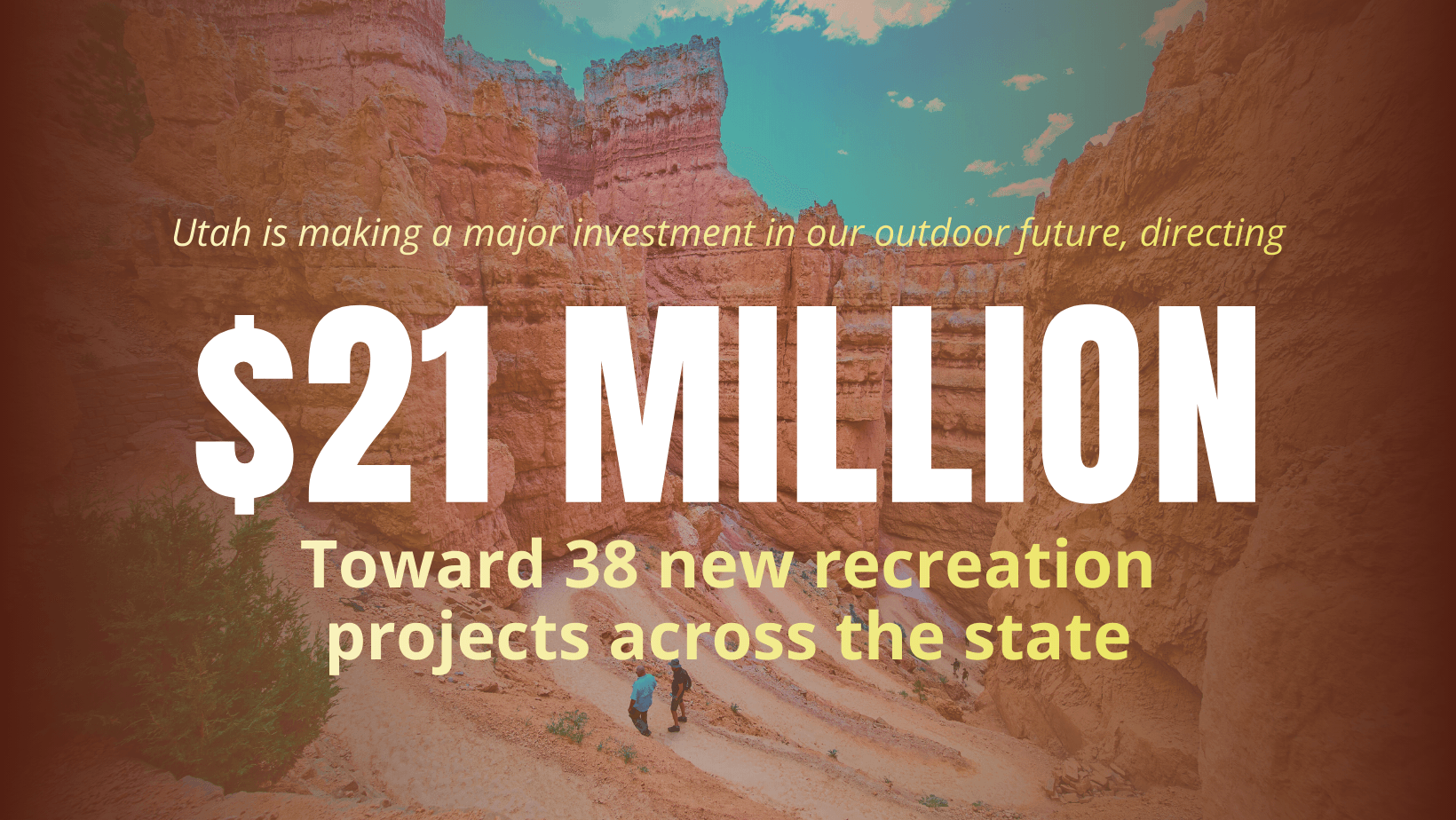
Utah is making a major investment in our outdoor future, directing $21 million toward 38 new recreation projects across the state. From regional bike parks and trail expansions to campground improvements and land acquisitions, these grants will help strengthen community recreation, boost local economies, and preserve Utah’s incredible natural landscapes. I was proud to help support this funding in the Legislature. These projects aren’t just about making things prettier — they’re long-term investments in quality of life, stewardship, and outdoor opportunity for every Utahn.
|
|
Utah’s Budget Process: Leading the Nation
|
Pew Charitable Trusts recognized the Beehive State for comprehensive and sustainable budget practices, including the deployment of long-term budget assessments and budget stress tests.
An early adopter of budget sustainability tools, Utah is one of only eight states to harness both practices and one of just a few states in the nation to boast a AAA credit rating. These assessments help the Utah Legislature craft a balanced budget year after year.
Long-term budget assessments project revenue and spending several years into the future to determine where the state of Utah is likely to face chronic budget deficits. Stress tests estimate the size of budget shortfalls from potential recessions or other economic events to gauge preparedness. The strategies paid off during the pandemic, allowing the Legislature to balance the budget “while minimizing harm to residents and the economy.”
Pew recommended other states follow Utah’s lead. “States could implement Utah’s strategy of paying for infrastructure with cash in most years to retain borrowing capacity for downturns,” says the report. “One advantage of Utah’s approach is that the state avoids some of the trade-offs between saving and spending, instead putting its dollars to work through the economic cycle rather than having them sit unused in an account potentially for years.”
|
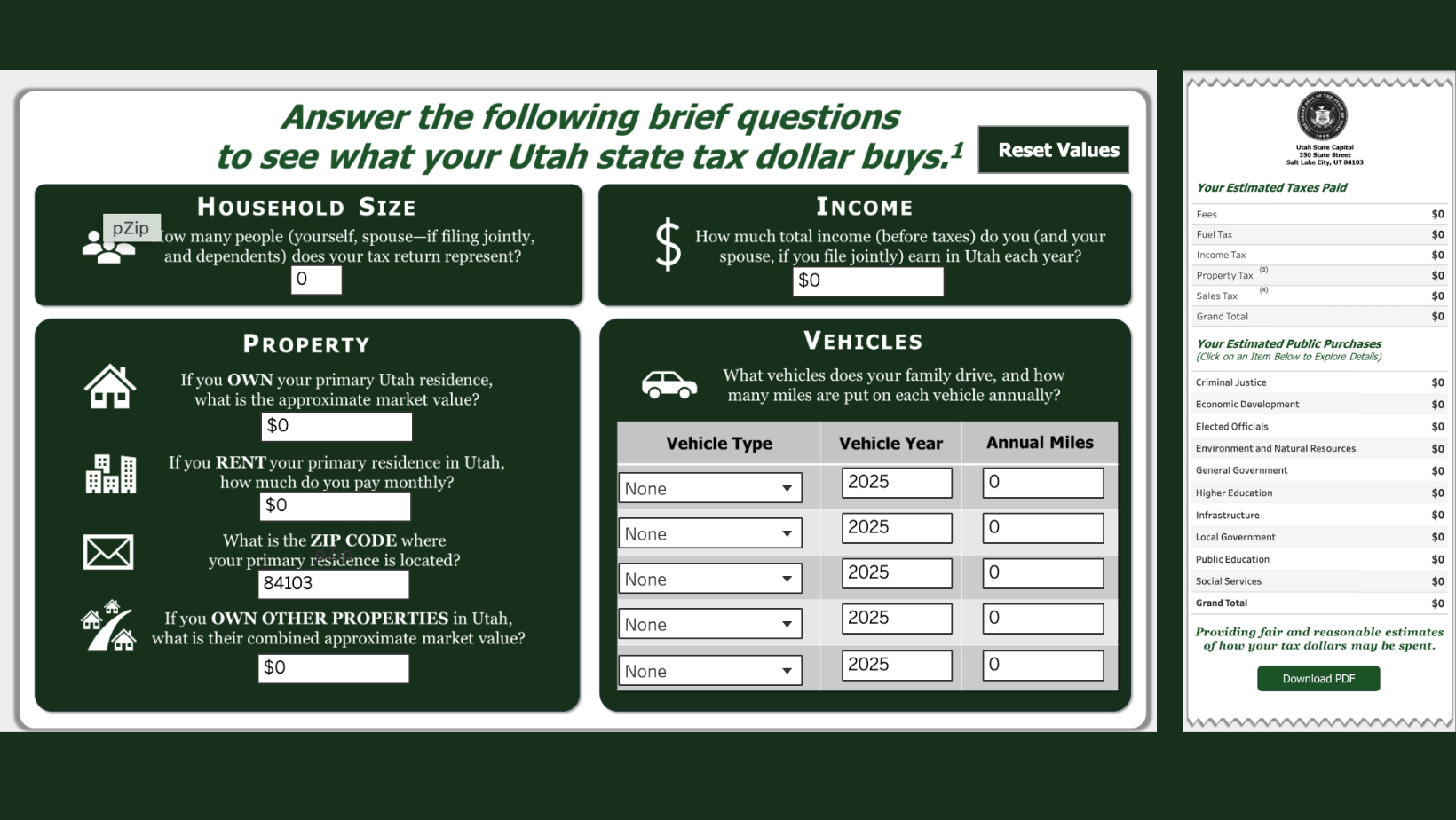
Utahns deserve to know how the state spends their tax dollars. A decade ago, the Legislature authorized the creation of the tool that reasonably estimates how much you paid in taxes and what those dollars fund in state government.
The Taxpayer Receipt – an easy-to-use online tool – has been revamped for Utahns. Get an estimate for your household here.
|
I would love to hear from you!
|
District 63
Representative Stephen L. Whyte
swhyte@le.utah.gov
385-271-8435
|
|